After the failed insurrection (Grito de Jayuya) of 1952, Pedro Albizu Campos and several Nacionalistas were charged with violating the universally hated Law 53, the Gag Law (ley de la mordaza). He was kept in isolation in La Princesa jail house from November 14, 1950, to May 18, 1951, when he was transferred to a larger and better-ventilated cell.
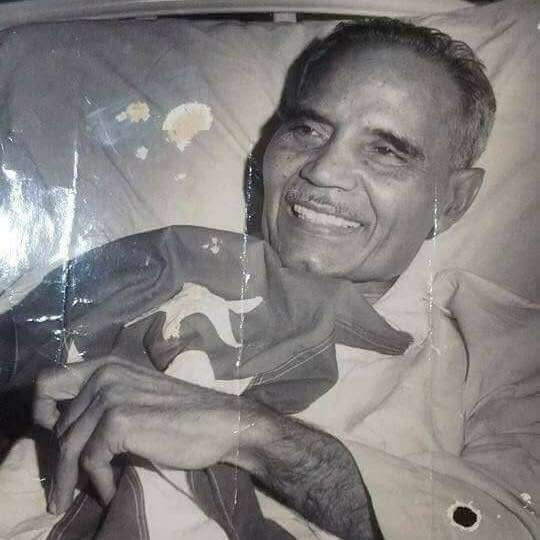
Pedro Albizu denounced that he was being bombarded with radiation in his cell. The Justice Department argued that he had early senile dementia. Though there is a possibility he could had been radiated during his time incarcerated- that would’ve taken place during his first incarceration in Atlanta– if it happened.
His trial took place between June 30 and August 5, 1951. He was sentenced to 12 to 54 years of confinement.
Albizu Campos continued to complain of radiation, and a psychiatrist declared him insane. On September 30, 1953, Muñoz Marín conditionally pardoned him. The government offer required that he pledge not to attempt to overthrow the government of Puerto Rico again. He refused the offer but was declared mentally incompetent and set free, nonetheless.
A year later he would again be sent to jail after Nacionalistas—Lolita Lebrón, Andrés Figueroa Cordero, Rafael Cancel Miranda and Irving Flores—opened fire from the gallery of the House of Representatives in Congress, wounding five congressmen.
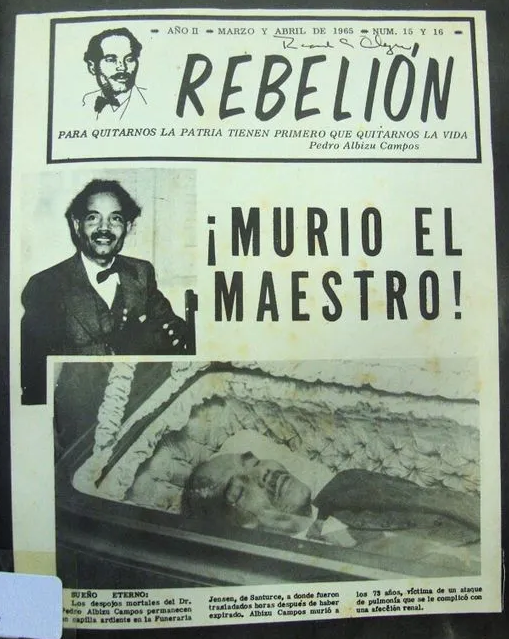
On November 15, 1964, Albizu was again pardoned by Muñoz Marín. He died on April 21, 1965, and was buried in the Viejo San Juan Cemetery.
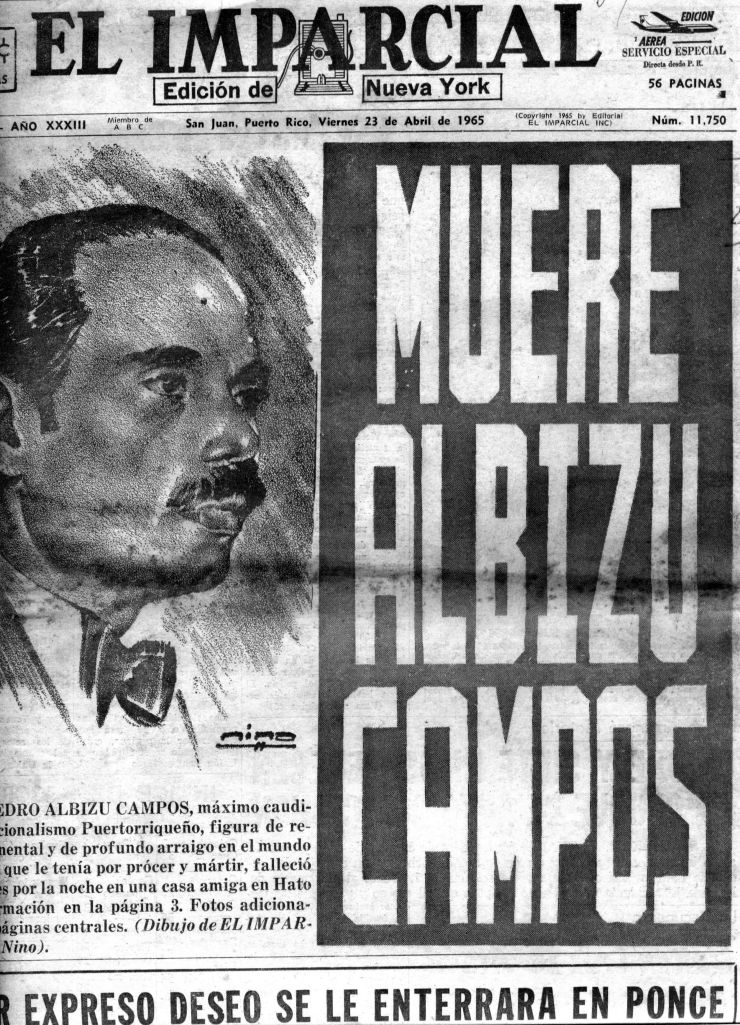
Tens of thousands attended his burial.
But Albizu Campos did not simply die.
In death, Albizu Campos increasingly ceased to be merely a historical figure and became a myth. For many of his followers, he was transformed into something approaching a messianic figure—a martyr who had suffered for the nation, endured imprisonment, illness and persecution, and never surrendered his vision of Puerto Rican independence.
His political program, his failures, his contradictions and even the violence associated with the Nationalist movement could become secondary to the larger story of sacrifice and redemption.
In this sense, Albizu became increasingly enshrined in myth. His image acquired something approaching the qualities of a saint: the martyr, the prophet, the imprisoned patriot, the man who suffered but did not recant. Scholars have long noted the quasi-religious dimensions of Albizu’s posthumous memory, including the language of martyrdom, canonization and ritual that developed around him.
That mythology was particularly powerful in the Puerto Rican diaspora, especially in New York and Chicago, where Albizu’s image became intertwined with the politics of identity, cultural survival and resistance.
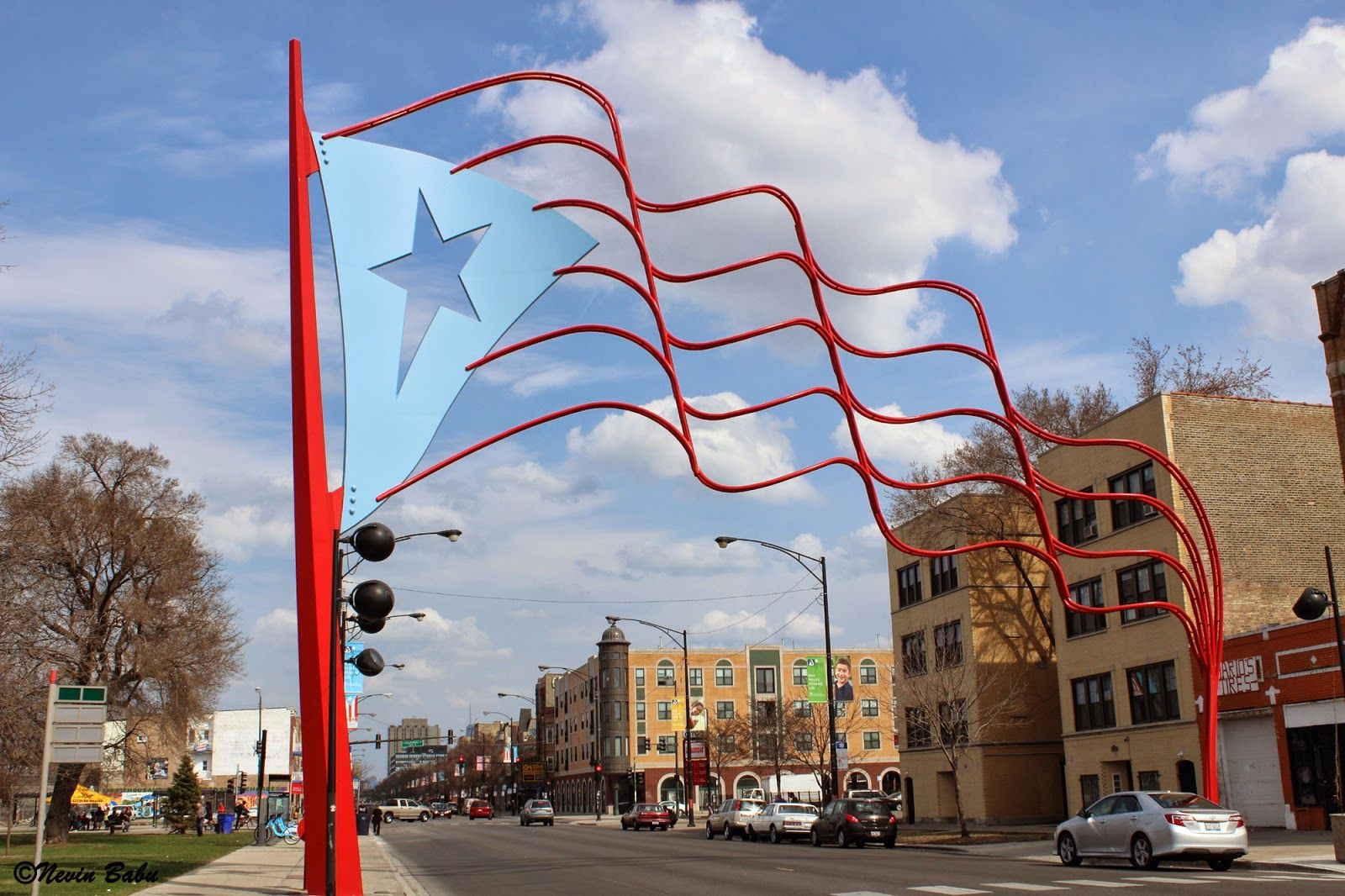
In Chicago, for example, his name became embedded in institutions, schools, murals, public spaces and the political culture of Humboldt Park and Paseo Boricua. His image helped connect the diaspora to an imagined Puerto Rican homeland—and to a history of resistance that many diaspora communities felt had been minimized, suppressed or forgotten-even though- if anything- we have been exposed to it since early age. In fact, we grew up in Puerto Rico during the 1980s and anyone who went to college in the 1990s was exposed to it- many becoming militants themselves.
The diaspora did not merely preserve Albizu’s memory. It remade him.
The Albizu of the diaspora became, in many respects, larger than the historical Albizu: a symbol of resistance, dignity, sacrifice and national identity. For some, he became a messianic figure of a Puerto Rico that had never been allowed to become what it was supposed to be.
And now, interestingly, we are seeing aspects of that diasporic mythology re-emerge on the island itself. Albizu’s image has become increasingly visible in contemporary cultural production, public commemoration and political discourse. Some of that revival is clearly being driven by diasporic intellectuals, influencers, comics, artists and activists who are bringing back to Puerto Rico a version of Albizu that had been cultivated for decades in New York, Chicago and other Puerto Rican communities in the United States.
The result is not simply a recovery of Albizu, the historical actor. It is, in part, the revival of Albizu the myth.
That distinction matters-greatly. History asks us to confront the complicated man—the lawyer educated at Harvard, the nationalist leader, the political organizer, the uncompromising advocate of independence, the prisoner, the controversial figure who didn’t shy away from with political violence, and the antagonists and victim of a colonial political order. Myth asks something different. Myth asks us to believe.
And Puerto Rico has always had room for both.
If Albizu became the martyr of the nation that never came into being, Luis Muñoz Marín became something very different: the architect of the Puerto Rico that actually emerged, the one Puerto Ricans have populated, felt and experienced since the days of the revolt and the creation of the ELA.
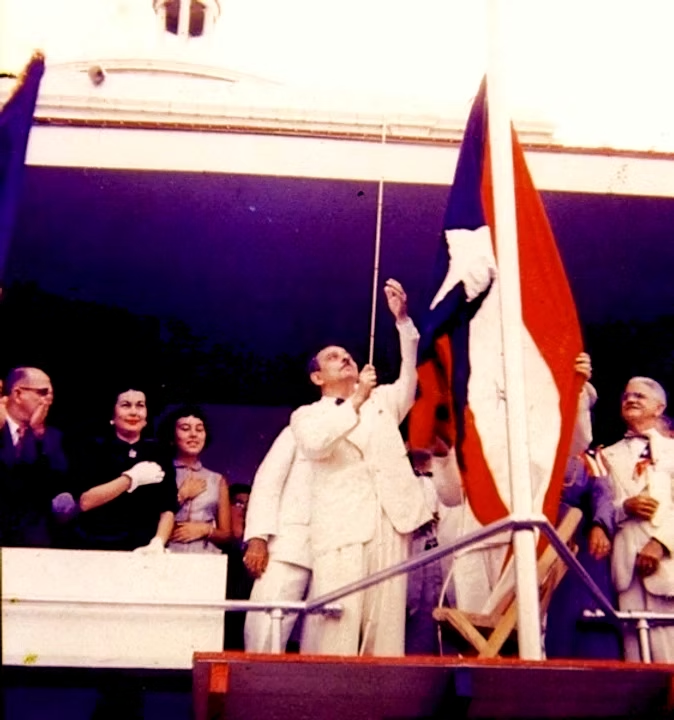
It is always hard for reality to live up to utopian promises.
Luis Muñoz Marín’s career after the creation of the Estado Libre Asociado in 1952 is best understood as a long transition from active governor to elder statesman, to political exile and observer, and finally to a symbolic national figure.
But he did not simply disappear after leaving La Fortaleza. He remained politically consequential almost to the end of his life.
Muñoz Marín had already been governor since 1949 when the Commonwealth was established in 1952. He then became the first governor of the newly constituted Estado Libre Asociado and won three additional four-year terms.
His administration continued the transformation begun during his first term:
- Operation Bootstrap (Manos a la Obra) — accelerating the transition from an overwhelmingly agricultural economy toward manufacturing and industrialization.
- Operation Serenity (Serenidad) — an effort to ease the profound social and cultural transition from el campo al pueblo, as Puerto Ricans moved from rural communities into an increasingly urban and industrial society.
- The massive expansion of public housing, schools, health services, electrification, roads, water systems and other infrastructure.
- Expansion of government social programs, particularly for rural and working-class Puerto Ricans.
- Continued efforts to reduce illiteracy, malnutrition and extreme poverty.
- Development of Puerto Rico as an industrial and tourism economy.
- Consolidation of the Partido Popular Democrático (PPD) as the dominant political organization.
- Political construction of the Commonwealth as an alternative to both independence and statehood.
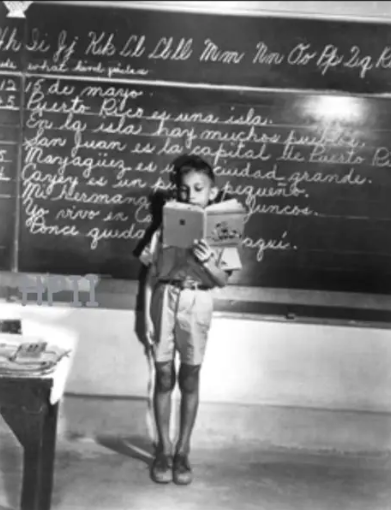
The transformation was indeed substantial, but it was neither simple nor without costs. Industrialization did not eliminate poverty. The decline of agriculture contributed to enormous rural-to-urban migration and to the migration of hundreds of thousands of Puerto Ricans to the continental United States.
Operation Bootstrap also exacerbated dependence upon U.S. capital and federal policy.
Muñoz was reelected in 1952, 1956 and 1960, giving him four consecutive terms as governor from 1949 through January 1965. But by the early 1960s, he was increasingly concerned with succession. He had become so central to Puerto Rican politics that the PPD’s identity had become deeply intertwined with his own.
In August 1964, Muñoz announced that he would not seek a fifth term as governor. He deliberately stepped away from La Fortaleza while he was still enormously powerful.
He selected Roberto Sánchez Vilella as the PPD’s gubernatorial candidate. Sánchez Vilella won the 1964 election, and Muñoz left La Fortaleza in January 1965.
This was not retirement in the ordinary sense. Muñoz Marín had traveled an extraordinary political road—from firebrand politician, to pariah, to the most important Puerto Rican political figure during World War II, to elected governor in the postwar era, and finally to senior statesman, political mentor and PPD patriarch.
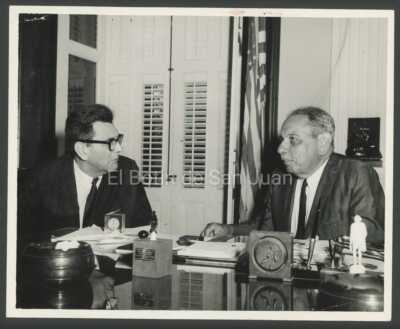
From 1965 through 1970, Muñoz served as a senator-at-large. He continued to influence the PPD and the status question, but his relationship with Sánchez Vilella deteriorated badly. The succession he had intended to be orderly instead became one of the great political ruptures in modern Puerto Rican history.
By 1968, Sánchez Vilella had broken with Muñoz and the PPD had split. Muñoz backed Luis Negrón López for governor. Sánchez Vilella ran under the Partido del Pueblo. Luis A. Ferré and the Partido Nuevo Progresista (seeking statehood) won, ending the PPD’s uninterrupted electoral dominance since 1940.
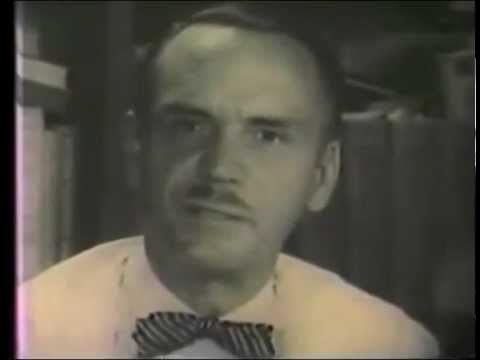
That defeat was enormously important for both Muñoz and the PPD. It demonstrated that the PPD could lose—and that Muñoz himself could no longer simply determine Puerto Rican electoral politics.
The Washington Post obituary noted that Muñoz had become increasingly concerned about the growth of statehood sentiment and had campaigned against it during his final years. As I have argued elsewhere, Muñoz did not betray independence—he bought time for it. He understood that during World War II and its aftermath, the United States had changed its position on Puerto Rico and that, if statehood were offered, Puerto Ricans might well choose it. Despite all the hatred he endured, Muñoz in fact preserved the hope of eventual independence.
On May 4, 1970, Muñoz resigned his Senate seat. He then left Puerto Rico and went to Europe for roughly two years, spending considerable time in Italy and Spain. The Fundación Luis Muñoz Marín describes this period as his voluntary European “exile.”
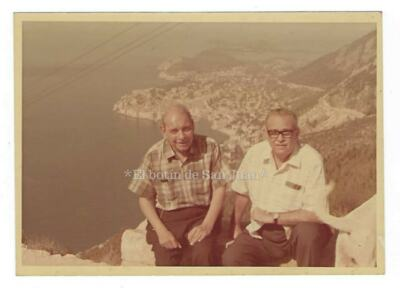
He wasn’t fleeing political persecution. Rather, the European period appears to have been connected to his desire to withdraw from Puerto Rican politics and allow a younger generation of PPD leaders to emerge. Or maybe, a tired statesman—Puerto Rico’s “Father of the Poor”—just wanted to finally rest.
He also devoted himself to writing his memoirs.
He returned to Puerto Rico on October 8, 1972, and lived out his final years at his residence in San Juan. But he wasn’t done yet.
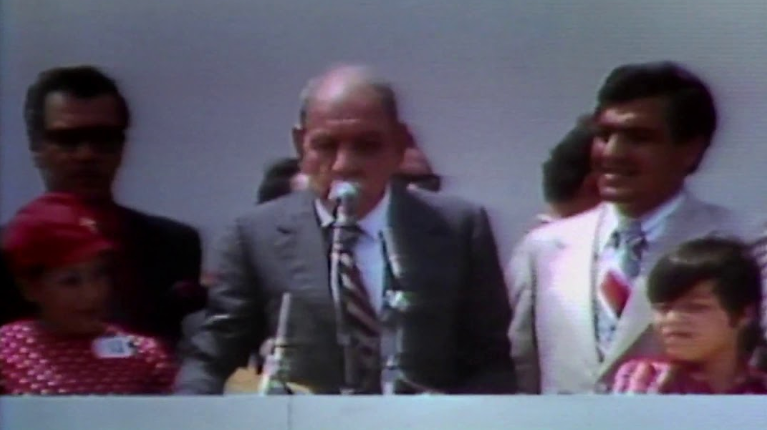
Muñoz campaigned for the PPD during the 1972 election. And the response was extraordinary. He appeared before approximately 150,000 people at Plaza Las Américas and delivered what is generally regarded as his last major political-electoral speech.
By 1972, he was no longer governor. He wasn’t even a senator. Yet 150,000 people came to hear him- willingly not because it was mandated. He helped introduce and campaign for the younger Rafael Hernández Colón, signaling the generational transition he had been trying to engineer. After the 1972 election, Muñoz largely withdrew from electoral politics again.
From approximately 1973 onward, Muñoz lived primarily at his San Juan residence, concentrating on his memoirs and writing. He nevertheless remained a national political figure. His influence was particularly visible in the 1976 and 1980 status debates. Even politicians who opposed his Commonwealth vision recognized the magnitude of his historical role.
One of the clearest indications came at his death. Governor Carlos Romero Barceló, a statehood advocate and political opponent, declared seven days of mourning for Muñoz.
That tells us something important about Muñoz’s place in Puerto Rican political culture by 1980: his significance had transcended the PPD, even though his political legacy remained—and remains—highly contested.
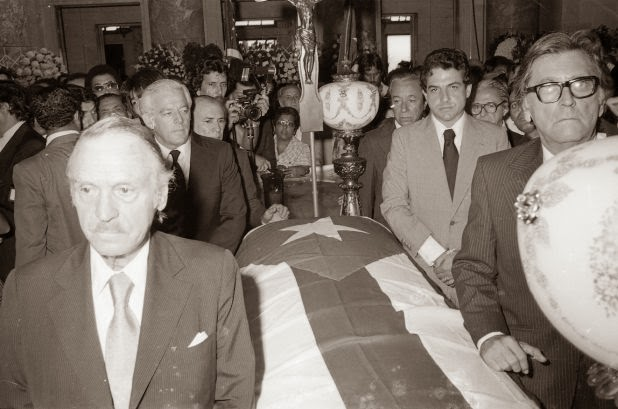
Luis Muñoz Marín died on April 30, 1980, at age 82, at the in Santurce. He had been hospitalized for several days.
As a kid growing up in a household that was, to say the least, unsympathetic to Muñoz, I couldn’t help but notice what happened when the news came that he was dying. Even my father—who would call Muñoz things I dare not repeat—was saddened by the news.
The feeling was the same in elementary school. You could see it with the teachers.
His body was subsequently taken through a series of public ceremonies: public viewing at the Capitol; religious services at the Cathedral of San Juan; the enormous procession from San Juan toward Barranquitas; and the final burial beside his father, Luis Muñoz Rivera. The funeral procession reportedly lasted approximately half a day.
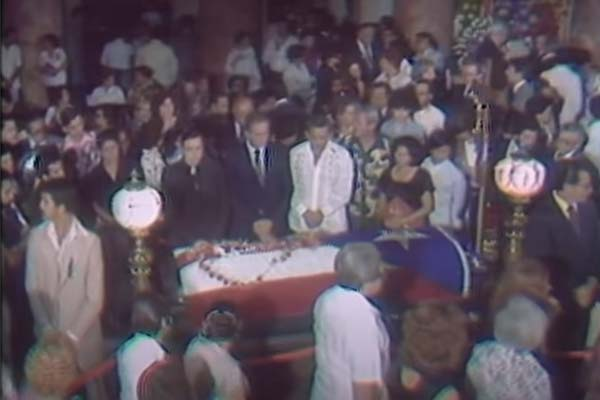
More than 200,000 people participated in or attended the various public funeral observances, from the Capitol wake through the burial in Barranquitas.
Contemporary accounts describe crowds lining the highways. When the hearse was already around Caguas, people were still waiting in San Juan.
Thousands stood along the route as the procession made its way toward the Muñoz family mausoleum in Barranquitas, where he was buried beside his father.
There was such a crowd around the tomb that his daughter Victoria Muñoz Mendoza eventually had to plead with the people gathered there to allow the family to bury him in peace.
And we watched the whole procession on television. At a certain point, I saw my father with tears in his eyes. I couldn’t understand why. He had never had anything good to say about Muñoz. Yet there he was, crying. It was about the only time I ever saw my father cry.
I could tell you about Governor Romero Barceló (from an opposing party) declaring siete días de luto to honor Luis Muñoz Marín. I could tell you about my schoolteachers trying to explain what was happening when the news broke that he had been hospitalized and wasn’t expected to recover—only to walk out of the classroom themselves to hide their own tears.
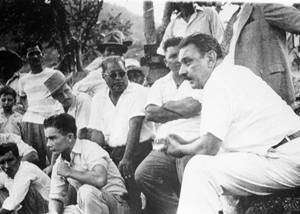
But seeing my father like that left a mark on me. It filled me with questions. Who had Luis Muñoz Marín been? What had he done for us?
And perhaps most importantly: what had he meant to Puerto Rico that even his political enemies seemed devastated (at least in public) by his death?
Because that is ultimately the measure of a statesman—not that everyone agrees with him, nor that history judges every decision he made kindly. A statesman is someone whose life becomes larger than the political battles of his own time.
When even your political enemies and rivals understand what you did for your country, what it cost you, what you had to sacrifice, and the terrible loss your departure signifies for a country still trying to find its path—that is the mark of a statesman.
Almost half a century after his death, Puerto Rico is still waiting for someone of his stature, passion, acumen, and devotion for the people of Puerto Rico to lead a path toward decolonization.
__________________________________________________________________________
Continue reading: The Nationalist Revolt and the Creation of the Estado Libre Asociado of Puerto Rico (Part five): On Saints and Ghosts, Myth and History


[…] Continue reading: The Nationalist Revolt and the Creation of the Estado Libre Asociado of Puerto Rico. (Part Five) Pos… […]
LikeLike