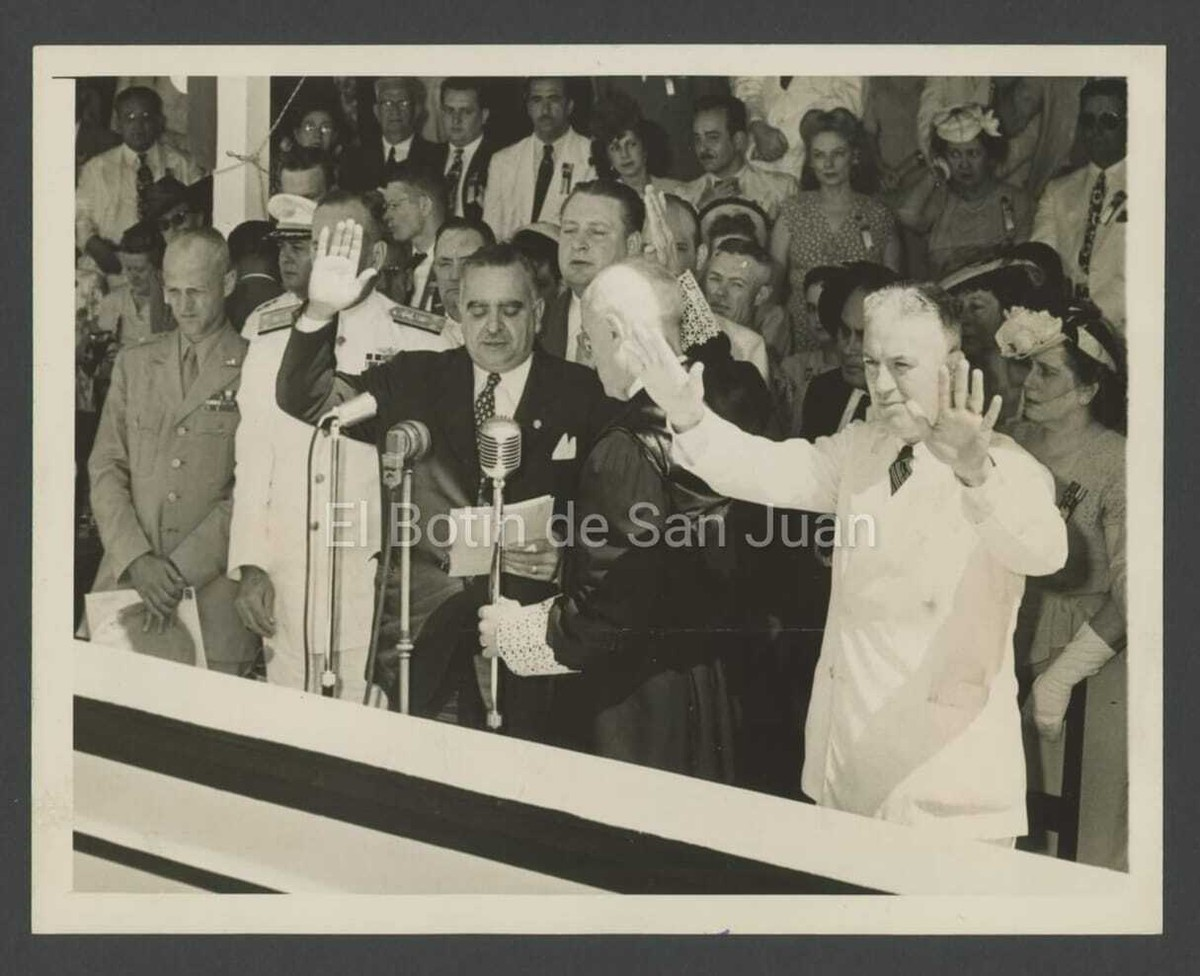
On June 10, 1948, Jesús T. Piñero, the first Puerto Rican appointed as governor of the island under U.S. sovereignty, signed Law 53 (known as the Gag Law or Ley de la Mordaza).
The law was passed by Puerto Rican Insular Legislature under the direction of then president of the Insular Senate and future first elected governor of the island and architect of the industrialization of Puerto Rico and the Estado Libre Asociado or commonwealth formula, Luis Muñoz Marín.
Law 53 closely resembled the U.S. Alien Registration Act (also known as the Smith Act) passed by Congress on June 29, 1940. The Smith Act made it illegal for anyone in the United States to advocate, abet, or teach the desirability of overthrowing the government.[i]
Law 53 violated the freedoms of speech, assembly, and association guaranteed by the First and Fourteenth Amendments of the U.S. Constitution. Because Puerto Ricans were (and are) U.S. citizens, those constitutional protections applied to them.
The law also violated Article II of the Constitution of Puerto Rico (1952), which guarantees freedom of expression.
Unsurprisingly, Law 53 was ultimately repealed in 1957.
Law 53 was not struck down by a court in 1957. It was repealed by the Puerto Rico Legislature. The Civil Rights Committee’s work, public discussion, the Governor’s intervention, constitutional arguments, and legislative action all contributed to that result. The Senate passed the repeal on August 5, 1957, as Law No. 2.
The First Amendment prohibits government from abridging freedom of speech, freedom of the press, the right to peaceably assemble, and the right to petition the government for redress of grievances. Through the incorporation doctrine under the Fourteenth Amendment, these protections apply not only to the federal government but also to state and territorial governments.
Those protections cover spoken and written words, symbolic acts, political expression, and even the right to remain silent. Courts have recognized limited exceptions—such as incitement to imminent lawless action, true threats, defamation, and certain forms of criminal conspiracy—but political advocacy itself is protected speech.
That is precisely why the Gag Law was unnecessary.
Existing laws already allowed authorities to prosecute incitement, violent conspiracies, insurrection, and other criminal acts. Under this light, Law 53 was not aimed at preventing violence; it was aimed at suppressing political dissent.
The law also infringed on freedom of association.
Although the Constitution does not explicitly mention that right, the Supreme Court of the United States has repeatedly recognized it as essential to the exercise of free speech, assembly, petition, and religious liberty. Joining a political party, attending meetings, organizing supporters, or advocating for a cause are all activities protected by the First Amendment’s broader guarantees. These rights are fundamental to democratic participation.
One particularly troubling provision was Article 2, which required that alleged violations be tried before a judge rather than a jury. In a tribunal de derecho, the judge serves as both fact-finder and interpreter of the law. If the judge is impartial, the system may function adequately. If the judge is partisan, ideological, or politically motivated, the system becomes an instrument of repression.
Puerto Rico’s legal system is a hybrid of civil law and common law traditions. It recognizes trial by jury, where citizens determine the facts and deliver the verdict while the judge oversees procedure and interprets the law.
By removing the jury from the process, Law 53 concentrated enormous power in the hands of a single government official at a time of intense political polarization.
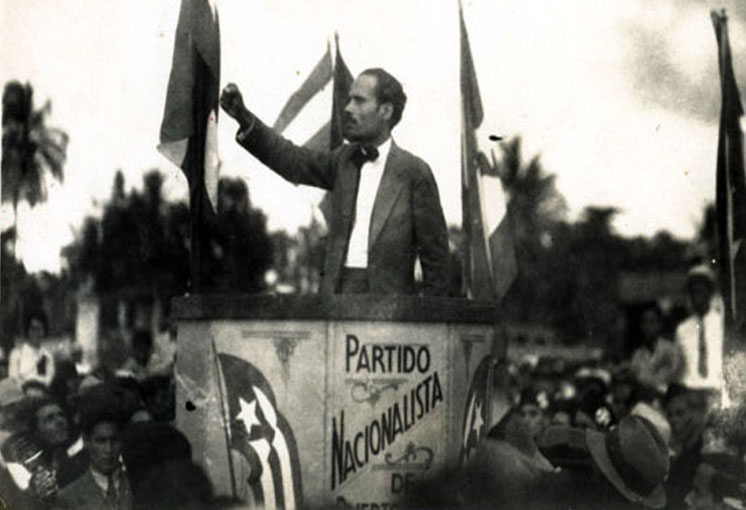
Despite the threats, violent rhetoric, and insurrectionary plans advanced by nationalist leader Pedro Albizu Campos and his followers, the Puerto Rican legislature under Luis Muñoz Marín made a catastrophic mistake in passing Law 53.
In attempting to confront extremism, it adopted an anti-democratic law and a judicial mechanism that could easily be used as a tool of political repression which is the same logic employed by authoritarian governments throughout history.
However, another problem emerges when discussing Law 53: the mythology that has grown around it (as I have argued elsewhere).
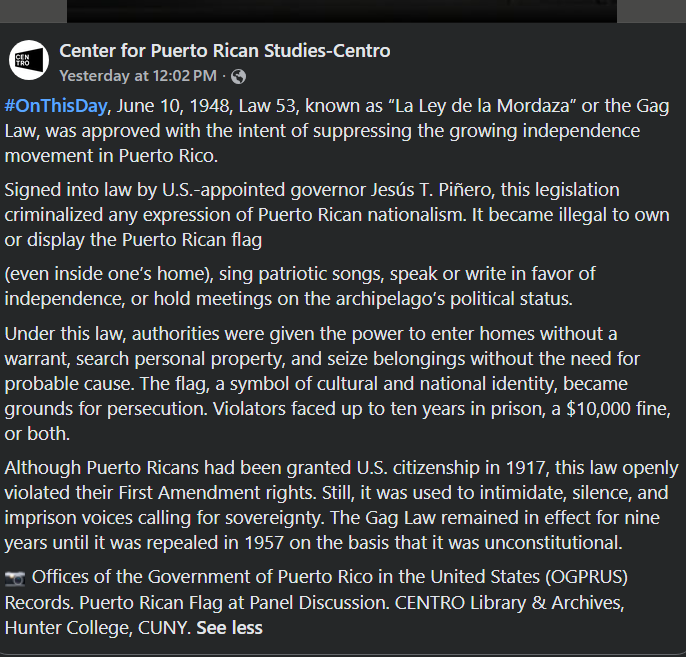
The law is frequently described as making it a crime to own or display a Puerto Rican flag, sing patriotic songs, advocate independence, or gather to discuss independence.
Those claims are repeated so often that many people assume they are found in the statute itself.
They are not.
The text of Law 53 criminalized:
- Advocating the overthrow or paralysis of the Insular Government through force or violence.
- Printing, publishing, distributing, or displaying materials advocating violent overthrow.
- Organizing groups dedicated to the violent overthrow of the government.
There is no language criminalizing the possession of the Puerto Rican flag, singing La Borinqueña, supporting independence, or discussing independence as political ideas or its achievement by peaceful means.
That does not mean abuses did not occur. They absolutely did.
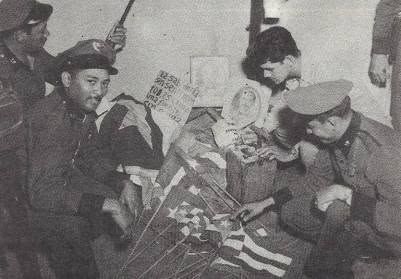
The Puerto Rico (Insular) Police and other authorities routinely violated the constitutional rights of Puerto Ricans. The infamous carpetas (surveillance files) reveal widespread illegal monitoring of independence supporters and suspected nationalists. Possession of a Puerto Rican flag, attendance at nationalist meetings, singing patriotic songs, or expressing pro-independence views could attract police attention and trigger illegal surveillance.
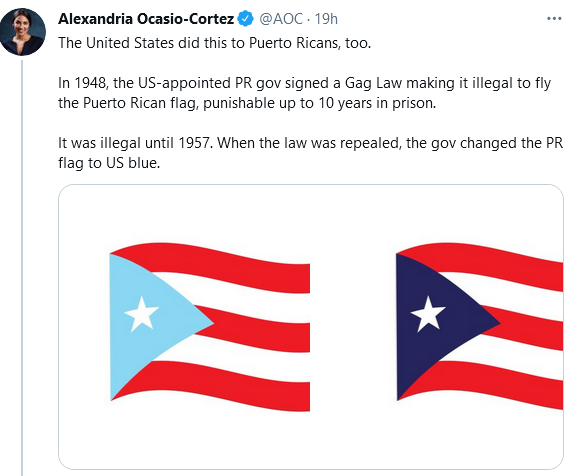
But police abuse and statutory language are not the same thing.
The carpetas demonstrate that the police often treated flags, patriotic songs, and independence literature as signs of alleged subversive intent. Yet that was police practice, not what the law explicitly prohibited.
Likewise, arrest records from 1948 to 1957 show charges framed as sedition, conspiracy to overthrow the government, or possession of seditious materials. During those arrests, police frequently confiscated flags, literature, and other nationalist symbols. However, the actual charges were tied to alleged advocacy of violent overthrow because that is what the statute criminalized.
This distinction matters.
Law 53 was already an unconstitutional, abusive, and anti-democratic law. There is no need to exaggerate its contents to condemn it. The historical record is bad enough on its own.
The claim that people were sentenced to ten years in prison simply for possessing a Puerto Rican flag or singing La Borinqueña requires evidence from arrest records, trial transcripts, and court proceedings—not repetition.
Too often, the claim persists because it has become part of a larger nationalist narrative, passed from generation to generation until it is accepted as fact.
The reality is more complicated. Law 53 was a serious violation of constitutional liberties and a powerful tool of political repression. The Puerto Rican government and police abused it. Citizens’ rights were violated. None of that is in dispute.
But history requires us to distinguish between what the law actually said, how authorities enforced it, and the myths that later developed around it. Failing to make those distinctions replaces history with political folklore and propaganda- and in no way advances the decolonization of Puerto Rico, Puerto Ricans- and their minds. In fact- it just further colonizes the mind.
Below is the text of the law.
Ley Número 53 que estipulaba lo siguiente:
“Para declarar delito grave el fomentar, abogar, aconsejar o predicar, voluntariamente o a sabiendas, la necesidad, deseabilidad o conveniencia de derrocar, destruir o paralizar el Gobierno Insular, o cualquier subdivisión política de este, por medio por medio de la fuerza o la violencia; y el imprimir, publicar, editar, circular, vender, distribuir o públicamente exhibir con la intención de derrocar, paralizar o destruir el Gobierno Insular o cualquiera de sus divisiones políticas, cualquier escrito o publicación donde se fomente, abogue, aconseje o predique la necesidad, la deseabilidad o conveniencia de derrocar, paralizar o destruir el Gobierno Insular o cualquier subdivisión política de este, por medio de la fuerza o la violencia, así como el organizar o ayudar a organizar cualquier sociedad, grupo o asamblea de personas que fomenten, aboguen, aconsejen o prediquen tal cosa y para otros fines.”
Artículo 1 – Constituirá delito grave, castigable con pena máxima de presidio de diez años o multa máxima de 10 000 USD o ambas penas, la comisión por cualquier persona de cualquiera de los siguientes actos:
-fomentar, abogar, aconsejar o predicar, voluntariamente o a sabiendas, la necesidad, deseabilidad o conveniencia de derrocar, destruir o paralizar el Gobierno Insular, o cualquier subdivisión política de este, por medio de la fuerza o la violencia
-imprimir, publicar, editar, circular, vender, distribuir o públicamente exhibir con la intención de derrocar, paralizar o destruir el Gobierno Insular o cualquiera de sus divisiones políticas, cualquier escrito o publicación donde se fomente, abogue, aconseje o predique la necesidad, la deseabilidad o conveniencia de derrocar, paralizar o destruir el Gobierno Insular o cualquier subdivisión política de este, por medio de la fuerza o la violencia
-organizar o ayudar a organizar cualquier sociedad, grupo o asamblea de personas que fomenten, aboguen, aconsejen o prediquen la derogación o destrucción del gobierno insular, o de cualquier subdivisión política de este, por medio por medio de la fuerza o la violencia
Artículo 2 – Todo juicio que se celebre por violación alguna a esta Ley deberá celebrarse por tribunal de derecho
Artículo 3 – Si parte de esta Ley es declarada inconstitucional, el resto de ella deberá sustituir en todo su vigor.
Artículo 4 – Esta Ley, por ser de carácter urgente y necesario, empezará a regir inmediatamente después de su aprobación el 10 de junio de 1948


[…] Law 53 (Gag law- Mordaza) was an unconstitutional and abusive law that violated freedom of speech and association. It deserved condemnation and repeal. But the law itself did not criminalize possession of the Puerto Rican flag, singing La Borinqueña, or advocating independence. Those claims emerged later through political narratives that completely blur the distinction between police abuses and the actual text of the statute. […]
LikeLike
Gracias por encontrar y enseñar el texto original de la ley.
LikeLiked by 1 person
[…] Continue to The Gag Law (Ley de la mordaza)… […]
LikeLike
[…] may continue reading on this topic: HereThe Gag Law (Ley de la Mordaza) in Puerto Rican Memory, Political Discourse, and […]
LikeLike