One of the biggest ironies in Puerto Rican history and common political discourse is that the famous Carta Autonómica of 1897 is usually used by nationalists and separatists alike to claim that Puerto Rico had autonomy, sovereignty or even independence under Spain– at least in the last months of Spanish control over the island. That is indeed a huge misreading of the charter itself and to believe it- one must ignore the context in which the charter came about- which I discuss elsewhere. (Brief Read on the Carta Autonómica of 1897)
The autonomic charter is usually deployed to claim that under Spain– Puerto Rico enjoyed at least more political freedom than under the United States- even when compared to present day- or, to put it bluntly, under the constitution of the Estado Libre Asociado.
Even more ironic is that both the carta Autonómica and the ELA constitution represent a long arch of political movements seeking autonomy- or compromised sovereignty rather than independence.
It is thus worthy comparing them both and how they took shape. Such juxtaposition will force us to separate the scope of autonomy from the legitimacy and durability of the political process that created them.
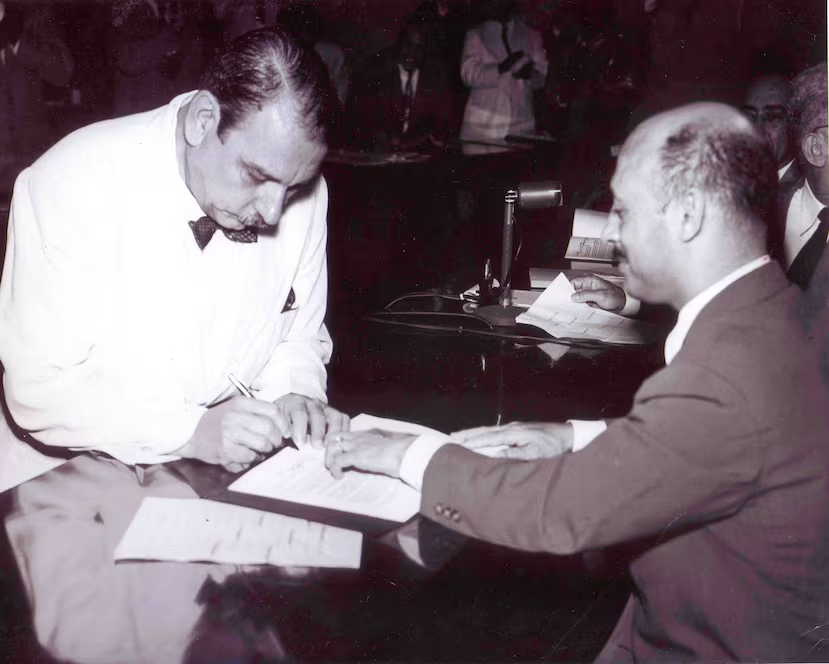
The common narrative often assumes that the 1897 Charter of Autonomy represented Puerto Rico’s highest level of self-government before the U.S. invasion and that the 1952 Constitution merely repackaged colonialism. The historical record is considerably more complex.
Indeed, one could reasonably argue that the 1952 Constitution rested on a far more democratic, transparent, and legally secure foundation than the Carta Autonómica, even if ultimate sovereignty remained with the United States.
Conversely, one could also argue that the 1897 Charter granted broader authority in certain internal governmental areas while resting upon a much weaker constitutional footing.
The comparison therefore requires evaluating two different questions: How much autonomy did each regime provide? And, how legitimate and durable was the political order that created it?
I. Origins: Two Very Different Constitutional Processes
The Carta Autonómica (1897)
The Charter emerged after decades of lobbying by Puerto Rican autonomists such as Luis Muñoz Rivera, but its final form was the product of negotiations conducted primarily between Puerto Rican political leaders and Práxedes Mateo Sagasta and Spain’s Liberal Party.
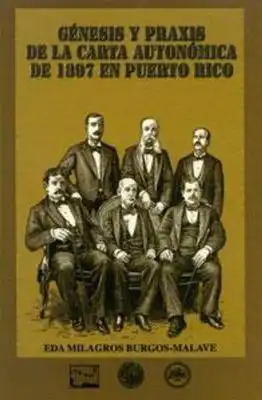
Those negotiations were conducted with relatively little public transparency.
Even more significant was the Charter’s legal birth. It was not enacted by the Spanish Cortes, Spain’s national legislature. Instead, it was promulgated through a Royal Decree signed by the Crown on November 25, 1897.
This distinction matters. Spain possessed an elected parliament capable of passing ordinary legislation and constitutional reforms. Rather than seeking parliamentary approval, Sagasta chose executive action.
Ironically, while championing liberal reforms, the Liberal government bypassed the institution that most clearly embodied constitutional liberalism.
This left the Charter on uncertain legal footing from the beginning. Its continuation depended largely upon the survival of the government that had created it.
In Spain’s notoriously unstable nineteenth-century political system—where conservatives and liberals alternated power through the turno pacífico and where constitutions were repeatedly suspended or rewritten—Puerto Rico’s autonomy remained politically fragile.
The Constitution of the Commonwealth (1952)
The constitutional process that produced the Estado Libre Asociado followed a dramatically different path.
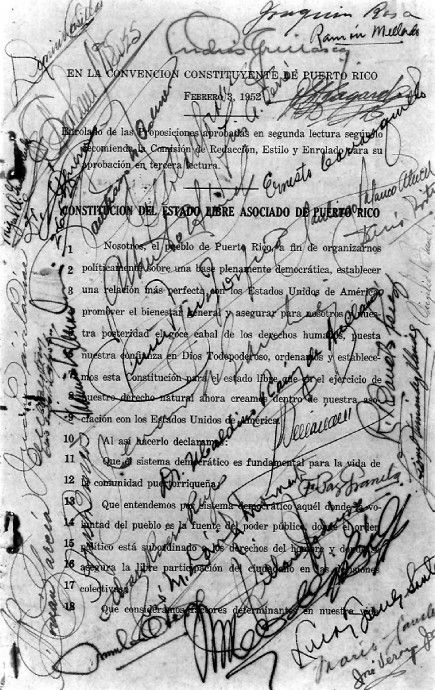
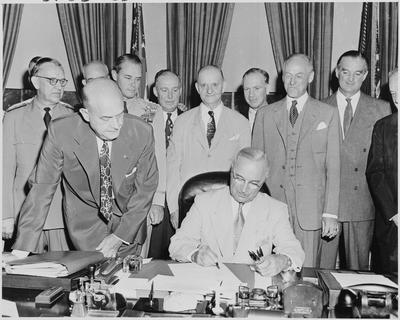
After decades of debate over Puerto Rico’s political future, Congress enacted Public Law 600 (1950), authorizing Puerto Rico to draft its own constitution, subject to congressional approval.
The process included multiple democratic stages:
- Congress approved the enabling legislation.
- The President signed it into law.
- Puerto Rican voters approved Public Law 600 through a referendum.
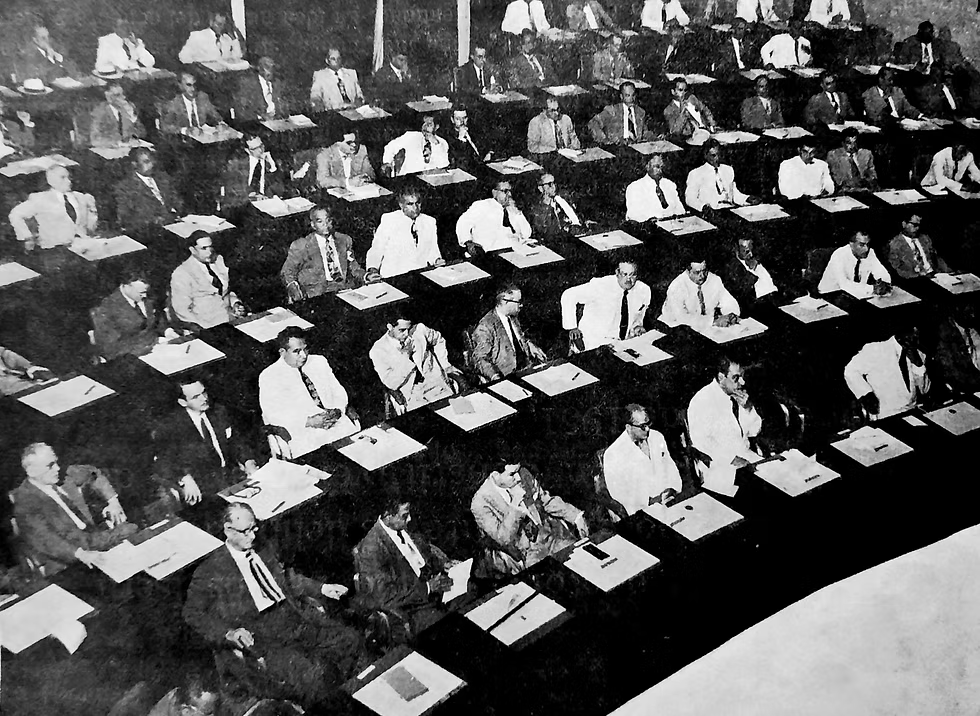
- Puerto Ricans elected delegates to a Constitutional Convention.
- Those delegates publicly debated and drafted the Constitution.
- Puerto Rican voters ratified the completed Constitution in another referendum.
- Congress approved the Constitution with amendments.
- Puerto Rico accepted those amendments.
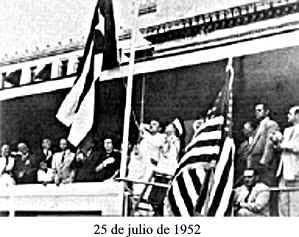
- The Constitution entered into force on July 25, 1952.
One may debate whether Congress retained ultimate authority—and it unquestionably did—but the process itself involved considerably broader public participation than the one that produced the Charter of Autonomy.
The ELA’s Constitution therefore rested on a negotiated political compact ratified through democratic participation on both sides.
II. Democratic Legitimacy- Here the differences become even more striking.
La Carta Autonómica
Democratic participation before adoption was limited. Puerto Ricans did not vote on the Charter. No constitutional convention drafted it. No referendum ratified it. The Spanish Cortes never enacted it.
Instead, Puerto Ricans received a constitutional arrangement negotiated by political elites and granted through executive decree.
Although many Puerto Rican autonomists welcomed the result, acceptance should not be confused with democratic ratification.
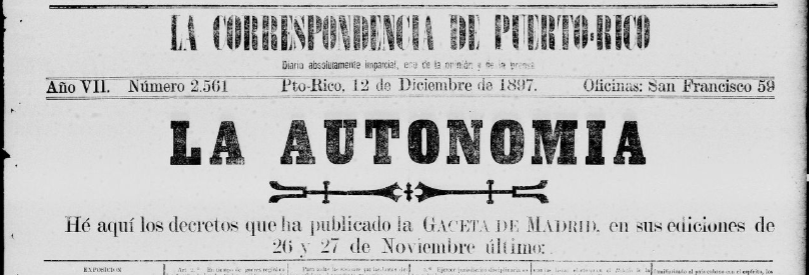
Constitution of 1952- El ELA
By contrast, Puerto Ricans participated directly throughout nearly every stage. The people voted to authorize the drafting process; to elect constitutional delegates; to approve the Constitution itself.
The debates occurred publicly within a constitutional convention. Unlike 1897, Puerto Ricans themselves wrote the governing document. Congress retained final approval, but the Constitution reflected negotiation rather than unilateral imposition.
From the standpoint of democratic legitimacy, the 1952 Constitution possesses a substantially stronger claim.
III. Stability and Constitutional Security -This may represent the greatest difference.
La Carta Autonómica
The Charter lasted only months.
- November 25, 1897 — Charter issued.
- February 8, 1898 — Enacted in Puerto Rico.
- March 27 — Elections.
- April 10 — Cabinet organized.
- April 21 — Martial law declared; civilian government suspended.
- July 17 — Constitutional guarantees restored.
- July 17–24 — Parliament briefly functioned.
- July 25 — American invasion.
Within scarcely two months of inaugurating autonomous government, Spain itself suspended the constitutional guarantees it had just extended. The Governor General dissolved civilian authority under martial law.
This episode vividly illustrates the Charter’s fragility. The legal protections existed only so long as Madrid considered them politically convenient. The rights were not entrenched against executive suspension.
Commonwealth Constitution
The 1952 Constitution has now remained operative for more than seven decades.
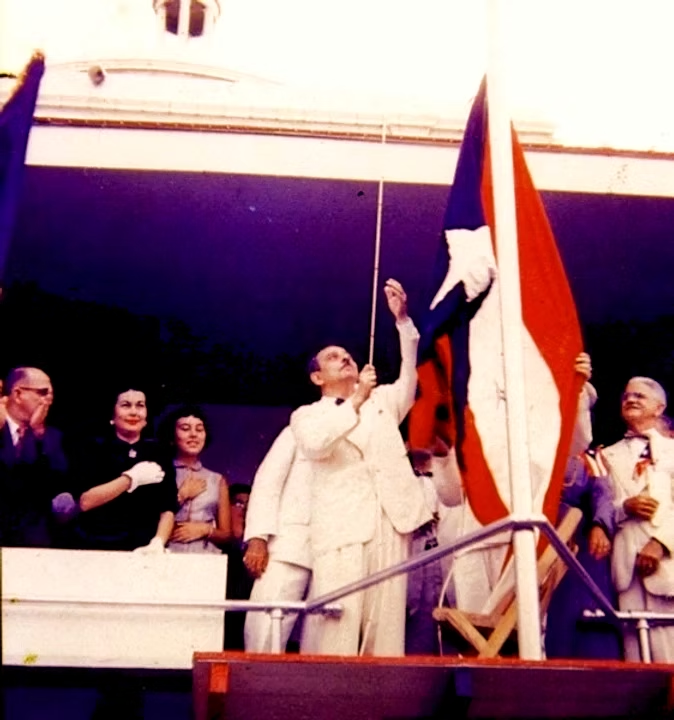
It has survived changes in presidential administrations, shifts in congressional majorities, Cold War politics, civil rights reforms, economic crises, hurricanes, bankruptcy, and multiple status plebiscites.
Congress unquestionably retains plenary authority under the Territorial Clause of the U.S. Constitution, but no President or governor has possessed the unilateral authority to suspend Puerto Rico’s Constitution in the manner exercised by the Spanish Governor General in April 1898.
Its legal durability has proven incomparably greater.
IV. Scope of Self-Government
The Carta Autonómica granted Puerto Rico authority over education, agriculture, commerce, internal taxation, public works, local administration, an elected bicameral parliament, cabinet ministers responsible to that parliament.
Spain retained control over foreign affairs, defense, customs, imperial sovereignty, appointment of the Governor General with the right to suspend the elected government and declare martial law during emergencies.
The Commonwealth Constitution grants Puerto Rico authority over education, health, labor, police, municipalities, internal taxation, public corporations, social welfare, economic regulation, judicial administration, constitutional rights, an elected governor, bicameral legislature, independent judiciary.
The United States retains control over defense, immigration, foreign affairs, customs, citizenship, interstate commerce, currency, federal law, ultimate sovereignty under the Territorial Clause.
Functionally, Puerto Rico today governs a broader and more complex range of domestic policy than was envisioned under the Charter, reflecting the vastly expanded role of the modern administrative state. At the same time, both systems reserved core sovereign powers—particularly defense and foreign affairs—to the metropolitan government.
V. Which Was More Autonomous? The answer depends on what one measures.
If one considers formal internal legislative authority, the two systems share many similarities.
If one considers institutional maturity, the 1952 Constitution governs a far more developed governmental structure with broader responsibilities over education, public health, labor, economic development, environmental regulation, and an independent constitutional judiciary.
If one considers ultimate sovereignty, neither regime conferred sovereignty upon Puerto Rico. Spain retained it in 1897; the United States retained it after 1952.
Thus, describing either arrangement as sovereignty would be inaccurate.
VI. Which Was More Legitimate? Here the historical evidence weighs more clearly.
The Carta Autonómica represented an important liberal reform, but its legitimacy and survival rested largely upon executive grace. It was negotiated largely behind closed doors; issued by royal decree; never enacted by the Cortes; never ratified by Puerto Rican voters; suspended within weeks by executive authority.
By contrast, the Commonwealth Constitution emerged through congressional legislation, presidential approval, popular referenda, election of constitutional delegates, public constitutional deliberation, congressional review, Puerto Rican acceptance of amendments, and continuous operation for more than seventy years.
Scholars disagree over the legal meaning of the “compact” created in 1952 (and rightly so), particularly after later Supreme Court decisions reaffirmed Congress’s territorial authority. But even those debates do not erase the fact that the Constitution’s creation involved a far more participatory and transparent democratic process than the Charter of 1897.
A careful historical comparison suggests that the Carta Autonómica of 1897 was the more precarious constitutional experiment, while the Constitution of the Estado Libre Asociado of 1952 was the more democratically legitimate and institutionally durable one.
The Charter promised significant internal self-government but rested on an unstable legal foundation. It bypassed the Spanish Cortes, depended on a royal decree, and proved vulnerable to the shifting political winds of Madrid. The suspension of constitutional guarantees under martial law only weeks after the autonomous government took office demonstrated how contingent those rights remained.
The Commonwealth Constitution, by contrast, did not establish Puerto Rican sovereignty, and Congress retained ultimate constitutional authority. Yet it emerged through a negotiated process involving enabling federal legislation, popular referenda, an elected constitutional convention, public debate, congressional review, and local ratification.
Whatever one’s view of Puerto Rico’s political status, the constitutional order established in 1952 possessed a degree of democratic participation, procedural legitimacy, and institutional permanence that the Carta Autonómica never achieved.
Part of the democratic process is based on universal suffrage not limited by gender or class and representation within the main legislative party be it the Spanish parliament and the U.S. Congress.
Under the autonomic charter, sixteen Puerto Rican delegates were to be elected by popular vote to represent the island in the cortes of the kingdom while three senators were to be chosen by an assembly of elected officials to serve in the Peninsular Congress. However, representation was not numerically equal to peninsular provinces. This reflected the broader electoral inequalities of nineteenth-century Spain, where representation was not always strictly proportional.
Nonetheless, Puerto Rican deputies sat in the national parliament and were scheduled to participate in Spanish legislation– under the Carta Autonómica whereas to this day, Puerto Rico can send only one elected representative to congress who has a voice but no voting rights outside committees.
Then again- Puerto Ricans elect their governor (along with local senator and representatives and mayors and municipal councilmen) under the constitución del ELA whereas as under la Carta Autonómica he was appointed by the Spanish crown.
The historical irony is that the Charter may have promised more than it could securely deliver, whereas the 1952 Constitution delivered a durable system of self-government that has endured for generations, despite remaining within a territorial framework ultimately subject to the authority of the United States.
Also see: A Few Issues in Puerto Rican History & the Transfer of Sovereignty from Spain to the United States
 in cOHERENT Thoughts
[…] In the next installment we compare the constitution of the Estado Libre Asociado and la Carta Autonómica of 1897– La Carta Autonómica of 1897 and la Constitución del Estado Libre Asociado de Puerto Rico- a Long H… […]
LikeLike