The short-lived nationalist revolt of 1950 has recently become a hot topic of legendary status among social-media self-styled truth-tellers. Unfortunately, their truth telling is marked by bias, disinformation and propaganda of epic level. A phrase from viral clips states: “Puerto Ricans were also bombed by the United States for wanting to be free.”
The saddest part is that he may actually believe this.
Like too many Diasporricans who have styled themselves as truth-tellers of Puerto Rican history, these artists, comics, activists and influencers seem to have inherited a version of the past in which the complexities disappear and everything becomes a morality tale: colonial oppressors on one side, Puerto Rican freedom fighters on the other.
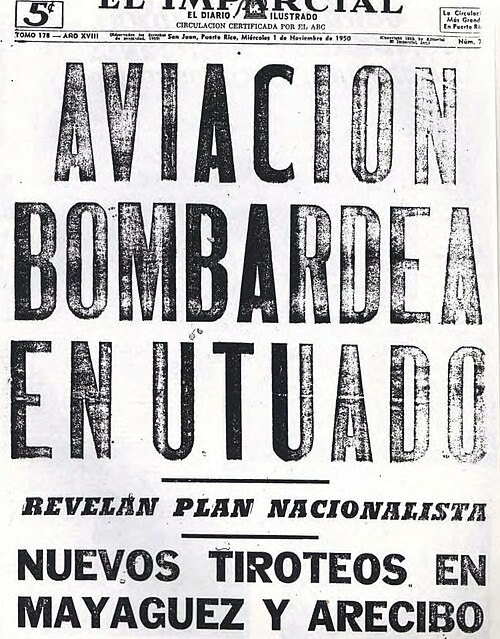
But then there is his deliberate choice of words: “Bombed for wanting to be free.”
First, the Nationalists—not Puerto Ricans as a people—launched the armed insurrection of October 1950. It was not a popular uprising of Puerto Rico against the United States. It was an armed revolt by the Puerto Rican Nationalist Party against the government and the political process then underway.
And that’s a huge difference.
The Nationalists rejected the political process that was leading toward the creation of the Estado Libre Asociado. Congress had authorized Puerto Rico to organize a constitutional government through Public Law 600. Puerto Rican voters approved that process in June 1951; a constitutional convention was elected; and the Constitution was subsequently submitted to the people for approval in March 1952.
The process was hardly free of colonial limitations. There is plenty to debate there. But it was nevertheless a mass electoral and constitutional process in which hundreds of thousands of Puerto Ricans participated.
The Nationalists chose armed rebellion instead. That does not erase the repression directed against the independence movement. Nor does it make every Nationalist a fanatic- though Albizu Campos and his inner circle clearly fit the bill.
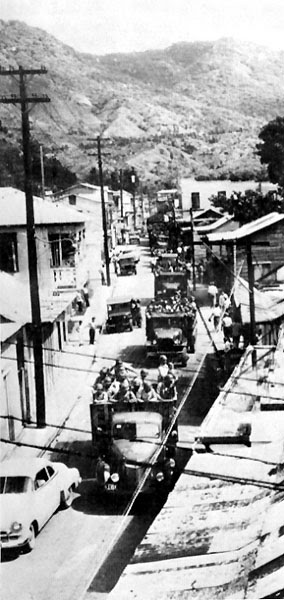
But the statement “Puerto Ricans were bombed for wanting to be free” is intentionally misleading and historically false. Worse yet- it transforms an armed insurrection into a passive act of victimhood.
But that is not the most egregious part of these narratives. The Puerto Rican National Guard- is referred usually as the “US military” and more recently as “United States-backed.” Technically, yes. The Puerto Rico National Guard- like any other- operated within the American military system.
But the phrase is constructed to create the impression that Puerto Rican soldiers were somehow foreign mercenaries doing the Yankees’ bidding. And this is in the rare occasions on which it is acknowledged that the struggle was between the nationalist fighters (augmented by fugitives recently escaped from the Insular Penitentiary) versus the Puerto Rico National Guard, the Insular Police, and firefighters.
But back to the point. These PRNG soldiers weren’t yankee puppets or assassins (asesinos). They were Puerto Ricans. They came overwhelmingly from the working and working-poor communities of the Island. They lived in the same towns as the people they were ordered to protect. They had families, jobs, and neighbors there.
When the insurrection began, Governor Luis Muñoz Marín mobilized the National Guard to support the Insular Police.
Understanding the military aspect matters. The government response was not simply to get the United States to bomb Puerto Rico. In fact, the US authorities and military made a point of not intervening.
Even though martial law was declared during the insurrection – which entitled the White House and the continental U.S. Army troops on the island and in the Caribbean region to a more prominent role in containing the insurrection – Muñoz Marín and the colonial administration made sure that only the Insular Police and the Puerto Rico National Guard participated in the affair.
The commander of the U.S. Army units in Puerto Rico and the Antilles, Brigadier General Edwin L. Sibert, turned his units’ ammunition over to the National Guard during the insurrection, but did not provide aid in any other way.[2]
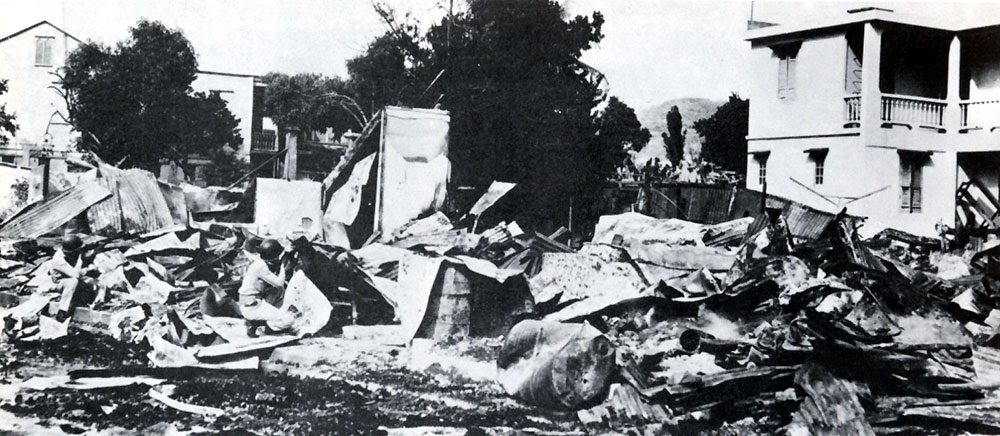
But what of the role of the 295th Regiment of Infantry of the Puerto Rican National Guard and the Air national Guard in quenching the insurrection?
It was a combined-arms operation involving Puerto Rican National Guard ground forces and police, artillery, mortars, and air support. The National Guard’s own historical account distinguishes among these aviation missions. It describes aircraft being used to fly police reinforcements and to conduct reconnaissance and diversionary missions. Those were not the same thing as the P-47 Thunderbolts conducting the combat air operations. The Puerto Rico Air National Guard had P-47 Thunderbolts in its inventory, and historical accounts document their use in the operations against Jayuya and Utuado.
Yes, the P-47s bombed and strafed Jayuya and Utuado. We should not sanitize that. Contemporary reporting described P-47 Thunderbolts bombing and strafing Jayuya, while later historical accounts likewise document aerial attacks against both towns.
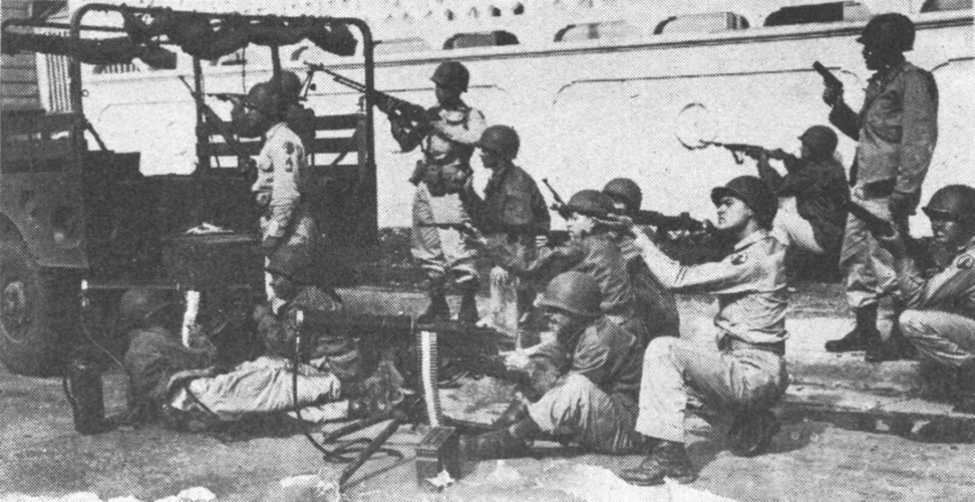
But here’s the part that gets lost when someone reduces the entire event to “Puerto Ricans were bombed for wanting to be free.”
Look at what the military operation was actually doing. The Nationalist forces had occupied and defended positions in the mountain towns. The National Guard and police were advancing on them from the ground. The aircraft provided support for that advance.
From a military standpoint, the pattern is recognizable: air-ground coordination designed to put pressure on a force holding a fixed position while ground troops advance, isolate, and reduce the perimeter.
Some accounts describe smoke or marker bombs being used to identify positions for advancing forces. Whether every account can be independently verified from surviving operational records is a separate question; I would not confuse that with the documented fact of P-47 bombing and strafing. But smoke bombs are a tool used by air forces to signal ground forces where to go.
But the broader tactical logic is clear. This was not an aerial campaign designed to conquer Puerto Rico or massacre the nationalists and civilians indiscriminately. It was air support for a ground operation against an armed insurgent force concentrated in particular towns and positions.
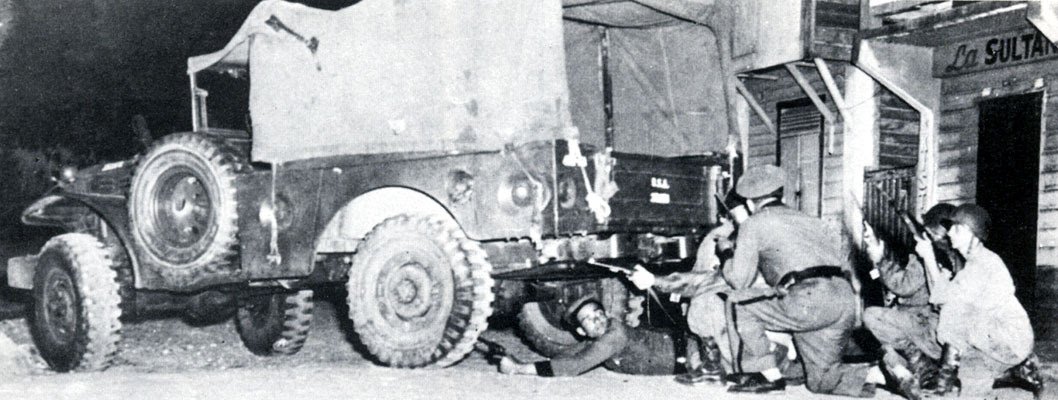
And that distinction matters enormously. The objective was to break the Nationalists’ ability to hold those positions while the National Guard and police advanced. That is why the casualty figures are so important. If the objective had simply been to destroy the towns and everyone in them, the military could have employed overwhelming firepower indiscriminately.
They didn’t. In fact, they showed incredible restraint. Instead, the ground forces advanced, the Nationalist positions contracted, and the insurgents eventually surrendered.
That does not make the operation gentle. Nor does it deny the bombing. It certainly does not mean civilians weren’t placed in danger. It means that “they bombed Puerto Ricans because Puerto Ricans wanted freedom” is an extraordinarily poor description of what the military operation actually was.
And it erases the people on the ground. The Puerto Rican National Guard. Those Guardsmen were not Yankees. They were Boricuas. They were Puerto Rican men—the majority from working-class and working-poor communities—who had been ordered to suppress an armed rebellion against a very popular and duly elected government.
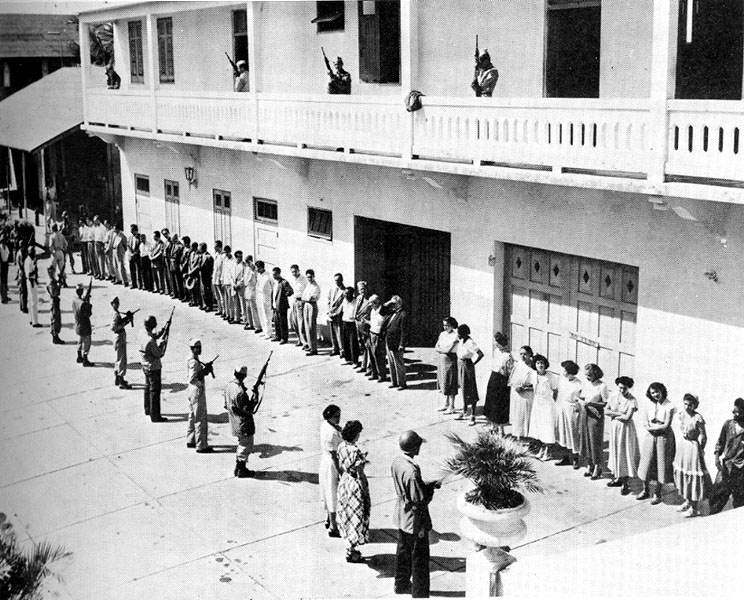
They were not foreign troops arriving in Puerto Rico. They were not mercenaries. They were not some alien colonial force. They were Puerto Ricans wearing the uniform of a respected Puerto Rican military institution operating within the American federal system.
And the National Guard (and unlike the rest of the U.S.- the Army Reserve too) would continue to play precisely that dual role for generations: military service intertwined with community service. These were the same kinds of Puerto Rican soldiers who would also serve in Korea and Vietnam and who would repeatedly leave their own families to respond to hurricanes, earthquakes, and other disasters.
They were building Puerto Rico too. In fact- as I have argued elsewhere- the tens of thousands of Puerto Ricans who served during WWII and the Korean war period- were the most important pillar in the making of modern Puerto Rico. And they overwhelmingly came from the poor and poor-working classes- both from the country side and from the urban centers.
These narratives identifying the Puerto Rican soldiers as asesinos or Yankee lackeys, or mere puppets who didn’t know what they were doing- is part of a long-lived nationalist narrative seeking to strip you of your Puertoricaness or at least call it into question if you are not with them.
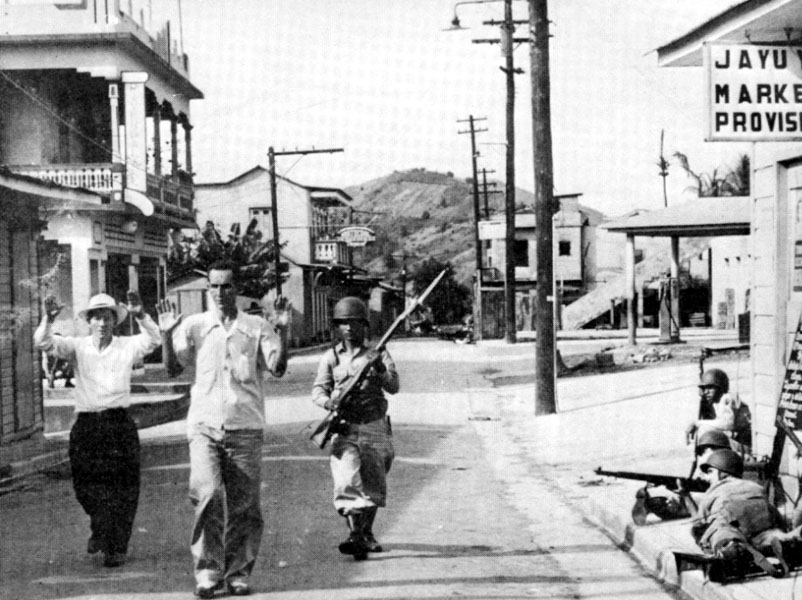
And in this case, they are doing that to the popular sectors- and to the people who toiled the land and sacrificed so much to build a new Puerto Rico. It doesn’t get more hypocritical and obscene than that.
Then there is Utuado. Here the mythology becomes even more revealing. The familiar version tells us that nine Nationalists surrendered, were stripped of their shoes, belts, and possessions, taken behind the police station, and summarily machine-gunned.
One version adds the gruesome story of seventeen-year-old Antonio González pleading for water before being bayoneted.
It is an extraordinarily powerful story. It is also precisely the kind of story historians are supposed to investigate rather than simply repeat. The evidence is considerably more complicated.
Nationalists certainly died after surrendering. Several were killed and others wounded. But the accounts of exactly how those deaths occurred are contradictory.
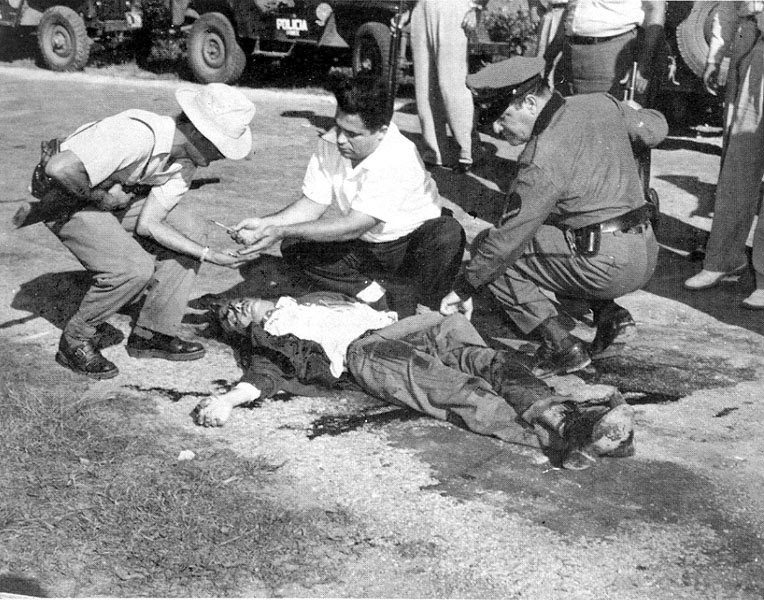
The work of Seijo Bruno, who is hardly unsympathetic to the Nationalists and interviewed Nationalist participants and witnesses, presents a much more complicated picture of what happened.
Their testimony points toward a confused and deadly exchange of fire between national Guard soldiers. Nationalists surrendered to PRNG soldiers. The soldiers proceeded to search them and strip them of belts and shoes– which was customary when taking combatant prisoners in a war zone.
Then they were ordered to escort the nationalist prisoners behind friendly lines late that evening.
National Guard soldiers manning a picket line saw the approaching column and, apparently believing they were under attack, opened fire. The firing struck both the surrendered Nationalists and members of the National Guard escorting them. And the scared and very young national guard soldiers did not dare leave their position for hours after shooting what they thought was an attacking nationalist column.
That is a tragedy. It is also very different from the neat story of guardsmen deliberately lining up helpless prisoners and executing them. A confused and deadly exchange of friendly fire is not the same historical event as a premeditated execution.
One requires us to investigate panic, command, discipline, communication, and responsibility. The other requires evidence of deliberate execution. We should not turn one into the other because one makes a better story.
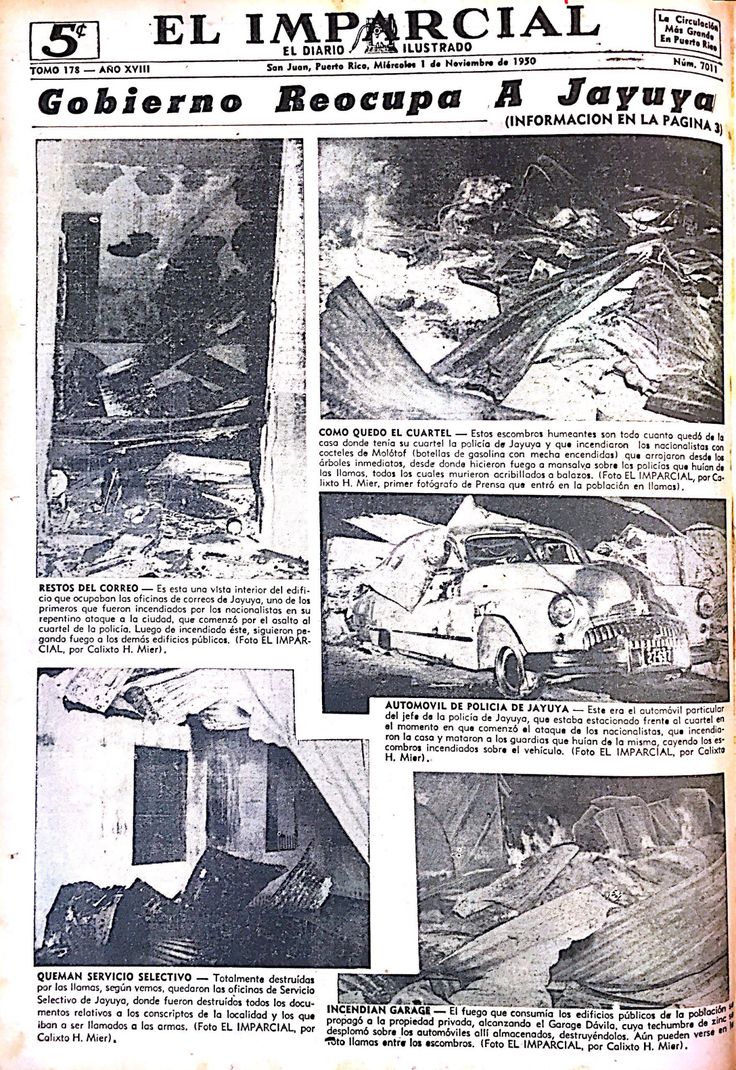
And the same principle applies to the bombing. I am not arguing that the bombing did not happen. It did. I am not arguing that P-47s did not strafe. They did. I am not arguing that civilians were not endangered or that Jayuya and Utuado did not suffer substantial destruction. They did too.
What I am arguing is that the military operation needs to be understood as a military operation against an armed insurrection.
The P-47s were providing aerial support to ground forces attempting to isolate and defeat an armed insurgency. Other aircraft were performing reconnaissance, transportation, reinforcement, and diversionary missions. The National Guard and police were advancing on the ground.
That is a very different historical proposition from: “The United States bombed Puerto Ricans for wanting to be free.” The latter is a propaganda slogan. The former is history.
But there is an even deeper problem. This narrative does not merely demonize the United States. It demonizes Puerto Ricans who were not with the nationalists- which by all accounts was the vast majority of the island.
The Puerto Rican working class becomes suspect because it did not follow the Nationalists. The National Guard and the Puerto Ricans served in it become asesinos, vende patrias or at best, puppets. The voters who inscribed to participate in the constitutional process as soon as the revolt had been suppressed also become suspect because they did not choose independence or to die for la patria.
In essence- everyone who did not follow Albizu Campos and the Nacionalistas – or more than 90% of the Puerto Ricans was either a coward, a puppet, or a traitor and unworthy of Puerto Rico.
That is cult mentality.
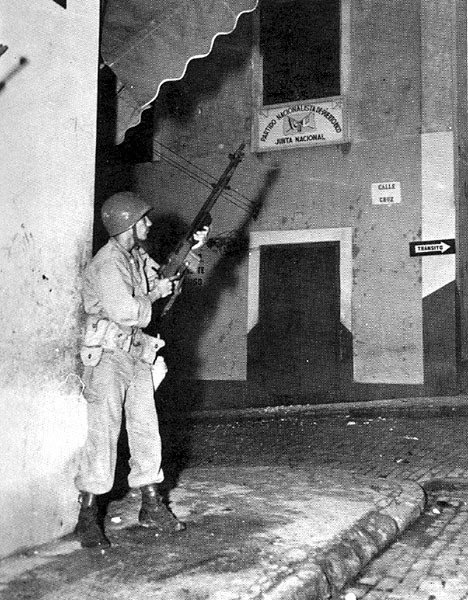
If you aren’t with them, the argument goes, you simply don’t know better- and your Puertoricaness comes into question. That is not a new idea. It goes back much further.
The Nationalist movement developed an intellectual and political tradition that claimed to possess a more authentic understanding of Puerto Rico than ordinary Puerto Ricans themselves. Albizu Campos was its most powerful twentieth-century expression.
The contemporary version simply repackages that old paternalism for a new audience. And that is why I object to this history—not because Puerto Rico’s colonial history should be sanitized, and certainly not because the actions of the United States government should be excused.
Quite the opposite. Puerto Rican history deserves better than propaganda from either side.
It deserves the messy truth: colonialism and agency; repression and resistance; Nationalists and Popular Democrats; soldiers and civilians; elites and working people; Island Puerto Ricans and the diaspora.
Most of all, it deserves to recognize that Puerto Ricans themselves—not just the people who claim to speak for them—have always been historical actors.
They made choices. They had agency like any historian worth 2 cents knows. Further, there is no prescribed or ordained history – we make history with our agency and choices. Puerto Rico has not been robbed of a messianically ordained historical trajectory. Not in 1868, neither in 1898, and much less in 1950 or 1952.
And a “history” that refuses to recognize that is not liberating Puerto Ricans. It is simply replacing one uncomfortable history with mythology and nationalist propaganda. That is not history- that is a political project disguising itself as education and liberation.
The battle for Puerto Rico rages on.
Previous article: The Nationalist Revolt and the Creation of the Estado Libre Asociado of Puerto Rico (part three); The Insurrection’s Aftermath – in cOHERENT Thoughts


[…] Continue reading: The Nationalist Revolt and the Creation of the Estado Libre Asociado of Puerto Rico: (Part Four) Did… […]
LikeLike
[…] Previous article: The Nationalist Revolt and the Creation of the Estado Libre Asociado of Puerto Rico: (Part Four) Did… […]
LikeLike