Who Deserves to Have Their Name on the Side of an Aircraft Carrier?
We are living in such bizarre—and increasingly dangerous—times that the United States Navy is reportedly considering renaming the future Ford Class aircraft carrier CVN-81, originally designated the USS Doris Miller, perhaps after President Donald Trump.
Let that sink in for a moment.
This is not yet an announced decision. It is, according to reporting based on people familiar with internal Navy discussions, something being considered. But sometimes what a government considers tells us almost as much as what it ultimately does.
And if the reports are true, the question is not simply whether Donald Trump deserves to have a $13 billion-plus nuclear-powered aircraft carrier named after him. The question is: What exactly do we mean when we talk about honor?
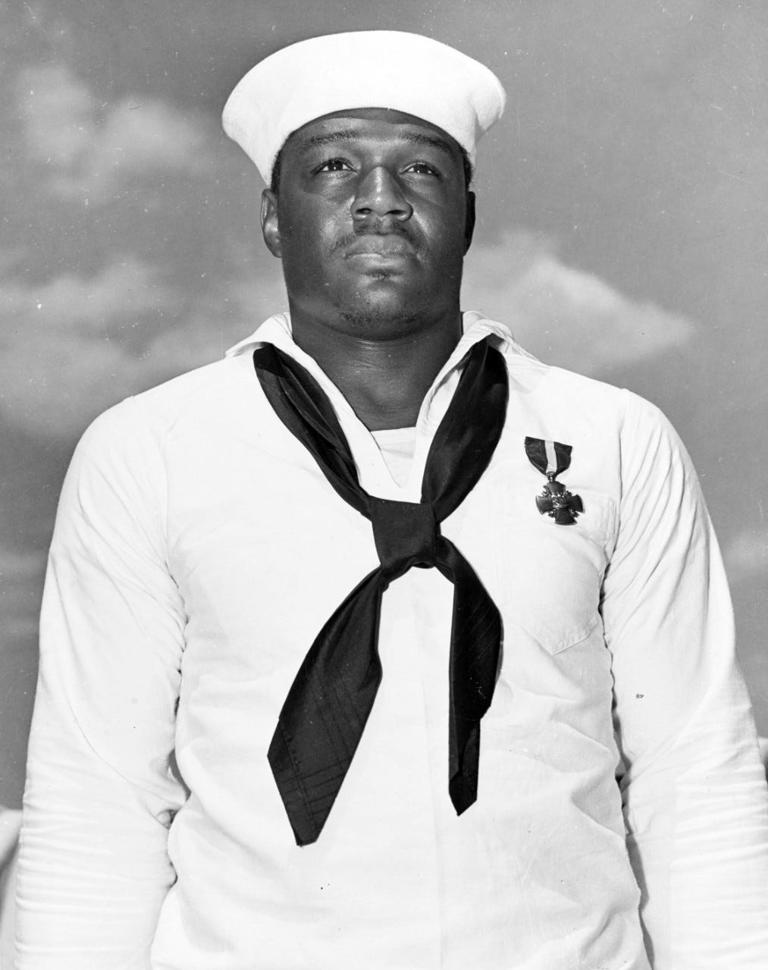
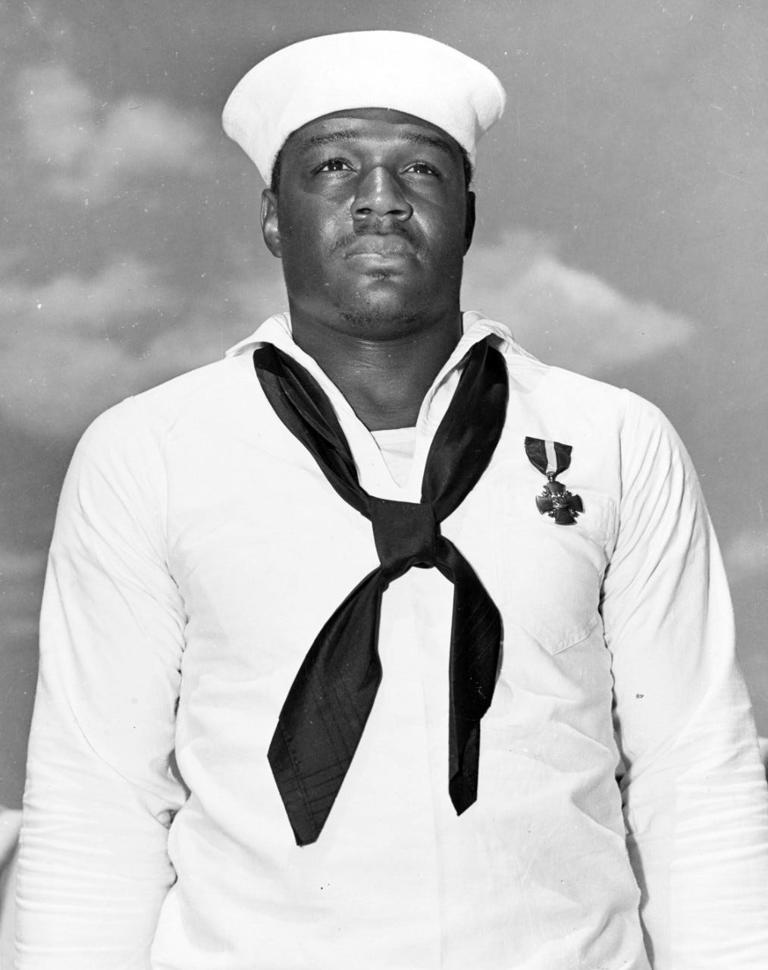
Because the man whose name was supposed to be on that carrier already answered that question. His name was Doris “Dorie” Miller.
Miller was an African American sailor from Waco, Texas, who enlisted in the United States Navy in 1939. He entered a Navy that did not allow Black sailors to serve in the combat roles available to white sailors. Instead, African Americans were largely confined to mess and service duties.
Miller was a mess attendant. That was the job the Navy’s racial hierarchy had decided a Black man was qualified to perform.
Then came December 7, 1941. When Japanese forces attacked Pearl Harbor, Miller was serving aboard the battleship USS West Virginia. His assigned battle station was in an ammunition-handling room. One of the first torpedoes that struck the ship destroyed that position.
So Miller went to the bridge.
There, under Japanese strafing and bombing and amid fires and chaos, he helped move his mortally wounded captain to safety. Then he did something he had never been trained to do: he took control of a .50-caliber anti-aircraft gun and fired at Japanese aircraft.
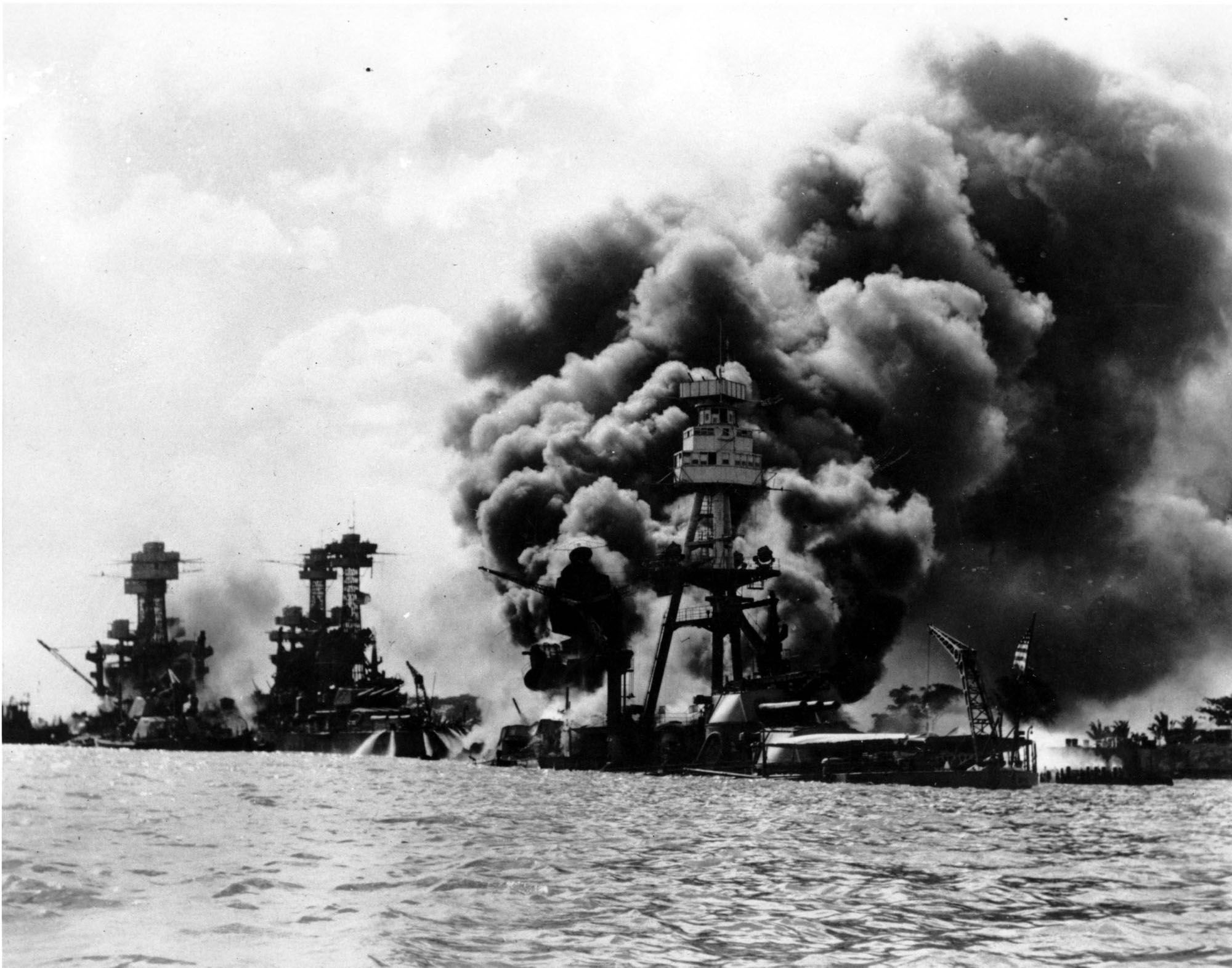
The Navy’s own historical account describes his conduct as extraordinary courage and devotion to duty. He helped save the lives of fellow sailors and continued operating the machine gun until ordered to leave the bridge. The Navy credits him with possibly helping bring down one or more attacking aircraft.
Think about the absurdity—and the magnificence—of that moment. The Navy had decided that Doris Miller was not qualified to be a combat sailor. The Japanese did not care- to them him and any other aboard the ship was a combatant. The bullets, bombs and torpedoes did not care. The burning ship did not care.
And when his country needed him, Miller did not stop to ask whether America had yet decided he was worthy of defending it. He defended it anyway. He defended the ship. He defended the flag. And above all, he defended and aided his fellow sailors- some of which might’ve looked at and treated him as racially inferior. He did not care. He fought to save them.
He defended a country that still maintained a racial system that told him, in effect, that he was good enough to serve it but not good enough to fight for it. That is the part of Miller’s story that should make us uncomfortable. Because patriotism is easy when your country recognizes your humanity. It is something else when you love and defend a country that has not yet learned to love and defend you equally.

For his actions at Pearl Harbor, Miller was awarded the Navy Cross in 1942. Admiral Chester W. Nimitz personally pinned the medal on his chest aboard the aircraft carrier USS Enterprise. Miller became the first African American sailor to receive the Navy Cross. Even though they have been serving in it since the revolutionary war!
Nimitz understood the significance. The country, perhaps, was beginning to understand it too. But not quickly enough.
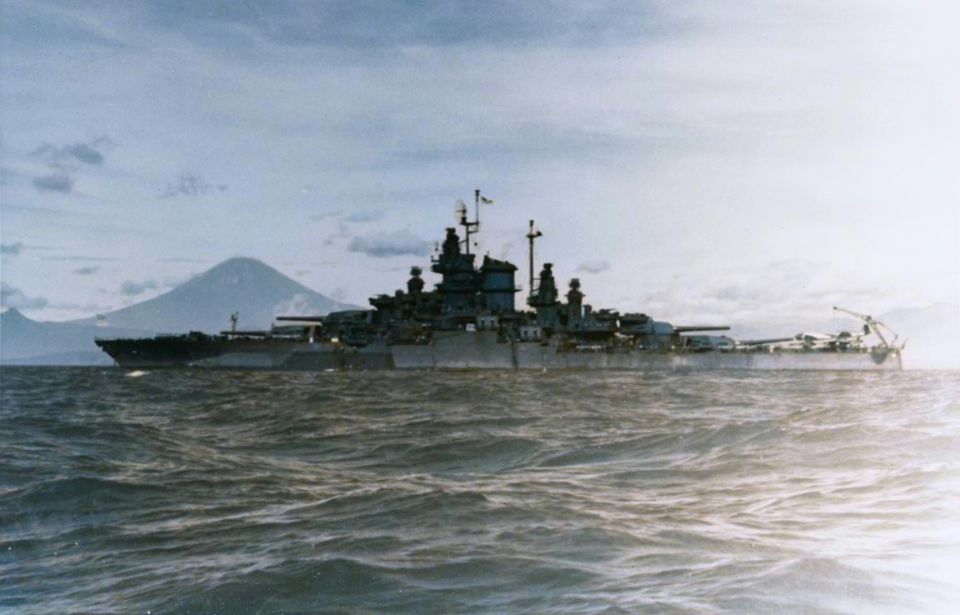
Miller continued serving. In November 1943, he was aboard the escort carrier USS Liscome Bay when a Japanese submarine torpedoed the ship during the invasion of the Gilbert Islands. The carrier sank, and Doris Miller died with it.
He was 24 years old. Still serving, still doing his duty. Still paying the price.
And here is where the story becomes even more difficult to explain. For decades, Miller’s family, veterans, civil rights organizations and members of Congress have pushed for him to receive the Medal of Honor, the nation’s highest military decoration.
Congress has repeatedly considered legislation to authorize a posthumous award. The most recent bill, introduced in 2025, states explicitly that Miller was relegated to service duties because African Americans were barred from combat roles and argues that his actions deserve the nation’s highest military honor. It also notes that of the 15 sailors awarded the Medal of Honor for actions during the Pearl Harbor attack, not one was African American.
That statistic should stop us cold. Fifteen. Not one Black sailor.
Miller was not asking for special treatment when he manned that antiaircraft gun. He was not receiving a diversity preference. He was not the beneficiary of an affirmative-action program. In fact, it was the complete the opposite. The Navy’s racial policies had left him technically unprepared and untrained to do what he did. He had been shorthanded by his own country.
But there he was, doing exactly what we claim military service is supposed to be about: displaying courage, initiative, selflessness and devotion to his comrades and country. Being a true American hero. Unplanned, unscripted, unprompted- just raising to the occasion.
And yet the system that had deemed him unworthy of a combat position somehow had no difficulty partially accepting his courage when the bombs started falling.
That is the irony at the heart of the entire DEI debate. People who rail against Diversity, Equity and Inclusion often describe it as an attempt to lower standards. But historically, the problem was frequently the opposite.
The problem was that we had standards—and then applied them differently depending on who was being judged. Doris Miller is not a story about lowering the bar. He is a story about discovering that the bar had been placed in different locations for different Americans.
And that brings us back to CVN-81.
In 2020, the Navy announced that its fourth Ford-class aircraft carrier would be named USS Doris Miller.
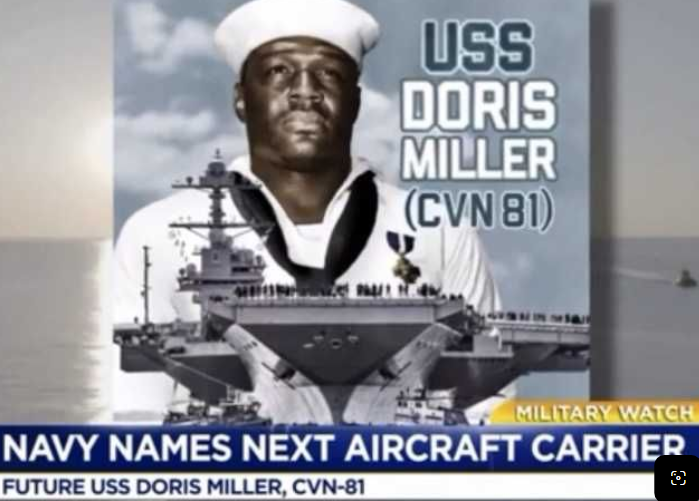
The decision was significant. An aircraft carrier is not just another ship. It is one of the most powerful symbols of American military power on earth. Naming one after Miller was a recognition that American military history belongs to more than admirals, generals and presidents.
It belongs to the mess attendant who picked up a machine gun when his country needed him. It belongs to the Black sailor who was considered fit to serve food but, when history called, proved himself fit to face an enemy. It belongs to the people who were once told that they were second-class Americans and nevertheless risked their lives to defend the first-class country they believed America could become.
That is why changing the name would matter. Not because Doris Miller needs a ship. He has been dead for 83 years. He doesn’t need the honor- that no one can ever take from him.
But we do. We need the reminder.
We need to remember what courage, duty and honor look like.
And perhaps most importantly, we need to remember that America’s history is not a story in which greatness has always belonged to the people who possessed the most power.
Sometimes greatness came from the galley, from the bottom deck.
Sometimes it came from people whom the nation had not yet learned to see.
There is another irony here. The Navy’s traditional policy since 1969 was that vessels should not be named for living persons. The policy was designed, in part, to avoid the reputational and political problems that can arise when a living honoree subsequently becomes controversial. The Navy later made exceptions, including for living former presidents (George H.W. Bush and Jimmy Carter) and other prominent figures.
So, yes, there is precedent for naming ships after presidents. But precedent is not the same thing as wisdom.
But a sitting president using the machinery of government to put his own name—or have his name put—on one of the most powerful warships in the world is a fundamentally different proposition from honoring a deceased American whose extraordinary sacrifice has already passed the test of history. And should give us all pause.
Especially when the alternative is Doris Miller. And especially now. Because this administration has spent enormous political energy attacking DEI as though acknowledging the contributions of historically excluded Americans somehow diminishes everyone else.
Defense Secretary Pete Hegseth has repeatedly portrayed DEI as an ideological threat and emphasized a return to what he calls merit and warfighting standards.
Fine. Prove it. Let’s talk about merit and standards. Let’s talk about Doris Miller. What standard did he fail to meet? What merit did he lack? What additional credential would have made his courage more legitimate? What diversity bureaucrat gave him permission to grab that machine gun? Nobody. No one appointed him. No one promoted him into the role. No affirmative-action officer put his name on a list. In fact, and this is worth repeating- the racial polices and attitudes of the time left him unprepared for that moment– at least in terms of training.
But he saw his shipmates in danger and acted. That is merit, courage, and selfless service and duty. Honor of the rarest and highest quality.
And that is why the current controversy is so revealing. Because while the administration lectures the rest of us about meritocracy, it is reportedly considering replacing the name of a man whose entire life story demonstrates how American institutions once systematically prevented merit from being recognized in the first place.
That is the very thing DEI was supposed to confront. Not mediocrity. Not entitlement. Not favoritism. Privilege. The privilege of assuming that certain people naturally belong at the top. The privilege of believing that recognition is something that should flow toward the powerful. The privilege of confusing proximity to power with evidence of greatness.
And that brings us to another uncomfortable comparison.
Just days ago, President Trump dismissed concerns about the extraordinary deployment of the USS Abraham Lincoln, whose sailors and Marines have spent more than 250 days at sea in an extended deployment. Families and lawmakers have raised concerns about conditions aboard the carrier, including food, supplies and the mental health of the crew.
Trump’s response? The deployment was “not nearly long enough.”
Imagine the contrast. Doris Miller died aboard a ship while serving his country. The sailors of the Abraham Lincoln have spent months at sea performing an extraordinarily demanding mission.
One story is from the 1940s. The other is happening now.
But the principle should be the same: Those who serve deserve to be seen. They deserve to be heard. They deserve respect. And their sacrifices should never become props in somebody else’s political mythology.
There is something profoundly American about naming a warship after Doris Miller. He represents a country that was imperfect but capable of becoming better. He represents the contradiction between American ideals and American practices.
He represents the Black Americans, Latinos, Asian-Americans, Puerto Ricans, and the common soldiers, sailors, aviators and marines… who fought in America’s wars while fighting for America to live up to its own promises.
And he represents something else we desperately need in this moment: A conception of patriotism that is bigger than any president.
Because presidents come and go. Political movements and administrations too. Ships eventually go to the bottom of the sea or are scrapped for metal. But the ideals we attach to their names can outlive all of them.
Donald Trump does not need an aircraft carrier to validate his presidency or legacy- history will judge that.
Just like Doris Miller does not need one to validate his courage- history has recognized that.
But the United States of America needs the CVN-81 USS Doris Miller to remind itself what courage actually looks like- and the true equality this country has striven for.

And if the administration truly believes that DEI is unnecessary because America is already a pure meritocracy, then perhaps it should pause for a moment and consider the life of Doris Miller.
A Black sailor whom his own Navy had decided was fit to serve food but not fight. A sailor who, when the bombs and bullets came, did both. A sailor who died in service to a country that had not yet decided to give people like him full equality. A sailor who never asked what America owed him. He simply did his duty.
Maybe that is the lesson.
Honor is not something you demand. It is something you earn.
Privilege demands recognition. Courage earns it.
And if the choice really comes down to putting the name of a living politician on an aircraft carrier or preserving the name of a young Black sailor who gave his life defending the United States when his country had not yet fully accepted him as an equal— I know which name I want painted on the side of that ship.
USS Doris Miller.
Not because he was Black. Not because it is DEI. Not because somebody wants to rewrite history.
But because he was a damn American hero who didn’t ask a damn thing from his country but gave it all for it.
And because, in a country increasingly confused about the difference between power and honor, we could use the reminder.
Continue Reading: No, the USS Abraham Lincoln Is Not a Cruise Ship. That Is Precisely the Point.


[…] Continue reading: Honor Is Earned, Not Demanded: Doris “Dorie” Miller Was a Damn American Hero […]
LikeLike