Assimilation is an admission of inferiority—and colonial subjugation.
We have to talk about race and racial projects because they are part of our history. An integral part of it. Racial considerations have impacted everything from colonial and immigration policies to annexation, territorial expansion, and even foreign policy. That is not just true of the United States, but of all European powers that, after 1492, created global empires. It is also true of former Spanish colonies after winning independence.
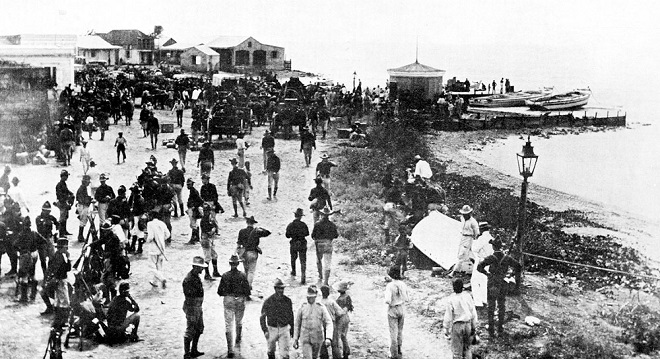
But I want to focus on the United States because this post is about Puerto Rico—and about the sad pitiyanquismo that began in 1898 and continues to shape the worldview of too many within the annexationist, or pro-statehood, movement in Puerto Rico today.
The larger story, however, begins much earlier.
The United States and the Expansion of a White Republic. One thing about the United States’ origins as a sovereign country is that an important factor leading to the War of Independence was the desire to continue the colonial projects and imperial expansion initiated by the English in North America.
The newly independent United States inherited an enormous contradiction.
It had been born proclaiming liberty, equality, and popular sovereignty while simultaneously dispossessing Indigenous peoples, enslaving Africans and their descendants, and expanding across a continent inhabited by peoples who had never consented to becoming part of the new republic.
But because of its revolutionary narrative, the United States could not simply reproduce European colonialism in precisely the same language. The United States therefore developed a peculiar model of continental empire.
Rather than openly maintaining all newly acquired territories as permanent colonies, the expectation was that territories would eventually become states of the Union—with representation and political rights. That distinction mattered.
Because the non-incorporated lands belong to the state—they also represented an easy income source for Congress—in particular the land between the Mississippi River and the western boundaries of the original colonies. Previous laws passed by Congress had stated that these lands would not be made into colonies but would be allowed to enter the Union as full states.
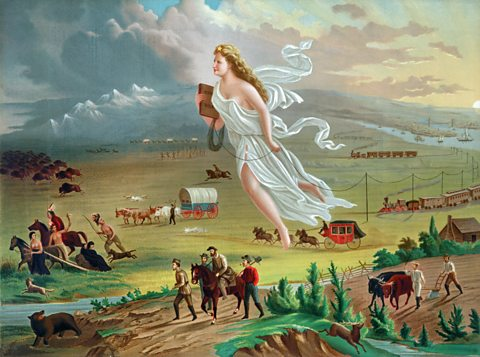
The problem was obvious: if territories were eventually going to become states, who would populate them? And, more importantly, what kind of people would populate them? The answer was embedded in the very first federal naturalization law.
The Naturalization Act of 1790 established the first rules for acquiring U.S. citizenship. It limited naturalization to “free white persons” of “good moral character” who had resided in the U.S. for at least two years. This was not an incidental description. The new republic was defining citizenship through race.
The United States, like the European empires from which it had emerged, engaged in the demographic and cultural construction of a “nation” through European migration and white settler colonialism.
The objective was not simply to acquire land. It was to populate that land with people considered capable of belonging to the political nation.
Those policies included removing, reducing, and concentrating Indigenous populations in areas where they could be managed. They also included the criminalization of racial mixing (miscegenation) and the reduction of the Black population. In other words, the expansion of the United States was simultaneously an expansion of territory, citizenship, and whiteness.
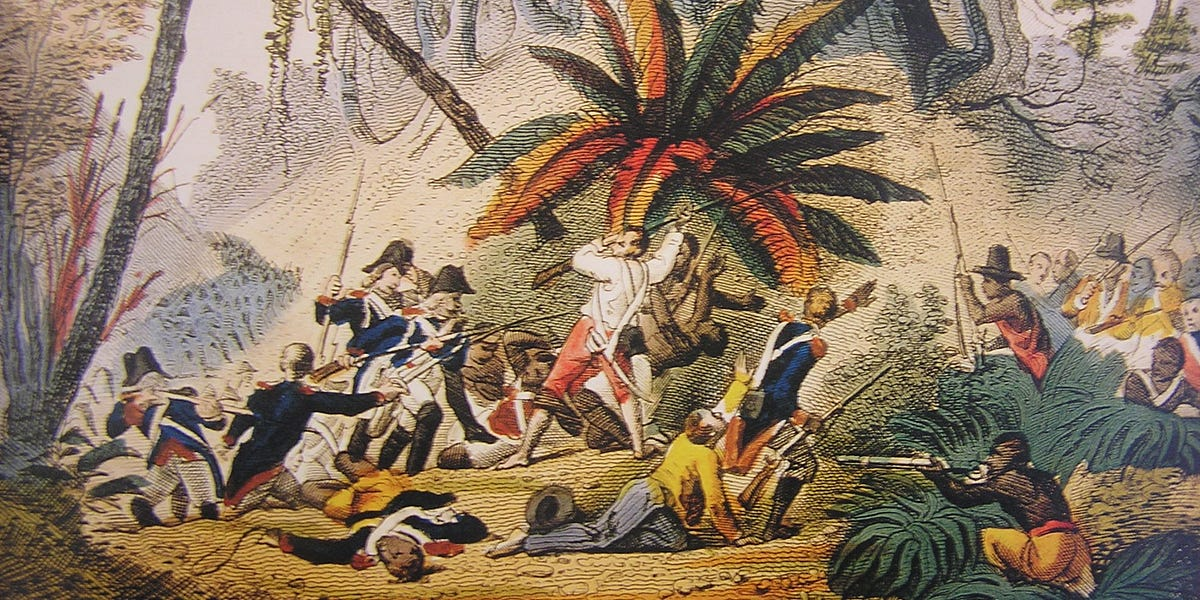
Haiti and the Fear of Black Sovereignty- The racial project becomes even clearer when we look at Haiti. In 1808, the United States banned the slave trade. But this was done largely in the context of domestic political calculations and fears surrounding the growth of the enslaved Black population—and especially the example set by the Haitian Revolution.
Fear of Haiti mattered enormously. In fact, even though the United States had strategically compelling reasons to support the Haitians in their revolution—including weakening French power in the Caribbean—racial beliefs and the ideology of white supremacy prevented such an alliance.
The United States would not officially recognize Haitian independence until 1862. That delay was not accidental. It reflected the profound fear that the Haitian model of Black sovereignty, citizenship, and emancipation represented to a slaveholding republic engaged in its own territorial expansion. Haiti was particularly threatening because it demonstrated that formerly enslaved people could overthrow a European empire, establish a sovereign state, and define political membership in ways radically different from the United States.
The Haitian Revolution was therefore not simply a Caribbean event. It was a challenge to the racial foundations of the American republic- and to all global empires which had being built upon the pillar of racial hierarchies.
Westward Expansion and the Problem of the Non-White American. Those tensions became unavoidable as the United States expanded westward. Those policies—expansion and whitening—would be tested as the United States expanded westward.
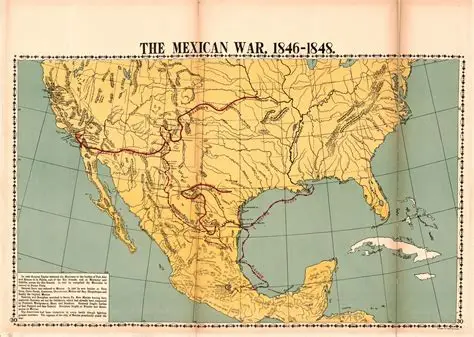
The Mexican-American War of 1846–1848 created precisely the problem that American expansionists had hoped to avoid. The United States acquired enormous territories populated by people who were not easily incorporated into the racial definition of the American nation.
A heated congressional debate followed the Mexican-American War. The debate was centered around the ratification of the Treaty of Guadalupe-Hidalgo, in which Mexico ceded about a third of its territory to the United States. With the annexation of more than 525,000 square miles of land, the Treaty of Guadalupe Hidalgo extended the boundaries of the United States west to the Pacific Ocean.
About 80,000 to 100,000 people of Mexican, Spanish, or mestizo descent lived in these territories—along with Pueblo, Ute, Navajo, Apache, and other nations whose ancestral territories overlapped with the ceded lands, but whose numbers were not tallied.
The question was no longer simply how much territory the United States could acquire. It was whether the United States could incorporate the people who came with it.
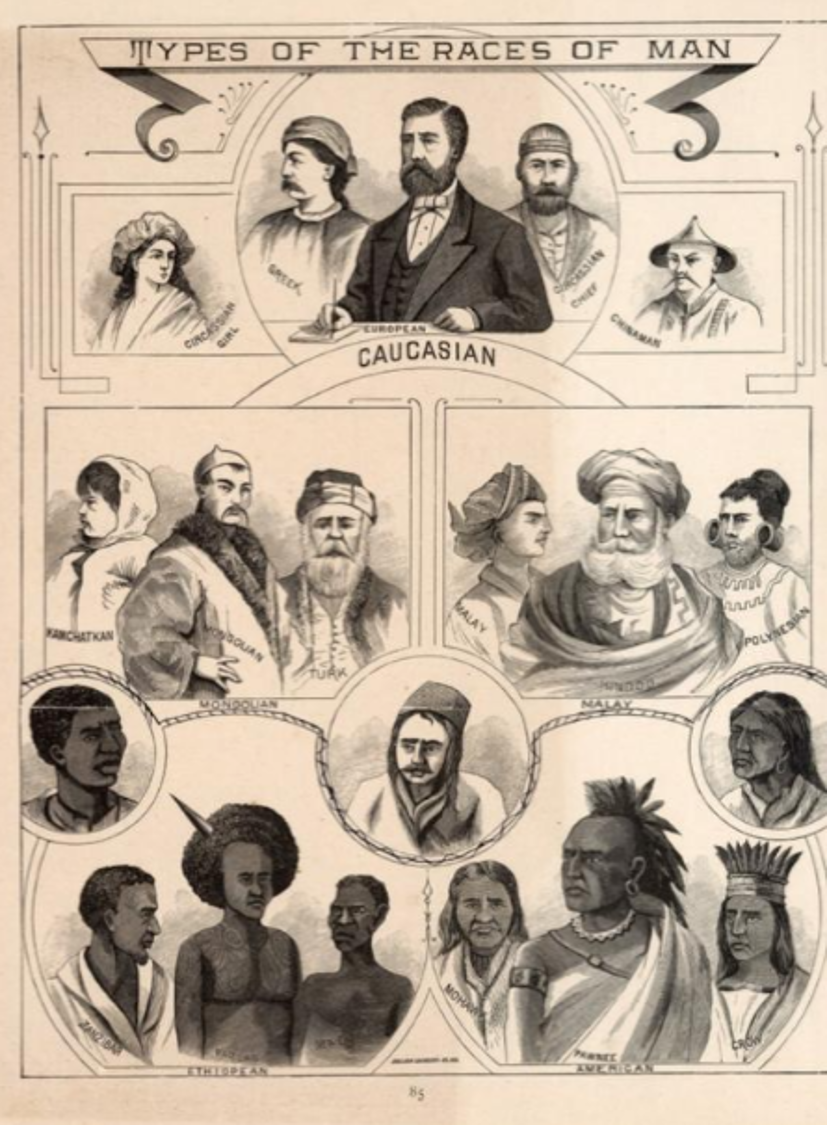
Senator John C. Calhoun demonstrated the racial and national prejudices of many when he asserted that the United States only wanted the parts of Upper Mexico that were lightly settled by Mexicans because, according to him, the United States was an empire or nation of, by, and for white Americans.
Calhoun strongly attacked the idea from the Declaration of Independence that “all men are created equal.” He argued that that principle was “false and dangerous” when understood literally. Speech on the Oregon Bil,” (June 27, 1848, U.S. Senate). Moreover, in his speech January 4, 1848, on the Mexican War (“Conquest of Mexico” speech), Calhoun opposed annexing all of Mexico.
His opposition centered especially on concerns about incorporating large populations of Mexicans who, in his view, were racially mixed — Indian, Indigenous, mixed (“mestizo”) — which he claimed would threaten the “character” of the United States. Calhoun said: “We have never dreamt of incorporating into our Union any but the Caucasian race — the free white race.”
That statement is extraordinarily revealing. The problem with Mexican annexation was not simply political. It was racial. The United States could expand its territory indefinitely, but its leaders repeatedly confronted the question of whether the people inhabiting those territories could become Americans.
Making the West White- Policies and practices—both legal and illegal—helped initially to dispossess, displace, and reduce Indigenous and Mexican or Hispanic-origin populations in the Southwest. This was the logic of settler colonialism. The land could be incorporated into the United States more easily than its inhabitants.
The United States would then encourage European migration, establish political and economic institutions controlled by white settlers, and gradually transform the demographic and cultural character of the territories. The process was neither uniform nor inevitable, and “whiteness” itself was never a fixed category. It expanded and contracted depending upon political circumstances.
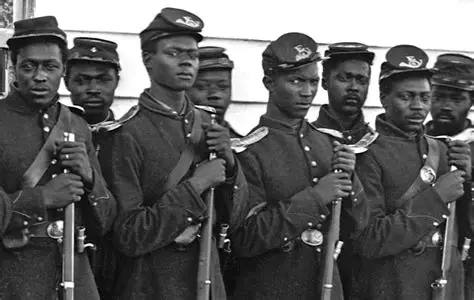
But the larger objective remained remarkably consistent: the construction of a political nation whose presumed norm was white.
The Civil War briefly disrupted that project.
Out of the war, along with the abolition of slavery, came the Fourteenth Amendment, which established birthright citizenship for those born in the country and provided a constitutional basis for citizenship for formerly enslaved people.
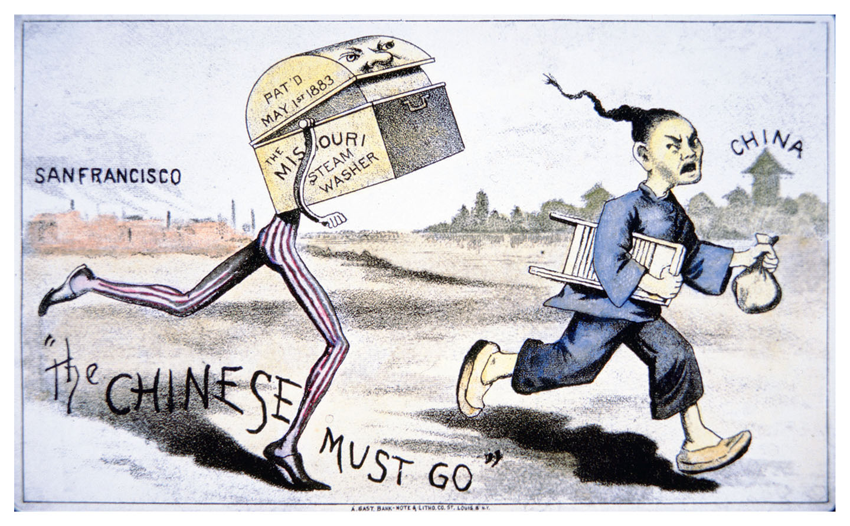
Yet even this enormous expansion of citizenship existed alongside racial exclusions. Indigenous peoples were excluded from citizenship under federal law for decades, while Chinese immigrants were increasingly portrayed as an alien and unassimilable race. This was followed by the Chinese Exclusion Act of 1882, a law that prohibited Chinese laborers from immigrating for ten years and was later extended and made permanent until its repeal in 1943. Later on, the Immigration Act of 1891 established the first federal immigration agency and expanded the list of excludable persons, including people with contagious diseases, polygamists, and those likely to become public charges.
The federal government was increasingly developing a system for deciding not merely who could enter the United States, but who was considered capable of becoming American.
That distinction would become crucial after 1898.
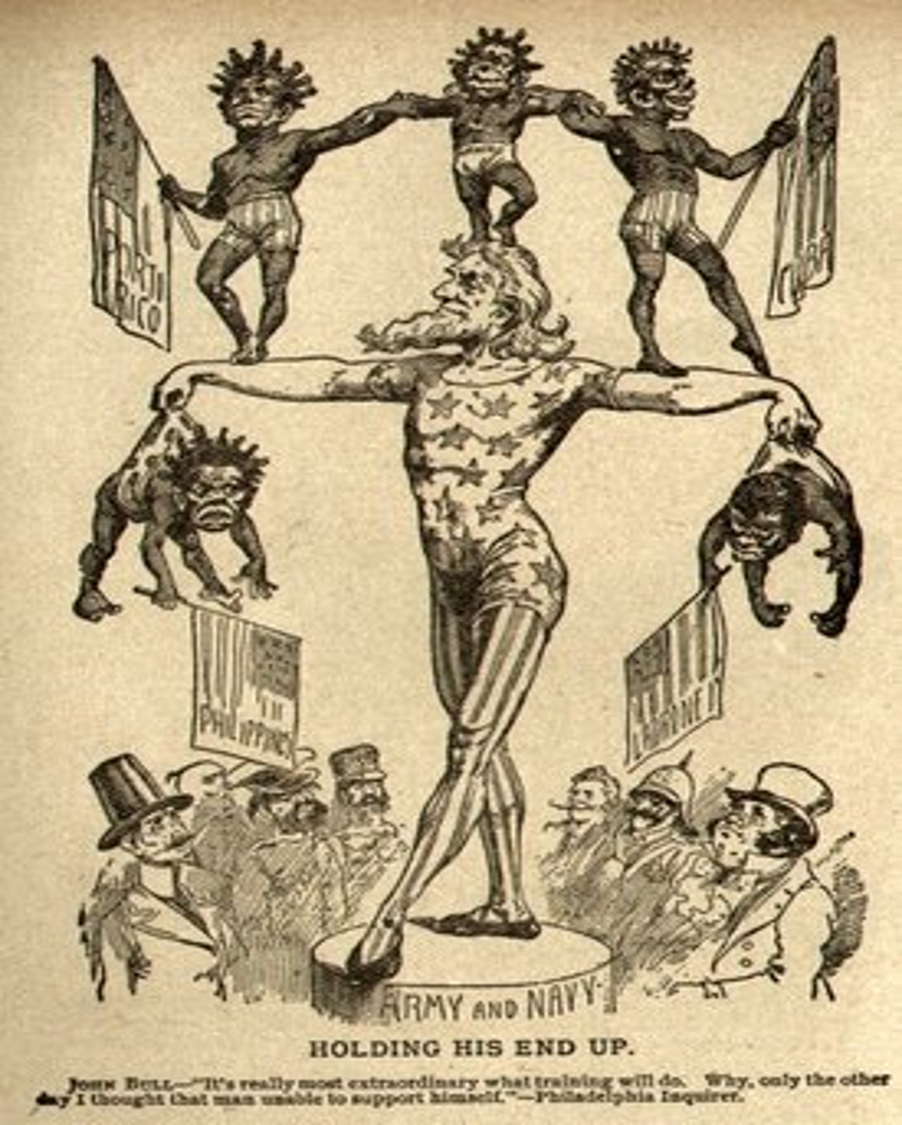
From Continental to Global Empire- All these laws and policies supported a process of white settler colonialism in continental North America. It is important to remember that newly acquired territories were generally expected eventually to become incorporated states and fill the Union with new states. That meant population mattered. The demographic and political balance of those territories mattered. And moreover, the racial identity of their inhabitants mattered.
Very tellingly, the southwestern territories consequently faced enormous obstacles to statehood. New Mexico, created as a U.S. territory in 1850, was rejected for statehood in 1850 and again in 1852 before finally being admitted in 1912. Arizona, separated from New Mexico Territory in 1863, was rejected for statehood in 1863 and again in 1866 before being admitted in 1912. Utah was created in 1850 and was rejected for statehood before finally being admitted in 1896.
The history of western statehood therefore reveals an important pattern: territorial incorporation did not automatically mean political incorporation.
And as the United States expanded, the meaning of whiteness itself evolved. European immigrants who were once regarded as racially suspect—Irish, Italians, Catholics, Jews, and others—could increasingly be incorporated into a broader category of “white” Americans. But the boundaries of whiteness remained especially difficult for populations categorized as Black, Indigenous, Asian, or racially mixed. Then the United States crossed an ocean.
1898: When the United States Could No Longer Simply Replace the Population- As global empires grew larger and included tens or hundreds of millions of non-white subjects, replacing native populations with white settlers became increasingly difficult. This was particularly true for Puerto Rico, Cuba, and even more so for the Philippines after the United States took them following the war of 1898.
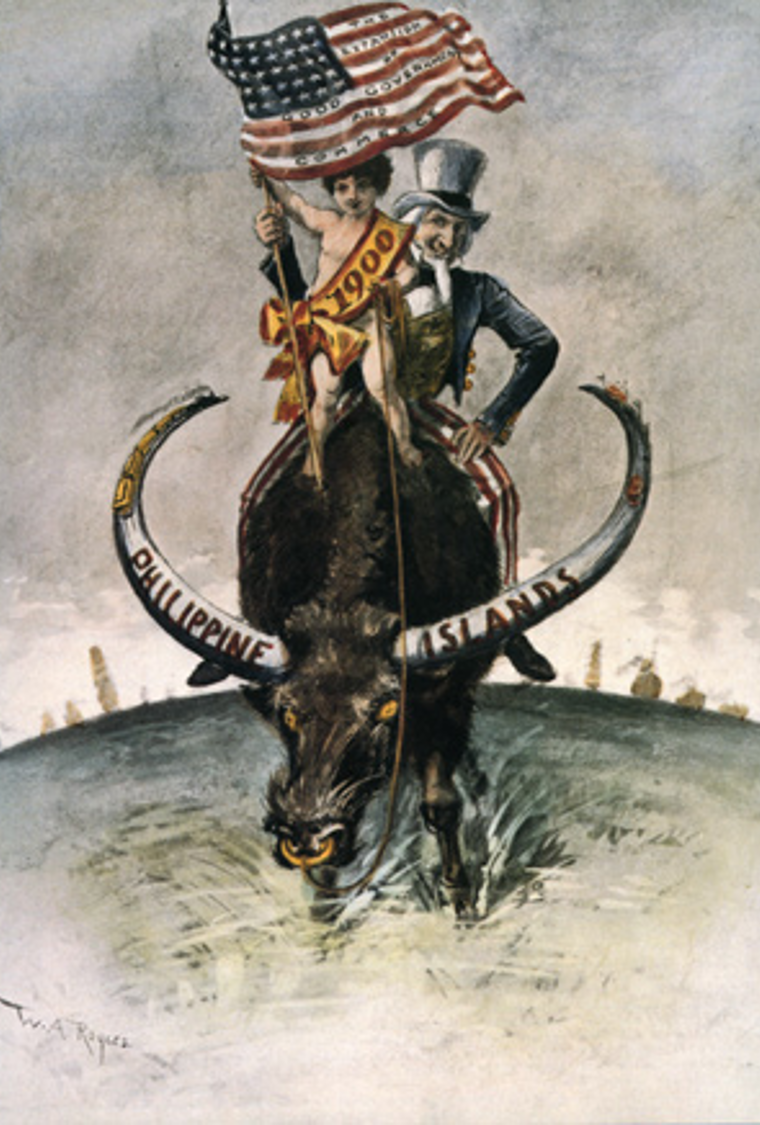
After the war with Spain in 1898, the United States had entered a new imperial phase that took it to parts of the world heavily populated. And continental settler colonialism could not simply be replicated in the Caribbean and Pacific.
The United States could not realistically empty Puerto Rico or the Philippines and repopulate them with white Americans. So the racial project had to evolve.
Whiteness took another meaning. Cultural whitening could now be sold as civilization. It could be called Americanization. It could be described as a type of modernization and modernity that included: education, democracy, progress, development, and civilization.
The racial hierarchy did not disappear. It became cultural. White culture, defined as either European, British, French, America, Anglo-Saxon, or even Latin (French definition), became a “stand in” for “biological race” throughout the colonies of the world.
And Puerto Rico was no exception. The non-white population could be whitened socially and culturally. Some. Not all. But even those who could claim the closest proximity to the ideals of White Anglos-Saxon Protestantism would never be fully accepted as equals because so blindly embracing assimilation is itself an admission of inferiority and of one’s subaltern status. This is where Puerto Rico becomes especially important to understand racial polices followed by the United States.
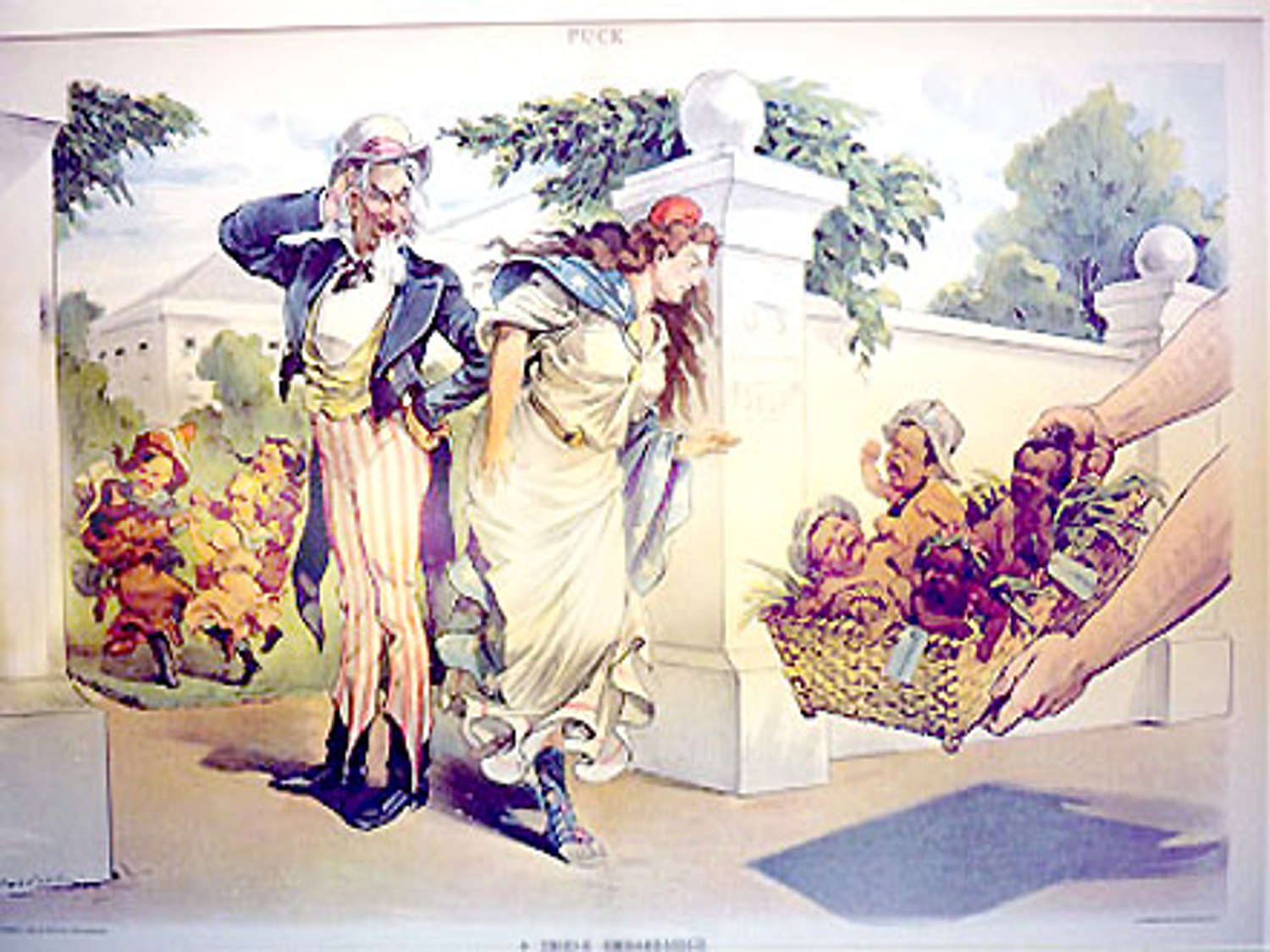
Puerto Rico and the Colonial Pursuit of Whiteness– As I have argued elsewhere, U.S. foreign policy came to be driven by a discourse of Civilizational Imperialism under Anglo-Saxon impress, which resulted in numerous attempts at nation-building throughout the world.
Civilizational Imperialism justified the purely economic need for expansion and ruling over non-whites without their consent.
Domestic racism, not the Constitution, followed the American flag worldwide. The colonies and their people would be reshaped in the image of the White Anglo-Saxon Protestant. Whiteness became a cultural export and colonial tool.
After the war of 1898, the United States faced the question of what to do with its new colonial possessions. Congress was dealing with the reaction against failed Reconstruction programs in the South, the expansion of big business, and increasing labor unrest in the North.
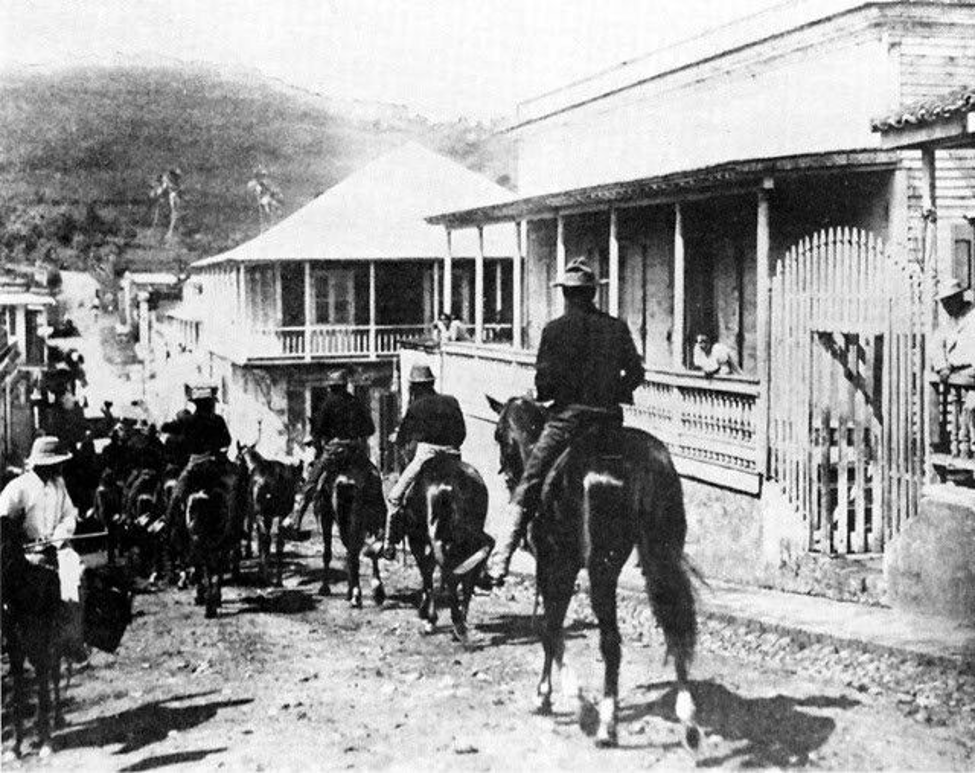
Those domestic tensions existed alongside racist views against incorporating “foreigners,” the development of Jim Crow in the South, and Social Darwinism—the idea of superior races and inferior ones.
These ideas influenced how the new colonies were understood. Filipinos were never meant to be incorporated—deemed too inferior. Puerto Ricans were defined as whiter than Filipinos—thus salvageable to a degree. Puerto Ricans, however, were also deemed incapable of self-government. Thus, very ironically though not surprising, the United States imposed a colonial tutelary state in Puerto Rico to “teach” Puerto Ricans democratic ideas and processes.
But here is where the story becomes more complicated. Puerto Rican elites did not simply resist this racial project. Many participated in it.
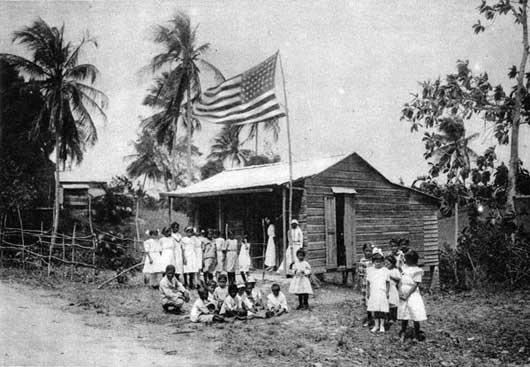
Puerto Rican Elites and the Whitening Project– Many Puerto Rican elites reacted by adopting projects of Americanization disguised as civilizational projects—joining, in fact, a whitening project of assimilation. But these projects were not new.
Puerto Rican elites had already been participating in a “Latin” or “Hispanic” version of this civilizational project embedded in Spanish and French colonization. The imperial vocabulary changed but the hierarchy remained.
As I have argued elsewhere: “Cayetano Coll y Toste, a Puerto Rican historian, writer, and patriarch of a prominent family of politicians and writers, became Civil Secretary to the American Military Governor in 1898.
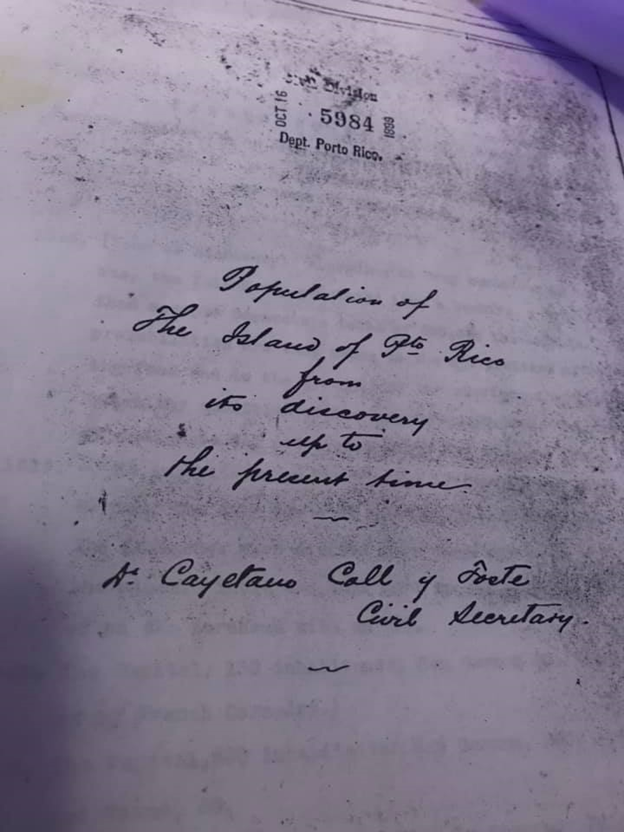
Reporting on Puerto Rico’s population to 1897, he concluded with an estimation and a not so-nuanced recommendation for racial cleansing, a continuation of the Whitening of the island initiated under Spain. He stated that:
“By prohibiting the immigration of negroes from the neighboring Islands, and estimating the annual loss, to that race, through absorption by the white and mixed races, at 3%, those 75,824 negroes that remain in the Island would have disappeared in a period of 300 years. – This is a very interesting anthropological study, because on the event of this happening, the Island of Porto [sic] would be the only one of the West Indies were the White race would prevail numerically.” May 27, 1899.
Cayetano Coll y Toste was not an exception, he was the norm.”
Puerto Rican criollos believed in whitening, in whiteness as a civilizational project of modernization. To them, the majority of the Puerto Rican population were rustic people who needed to be cleansed under the leadership of the white Criollos and under the sponsorship of the United States, the new imperial master.”
Puerto Rican elites did not necessarily understand Americanization as the destruction of Puerto Rican identity. Many understood it as an opportunity for Puerto Rico to move upward in an existing hierarchy of civilization. They had already inherited a hierarchy from Spain. Now they encountered a new hierarchy from the United States. And they attempted to position themselves near the top of it.
But there was a fundamental contradiction. Whiteness could be pursued, but it could not simply be claimed. The Puerto Rican elite could become more Americanized. They could speak English, adopt American institutions, embrace American political culture, celebrate the United States. And they could try to distance themselves from Blackness, rural Puerto Rican culture, working-class Puerto Ricans, and everything they associated with backwardness.
But none of that guaranteed equality. Because the system depended upon hierarchy. And hierarchy requires someone to remain below.
The Insular Cases and the Limits of Assimilation- Regardless of what Puerto Rican elites did and were willing to do, Congress would not necessarily incorporate a territory into the Union as a full state if it was inhabited by populations deemed “alien” and “rustic.”
As Charles Venator has argued, the Supreme Court first established in Downes v. Bidwell in 1901 that territories annexed after 1898—those mostly inhabited by nonwhite populations or so-called “alien races”—would be ruled as “unincorporated territories,” or territories that were not necessarily meant to become states.
The Constitution would not follow the flag—at least not completely. That distinction fundamentally transformed American empire. The United States had developed one model of continental expansion in which territories were generally understood as future states.
After 1898, it developed another model. Empire without incorporation. Colonial possession without an automatic promise of statehood. American citizenship without full political equality. Americanization without incorporation. And Puerto Rico has lived inside that contradiction ever since. The idea that “inferior” and “alien” races could be Americanized became a way to rationalize ruling people against their will. It also became a way of selling the dream of eventual statehood and equality.
Assimilation therefore served two purposes simultaneously. It subordinated Puerto Ricans while promising that their subordination could eventually disappear if they became sufficiently American. That is a powerful colonial mechanism. It creates subjects who are encouraged to prove that they deserve the rights they have already been denied. And it can produce something even more insidious: the colonized person who begins to police the colonized person.
The Failure—and Success—of Assimilation. Luckily, that is not how culture works. People are not passive recipients of imperial projects. They (we) have agency. Every project of assimilation and domination failed to one degree or another in Puerto Rico—or, at the very least, was profoundly altered by Puerto Ricans themselves.
Puerto Ricans appropriated, transformed, rejected, mocked, and reinterpreted American institutions and cultural practices. They remained Puerto Rican. They created new forms of Puerto Rican identity. They migrated, organized, resisted, adapted. And they transformed American culture as much as American culture transformed them. But people did buy into these projects. And some continue to do so today.
The New Piti-Yanqui– In the present day, the annexationist movement in Puerto Rico—particularly the MAGA movement within the Partido Nuevo Progresista (PNP)—has redoubled its efforts to assimilate what they consider true American culture and thus superior, while repudiating all that they consider Puerto Rican and inferior.
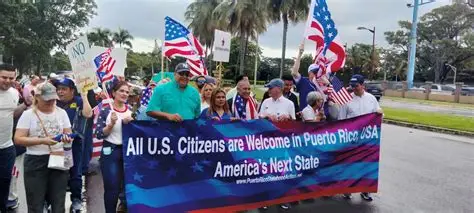
This is perhaps most visible within portions of the local evangelical movement that copy many of the excesses and departures from Jesus’ teachings that characterize parts of the American televangelical movement and the heinous prosperity gospel.
From the obsession with the accumulation of wealth and proximity to power, to the callous cruelty toward those in need, immigrants, foreigners, and anyone outside their politico-religious clique, the pattern is unmistakable. So is the aggressive intolerance toward whoever is not part of their clique and the almost cultish devotion and adoration not merely of men, but of the lesser of them. In sum, a despicable and deplorable perversion of Christian universal values.
In this, they come close to resembling the worst of the MAGA movement.
And yet—like the piti yanquis who tried to look and sound like their new colonial masters during the first decades of American domination over Puerto Rico—they continue to be looked upon by even the least accomplished “American” as nothing but inferior human beings.
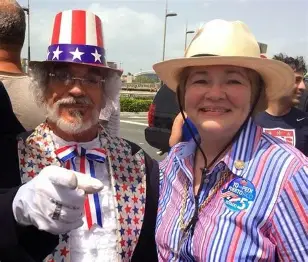
That is the tragedy of colonial assimilation. You can spend your life trying to prove that you belong to the master’s house and still be reminded that you were not invited as an equal.
And what do they have left after selling both their culture and soul? Crumbs from their master who is still repulsed by their mere existence. And somehow, they are in power in Puerto Rico.
The Final Irony- There was never a concerted effort or official policy to empty Puerto Rico of Puerto Ricans when the United States ruled it directly.
But the current combination of economic decline, political mismanagement, corruption, demographic displacement, and policies that invite Continental Americans and their capital while island-born Puerto Ricans—particularly young people and members of the middle class—continue to be displaced makes you wonder.
Does the contemporary PNP project intentionally or unintentionally reproduce a demographic logic remarkably similar to the older American project of settler colonialism?
Are they turning Puerto Rico into a place where those born elsewhere accumulate land, capital, and political influence while Puerto Ricans increasingly become migrants in their own country? Hoping that if enough “true Americans” eventually arrive, while enough Puerto Ricans are pushed out by economic necessity, the old dream of statehood finally be fulfilled?
Are they trying to finally make Puerto Rico white enough, American enough, and culturally assimilated enough to be admitted as a state? Perhaps.
But there is a profound irony here. Because the historical record clearly shows that the problem was never simply that Puerto Ricans were insufficiently American. The problem was that American political culture repeatedly defined “American” in racial and cultural terms that Puerto Ricans could never completely satisfy.
And that is why assimilation is such a dangerous promise. It tells the colonized that equality is waiting just around the corner. All they have to do is become someone else.
But as history shows, for those with an internalized inferiority complex, no price is high enough to gain their master’s favor.

