Puerto Rico is running out of water. There should be no political argument about that basic fact.
July 2026 was the driest July ever recorded in San Juan in more than 120 years of observations. Nearly 68 percent of Puerto Rico was experiencing drought conditions in early August; about one-quarter of the island was experiencing severe drought and another 36 percent moderate drought. The National Weather Service warned that rainfall could remain substantially below normal, while NOAA forecasts gave Puerto Rico more than a 70 percent probability of below-normal precipitation and above-normal temperatures for August through October.
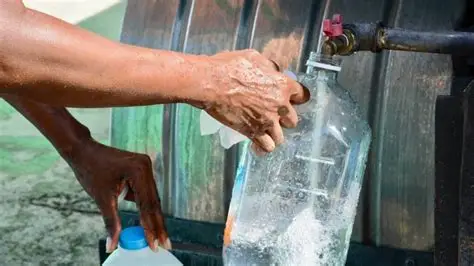
The result is water rationing. More than 180,000 customers in seven municipalities have been placed on rotating 48-hour cycles without water, with hospitals and other critical facilities receiving priority for tanker deliveries.
This drought is real. But another fact is equally real: Puerto Rico has spent decades failing to build a water system capable of absorbing a crisis like this. The drought is the trigger. Poor infrastructure, inadequate maintenance, weak planning and institutional failure are the accelerants.
And that distinction matters. Because if we reduce this crisis to “climate change,” we absolve institutions of responsibility. And if we reduce it to “colonialism,” we do something even more intellectually convenient: we make the problem so large and abstract that nobody has to answer for the pipes, reservoirs, budgets, engineers, contracts, maintenance schedules and decisions that are failing Puerto Ricans today.
The drought is extraordinary. The infrastructure problem isn’t. Puerto Rico has a water system that would be difficult to defend even in normal circumstances. The American Society of Civil Engineers gave Puerto Rico’s infrastructure an overall D- in its 2019 infrastructure report card. Its assessment of the water system found approximately 58–59 percent non-revenue water—water produced by the system that does not become billed consumption. Physical losses from leaks, tank overflows and similar problems were estimated at approximately 42 percent.
Think about that. A system can be producing 100 gallons of treated water and, depending on how losses are calculated, roughly half of it may never become revenue-generating delivered water.
Not all “non-revenue water” is literally leaking through pipes. Some is attributable to inaccurate meters, unauthorized consumption and accounting problems. But a huge portion is physical loss. And this is not some obscure technical statistic. It means that Puerto Rico has been losing water while complaining that it does not have enough water.
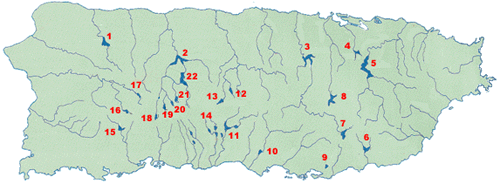
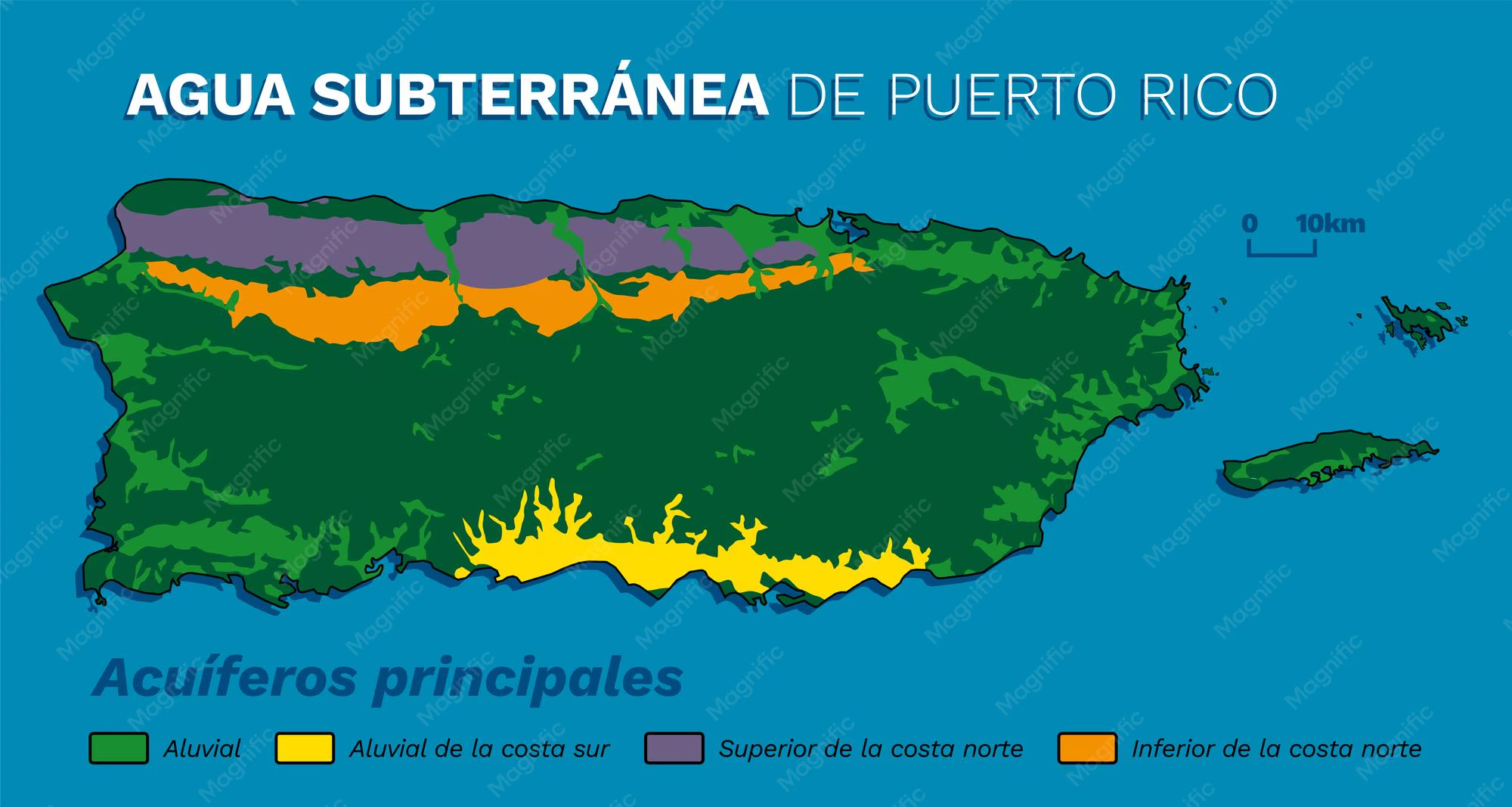
ASCE also found that several major reservoirs had lost between 30 and 60 percent of their storage capacity because of sedimentation. The 2021 ASCE assessment estimated that approximately $551 million would be required over six years simply for renewal and replacement of aging PRASA infrastructure.
This is not a drought problem. This is a maintenance problem that becomes vastly more dangerous during drought.
The reservoir and the leaking pipe. Imagine a household preparing for a drought. The family knows that it may not rain. So, it fills a cistern. But the cistern has accumulated sediment and can hold only 60 percent of its original capacity. Then the family connects the cistern to a distribution system in which enormous quantities of water disappear through leaks. And when the water begins running out, the family announces that the drought is responsible.
The drought is responsible. But so is the failure to maintain the cistern, the leaking pipe, the failure to invest in additional storage, the failure to diversify the water supply.
A drought reveals the resilience—or lack of resilience—of a society. And Puerto Ricans have shown they have resilience by the bucket. But there is only so much people can take. The Puerto Rican government knew. This is perhaps the most frustrating part. Puerto Rico has not been blindsided by the basic problem. Its own laws and planning documents have been telling policymakers for years that water conservation, watershed protection, drought resilience and rainwater harvesting matter.
Puerto Rico’s 2019 climate-change law explicitly called for improving water conservation and efficiency and establishing guidelines for evaluating rainwater-harvesting systems in newly built housing and buildings. Yet in 2024, the island went further, passing legislation requiring public agencies to implement rainwater collection systems on government buildings.
And in 2026, reporting by WIRED found that the law had largely gone unenforced. It is like being stuck in the obedezco pero no cumplo (I obey but do not comply) mentality. Laws are passed but not implemented. This is the kind of fact that should make us furious. Not because rainwater harvesting would have prevented the current drought. It wouldn’t. But because resilience is built before the emergency. Again- not the resilience of the people- but of the system.
Every school, government building, hospital, industrial facility and appropriate residential development capable of collecting rainwater represents another piece of decentralized water infrastructure. Puerto Rico does not need rainwater-harvesting instead of PRASA. It needs rainwater harvesting in addition to PRASA.
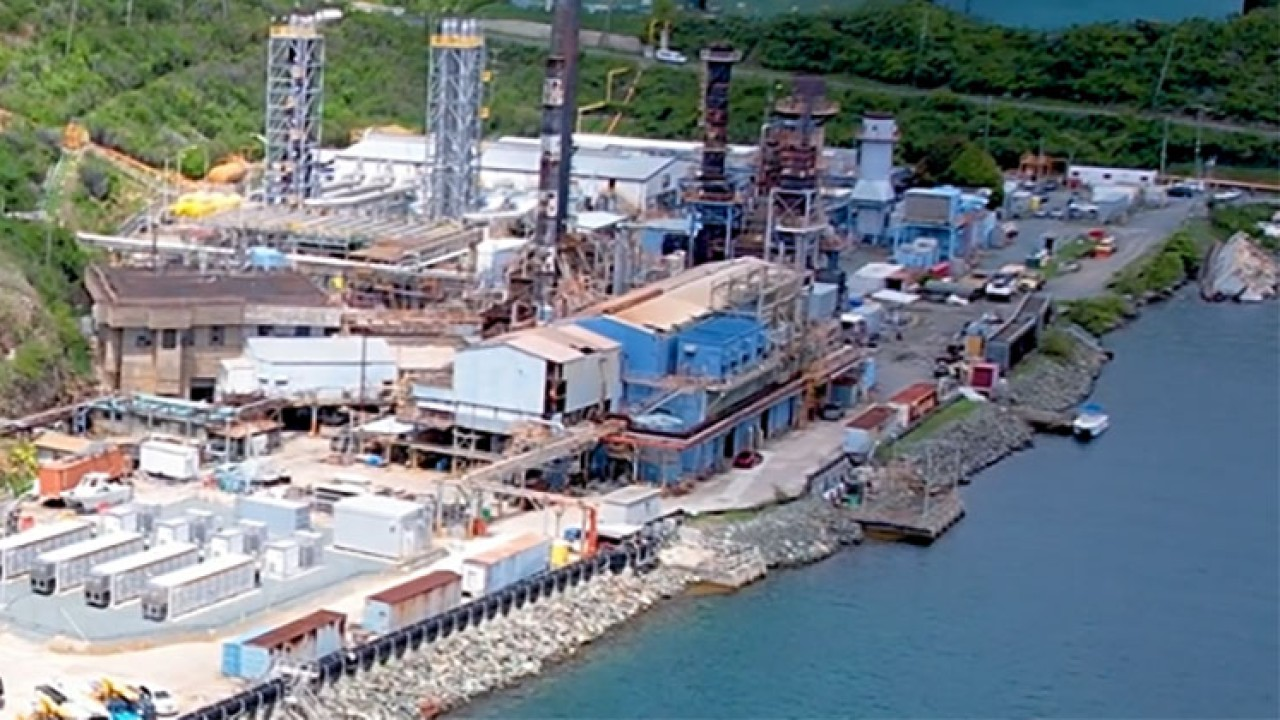
Puerto Rico is an island surrounded by the Atlantic Ocean and the Caribbean Sea. Thus, where is desalination. Desalination is expensive. It requires substantial energy. It creates concentrated brine that must be properly managed. It is not a magical solution to Puerto Rico’s water problems. But that is not an argument against it. It is an argument for figuring out where it makes sense.
Hospitals, critical infrastructure, industrial facilities, drought-prone communities, emergency reserves, decentralized systems, strategic installations.
The question should not be: “Can desalination replace Puerto Rico’s water system?” Obviously not.
The question should be: “What combination of reservoirs, groundwater, rainwater capture, wastewater reuse, conservation, desalination and conventional surface-water systems gives Puerto Rico the greatest resilience at an acceptable cost?”
That is a policy question. It requires engineers, economists, hydrologists and planners. It does not, however, require a nationalist slogan.
The water problem is also a geography problem. Puerto Rico has another vulnerability that receives considerably less attention: the concentration of population and critical infrastructure around metropolitan San Juan.
The Census Bureau reports that 91.9 percent of Puerto Rico’s population lived in urban areas in 2020, compared with 80 percent in the United States. Puerto Rico’s total population was approximately 3.29 million in 2020 and had declined to an estimated 3.18 million by 2025. San Juan municipio alone had about 342,000 residents in 2020, although its population has since declined. But population concentration is only part of the story.
The San Juan metropolitan area also concentrates government, finance, hospitals, universities, transportation, industry, ports, the principal airport and much of the island’s economic activity. That creates economies of scale. It also creates single points of failure.
The question is therefore not simply whether San Juan has too many people. It is whether Puerto Rico has allowed too much of its economic and infrastructural capacity to depend on one metropolitan system. A more geographically distributed Puerto Rico—with stronger regional economies in Ponce, Mayagüez, Aguadilla , Arecibo, Caguas, Humacao and elsewhere—could be economically healthier and more resilient. Again: this is not a question about colonialism. It is a question about regional planning.
And then we reach the money question. This is where the discussion gets uncomfortable and too many people take political sides and become impervious to facts and figures- and the reality on the ground.
Puerto Rico has received substantial federal assistance for infrastructure.
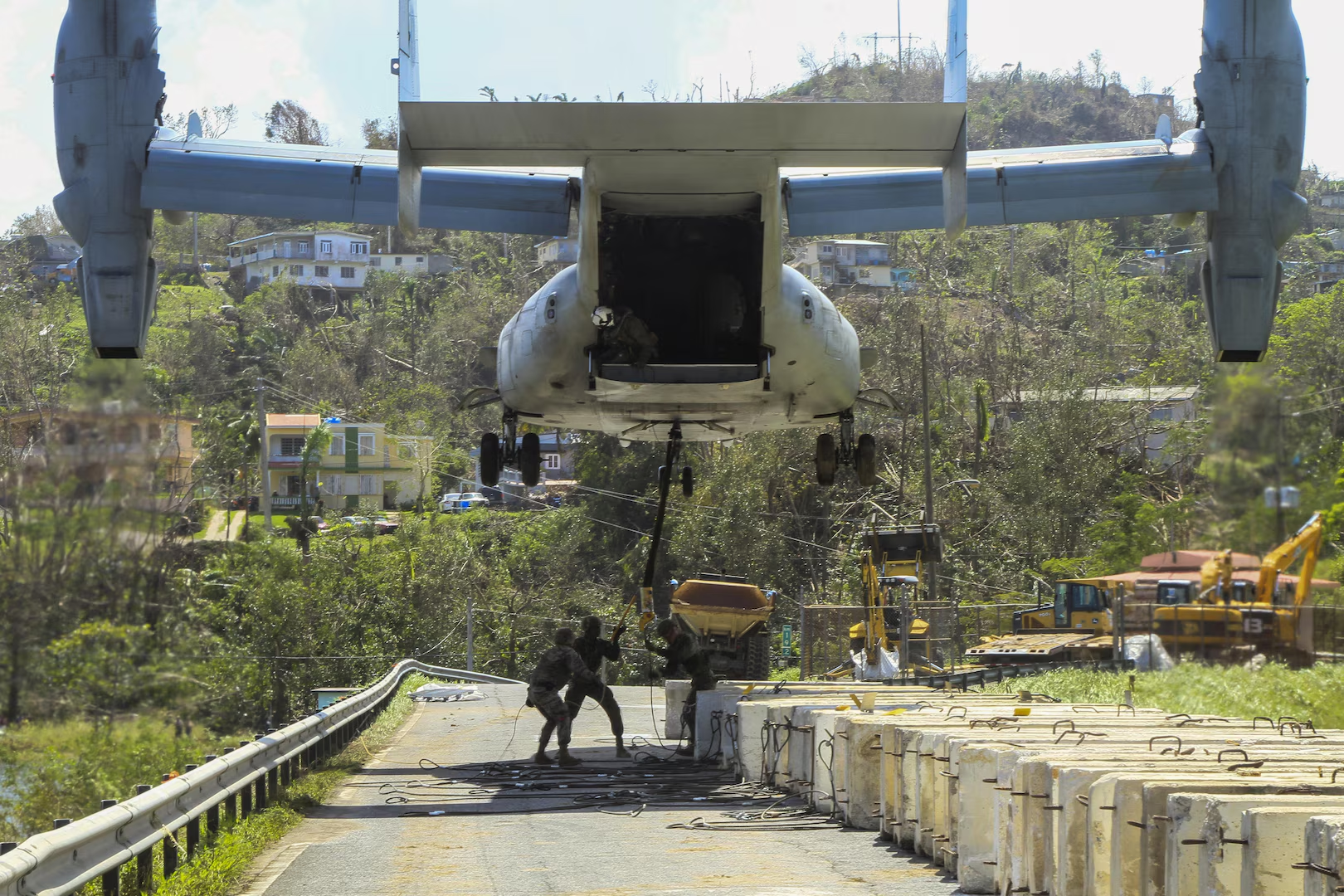
After Hurricanes Irma and Maria, FEMA alone had awarded approximately $32.2 billion in disaster recovery grants to Puerto Rico and the U.S. Virgin Islands by August 2022; approximately $7.7 billion had actually been spent at that point, including roughly $1 billion for permanent work projects involving long-term rebuilding of infrastructure, including water systems.
The federal government has continued investing. In 2019, EPA announced the restructuring of more than $571 million in delinquent Puerto Rico water-system loans, helping clear a major obstacle to accessing federal drinking-water and clean-water revolving funds.
In February 2024, EPA announced another $63.3 million for Puerto Rico drinking-water and clean-water infrastructure through the Biden administration’s Investing in America agenda.
In 2025, the Puerto Rico government announced another major federal allocation for PRASA infrastructure modernization. And federal funding has continued in 2026, including $11.4 million for Puerto Rico communities, drinking-water systems and private well owners addressing PFAS and other emerging contaminants.
So the honest question isn’t: “Has Washington ever given Puerto Rico money?” It clearly has. The honest questions are: How much? For what? When was it obligated? When was it actually disbursed? What was constructed? What was repaired? What was maintained? What failed afterward? Who was responsible?
Those are not anti-Puerto Rican questions. They are not pro-colonial questions. They are responsible citizenship fact-finding questions.
We should follow the money without inventing the answer. There is a temptation to say that federal infrastructure money has simply been swallowed by salaries and bureaucracy. We should resist making an accusation that the evidence does not establish. Federal grants frequently carry strict restrictions on their use. But there is still a legitimate question about the broader finances of PRASA.
The Financial Oversight and Management Board (la Junta) reported that PRASA’s FY2024 budget projected approximately $1.1 billion in revenue and emphasized the need for rate adjustments to maintain financial obligations while preserving necessary investments in maintenance and system-wide improvements. It also highlighted the need to modernize meters to improve the measurement of water losses.
The larger budget documents deserve much more public scrutiny. How much is spent on personnel; on pensions and benefits; on consultants; on emergency repairs; on preventive maintenance; on capital replacement; on debt service? And what percentage of every dollar entering the system actually improves reliability? These are questions journalists, legislators, academics and civic organizations should be answering with spreadsheets—not hashtags.
The federal money problem is also a Puerto Rican management problem. There is a revealing parallel in the electrical sector. A 2026 Government Accountability Office investigation found that of $17.1 billion allotted for Puerto Rico’s post-Maria electric-grid recovery and modernization, $14.3 billion had been obligated but only $3.6 billion had actually been disbursed. That means approximately 75 percent of obligated funds remained undisbursed.
The GAO identified bureaucratic complexity, staff turnover, project-review processes and institutional problems among the obstacles. This is not evidence that Washington has been perfect. It is evidence of something much more important: Money alone does not build infrastructure. Institutions do.
That is competent institutions, stable institutions, accountable institutions, institutions capable of planning beyond the next election. Puerto Rico can receive billions of dollars and still have a broken system if the machinery for turning appropriations into functioning infrastructure does not work.
This is where the ideological argument becomes dangerous and harmful to Puerto Ricans. And this is where I have a problem with a particular form of scholar-activism that has become increasingly influential in discussions about Puerto Rico. There are academics and activists who appear to have found an explanatory formula capable of swallowing every Puerto Rican problem: Water crisis? Colonialism and Capitalism. Blackouts? Colonialism and Capitalism. Debt? Colonialism and Capitalism. Migration? Colonialism and Capitalism. Poverty? Colonialism and Capitalism. Infrastructure? Colonialism and Capitalism. Climate vulnerability? Colonialism and Capitalism.
And the answer to all of it? Independence.
The colonial relationship matters. Of course it does. Puerto Rico’s political and economic relationship with the United States has shaped its fiscal institutions, development patterns, trade, migration, military history and political possibilities. Anyone denying that is not doing serious history.
But there is a profound difference between saying colonialism is an important structural factor and saying colonialism is sufficient to explain everything. It isn’t.
A pipe doesn’t know whether Puerto Rico is a colony. A reservoir does not care about the Jones Act. Sediment does not vote. A leaking valve is not a referendum. A dysfunctional procurement process is not an imperial theory. And a politician who fails to maintain infrastructure is still responsible for that failure.
The colonialism escape hatch. The universal colonialism explanation creates an intellectual escape hatch. If every failure is ultimately caused by the United States, then there is no reason to investigate the decisions made by Puerto Rican institutions.
No need to examine PRASA management. No need to investigate contracts. No need to examine personnel costs. No need to evaluate maintenance schedules. No need to investigate why reservoirs were allowed to lose enormous portions of their storage capacity. No need to explain why rainwater-harvesting legislation went unenforced. No need to debate desalination. No need to rethink metropolitan concentration. No need to develop regional economic strategies. No need to ask whether public institutions are organized efficiently. No need to ask why federal money remains unobligated or undisbursed. No need to hold Puerto Rican politicians accountable.
Everything can be blamed on the Yankees. It is politically convenient. It is emotionally satisfying.
And it is intellectually impoverished- and it ultimately does nothing for the Puerto Ricans. It does, however, create yet another platform from more “activist-scholars” to engage in their very own form of colonialism and disaster capitalism (and quite a bit of white saviorism) as they pad their CVs and jump to the next podcast and cushy academic position.
Puerto Rico has seen this movie before. This is not the first time Puerto Rican political movements have confronted the uncomfortable relationship between material conditions and political mobilization. During the Great Depression, Puerto Rico experienced extraordinary poverty and unemployment. The crisis contributed to the growth of the Nationalist movement, which drew strength from economic desperation as well as opposition to U.S. rule.
Then came the New Deal. The Puerto Rico Reconstruction Administration and other New Deal initiatives poured resources into roads, schools, electrification, housing, agriculture, public health and infrastructure.
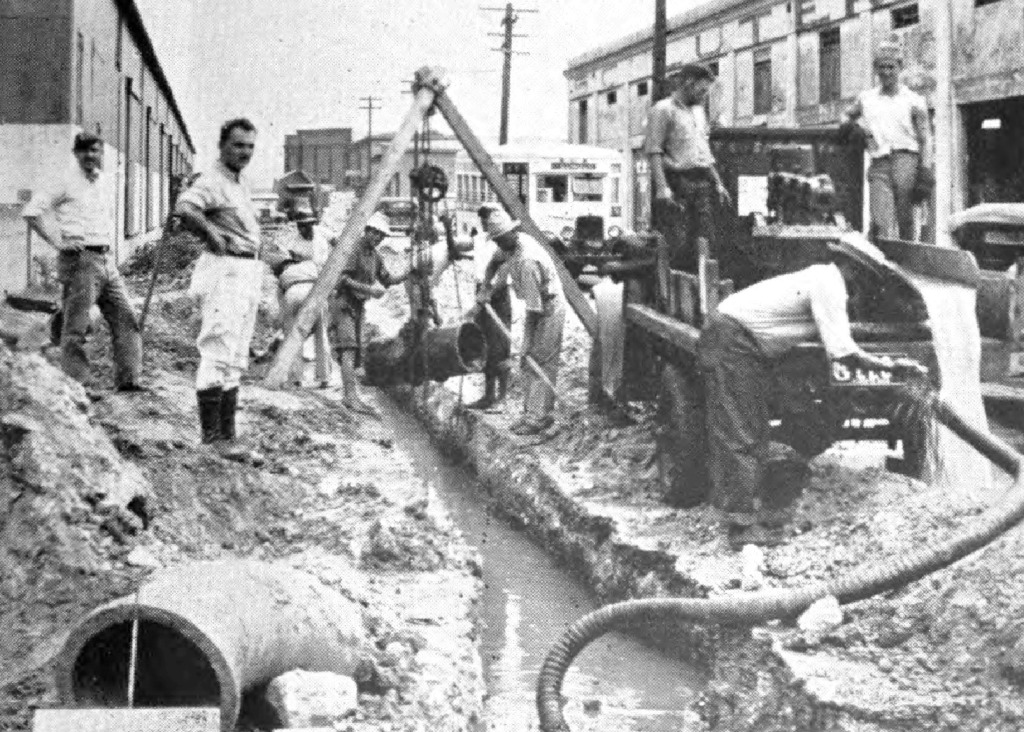
The point is not that the New Deal solved Puerto Rico’s problems. It didn’t. Nor is it that the Nationalists simply “wanted misery.” That would be historically simplistic. The important point is more subtle: When governments materially improve people’s lives, the political economy of grievance changes.
The Nationalists’ challenge was not simply ideological. It was that the material environment in which their appeal operated was changing. And this is precisely why the history of relief and reconstruction matters today.
A movement that defines its political legitimacy through permanent crisis has an uncomfortable relationship with successful reform. And just like the Nacionalistas in the 1930s targeted relief and reconstruction agencies to thwart their progress- I suspect that too many of these “activist-scholars” salivate when witnessing the Puerto Rican’s suffering. They make bank on it.
The politics of permanent victimhood. This is where contemporary scholar-activism deserves scrutiny. There is a growing academic and activist ecosystem devoted to documenting Puerto Rican suffering. The hurricane, the blackout, the flooded barrio, the abandoned school, the old woman without water, the family leaving the island, the community devastated by disaster.
The images are powerful. The suffering is real. But suffering is not a political program. And documenting suffering is not the same thing as solving it. Especially when the so-called documentation is ideologically compromised and biased.
At its worst, this becomes what we know as porno-misery scholarship: the transformation of poverty, disaster and political marginalization into academic and political currency. These scholars are no better than the people who invited the white liberal gaze into poverty or slum tours. It is part of the sinful voyeurism these so-called first responder scholars sell to promote their careers.
The disaster becomes the field site. The victim becomes the subject. The outrage becomes the methodology. The article becomes the product. And the conclusion was often determined before the research began: capitalism, colonialism, neoliberalism, empire.
And finally: liberation.
But where is the water-management plan?
Where is the reservoir rehabilitation strategy?
Where is the leak-reduction target?
Where is the budget model?
Where is the regional-development plan?
Where is the desalination feasibility study?
Where is the rainwater-capture implementation strategy?
Where is the institutional reform proposal?
Where is the spreadsheet?
Where is the five-year plan?
Too often, there isn’t one. And those who have one are shone by institutions of higher learning and the whole circus of traditional and social media that depends on clicks and subscriptions to survive. Quite ironic that these activist-scholars who can’t stop their litany on disaster capitalism are the ones cashing in on the suffering of the people they self-proclaim to champion.
Explaining misery is not the same thing as eliminating it- even if the explanation comes from a genuine interest in solving it.
The paternalism hiding inside the politics of liberation. There is an especially disturbing irony here. Some of the loudest voices telling Puerto Ricans that they are oppressed are people whose own professional lives have been built on interpreting Puerto Rican oppression. They publish about the victim- heck, they do “anthropological studies” to teach the “victim” that they are the victim and how to put their suffering in academic jargon. If it sounds biased and completely unprofessional, unethical- even like abusing your subjects- it is because it is all that.
They speak for the victim, they organize panels about the victim, they receive grants to study the victim, and they produce documentaries about the victim. And then they tell the victim that his problems cannot really be solved until the political status changes.
That is paternalism wearing the clothes of radicalism. The Puerto Rican is no longer treated as a citizen capable of solving problems. He becomes a subject to be interpreted. His suffering becomes evidence. His anger becomes political currency. His neighborhood becomes a research site. His disaster becomes an academic opportunity. And his future is reduced to somebody else’s ideological conclusion.
That is not liberation. It is another form of intellectual dependency.
We need to retire two caricatures. Puerto Rico once had the caricature of Don Eleuterio, the estadista so fearful of the Americans leaving that he supposedly imagined they would take the roads, electricity and infrastructure with them. We mocked him—and rightly so. Puerto Ricans are not incapable of governing themselves.
But we have created another caricature. I guess I will call it “el Boricua bestial” or the “boricuazo”. The new Puerto Rican is the permanent victim. The American is the permanent villain. Every failure is colonial. Every crisis proves oppression. Every reform is insufficient. Every success is somehow evidence of continued exploitation. And the only real answer is independence.
Sometimes this narrative is promoted by Puerto Ricans residing in Puerto Rico.
Sometimes by liberal American academics who have discovered Puerto Rico as a particularly fertile site for ideological scholarship. And too often- by Puerto Ricans in the diaspora who would do absolutely anything for Puerto Rico but truly learning about it and letting the people on the island speak for themselves.
Either way, the underlying paternalism is remarkably similar: Puerto Ricans are incapable of solving their own problems until someone changes their political status for them.
I reject that argument precisely because I believe Puerto Ricans are capable of much more. The real insult is not criticism. There is nothing progressive about telling people their suffering is inevitable.
There is nothing emancipatory about telling Puerto Ricans that their water will remain unreliable until independence. In fact- this position is as untenable and as abusive – perhaps even more so- as claiming that federated statehood will solve these issues.
There is nothing radical about explaining a broken pipe through Marx, Foucault or theories of coloniality while ignoring the pipe. And there is nothing respectful about converting Puerto Rican suffering into intellectual capital while denying Puerto Ricans the agency to fix the problems in front of them.
Puerto Ricans need water. They need functioning infrastructure. They need competent institutions. They need transparent budgets. They need accountable government. They need engineers (of which we produce plenty and of the highest caliber). They need hydrologists. They need planners. They need economists not married toa political party or ideology. They need public-health specialists to lead. They need journalists who follow money. They need historians who explain context.
And they need citizens willing to ask uncomfortable questions of everyone, including the people with whom they agree.
So what should we do? Start with the pipes.
Set a public target for reducing physical water losses. Publish every major leak and repair. Publish the age and condition of the distribution system; PRASA’s maintenance backlog; preventive-maintenance spending; personnel and administrative costs; every major federal award, its purpose, its status and its expenditures.
Explain every delay. Rehabilitate reservoirs. Remove sediment where economically justified. Increase storage. Expand rainwater harvesting. Enforce the laws already on the books. Develop wastewater reuse. Study targeted desalination. Protect watersheds. Improve groundwater management.
Build decentralized water systems for critical facilities. Strengthen Ponce, Mayagüez, Arecibo and other regional centers. Reduce the island’s excessive dependence on one metropolitan economy.
And build a water system designed not for the Puerto Rico of yesterday but for the Puerto Rico of the next fifty years.
None of this requires abandoning the debate over political status. None of it requires denying the realities of U.S. territorial rule. None of it requires pretending that Washington has always treated Puerto Rico fairly. It requires something much more radical: taking Puerto Ricans seriously enough to believe they deserve solutions.
The question we should be asking. The drought will eventually end. The rain will return. Reservoirs will refill. The headlines will disappear. And that is precisely when Puerto Rico will face its most important decision. Will it repair the system and prepare for the next drought? Or will it wait for the next emergency? Will it diversify its water supply? Or will it continue depending overwhelmingly on the same vulnerable infrastructure? Will it enforce its own rainwater laws? Or allow another decade to pass? Will it invest in maintenance before things break? Or continue spending more when they fail? Will it investigate where federal money goes? Or simply demand more? Will politicians compete over solutions? Or compete over who can shout “colonialism” the loudest?
And will Puerto Rican academics use their scholarship to expand the range of possibilities available to Puerto Ricans—or continue turning every disaster into confirmation of an ideological conclusion reached before the research began?
These are not questions that Washington can answer for Puerto Rico. They are questions Puerto Ricans must answer for themselves. The most dangerous political idea is not that Puerto Rico is oppressed. It is the idea that Puerto Ricans are powerless.
They are not. And telling them otherwise—whether from a colonial office or an academic conference—is its own form of paternalism.
The drought is real. The climate is changing. The infrastructure is deteriorating. The money is real. The institutional failures are real. The political constraints are real. But so is Puerto Rico’s agency.
The task now is to stop turning every crisis into an ideological morality play and start treating every crisis as a problem to be solved. That is not a rejection of Puerto Rican cultural nationalism. It is a rejection of the politics of permanent victimhood. And perhaps that is the most genuinely patriotic thing we can do.

