To everyone calling the sailors and Marines aboard the USS Abraham Lincoln “woke,” “leftists,” “whiners,” “fruits,” or whatever other misogynistic and homophobic insult your particular corner of social media has manufactured this week:
You might want to learn something about military history before lecturing sailors about toughness.
Because the argument you are making is historically ignorant, militarily naïve, and, if you actually served, profoundly disrespectful to the people who are serving now.
The USS Abraham Lincoln is not on a fucking cruise.
It is a nuclear-powered aircraft carrier engaged in a prolonged wartime deployment.
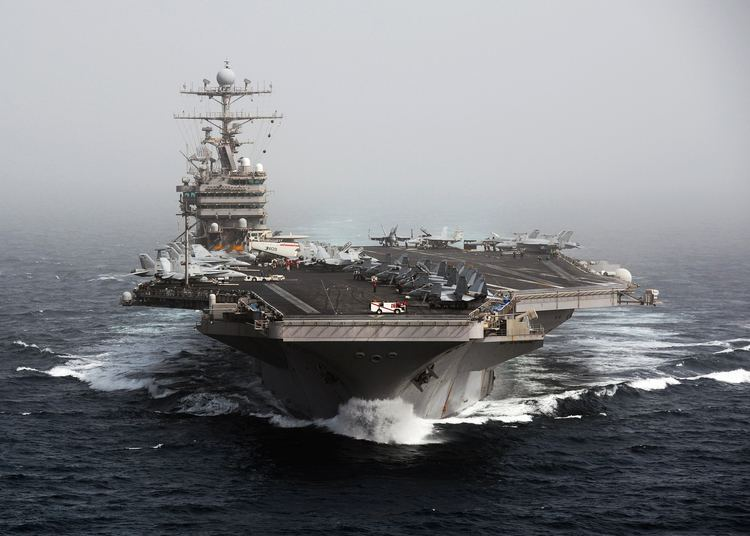
The carrier left San Diego on November 21, 2025. By August 2026, the ship had been deployed for roughly nine months, with more than 260 days of deployment and more than 200 days in a combat zone. Reports indicate that it has gone more than 200 days without a port call. Roughly 5,000 sailors and Marines are aboard.
And now we have reports of severe shortages, deteriorating sanitary conditions, poor food, broken or inadequate facilities, mental-health crises, and sailors going overboard or attempting to do so.
Families have reported weight loss, contaminated water, inadequate hygiene supplies, broken toilets, undercooked food and extraordinary exhaustion. The Navy has disputed some of the characterizations, and those claims deserve investigation rather than simply being accepted or dismissed wholesale.
But here is the important part: There are enough independent reports, family accounts, congressional concerns and operational facts that the proper response is investigation—not ridicule.
Yet here come the keyboard warriors: “It’s not the crew. It’s a couple whiners and a mainstream media that hates America.”
Really? A couple of whiners? Families? Multiple sailors? Mental-health professionals? Members of Congress? Commanders? A ship that has been operating for months with extraordinarily limited respite? And a sailor being recovered after going overboard?
You can disagree about the interpretation of the evidence. But dismissing all of it as “a couple whiners” is not toughness. It is cowardice disguised as patriotism.
“People were built different back then.” This one might be my favorite. Were they? Or did military institutions understand something that today’s social-media tough guys apparently don’t?
Morale is a military capability. During World War II, the U.S. military did not say: “You’re lucky to get a letter from your wife, so shut the hell up.” It understood that communication with home was essential to sustaining fighting effectiveness.

The United States created V-Mail specifically because mail was so important to deployed troops. More than one billion V-Mail letters were sent between 1942 and 1945. The U.S. Navy alone received more than 310 million pieces of mail in 1944.
The Navy’s own historical record is remarkably explicit about this.
Admiral Chester Nimitz reportedly summarized the basic needs of his Pacific Fleet as: FOOD, AMMUNITION, AND MAIL.
Not: “Food, ammunition, and stop being a fucking snowflake.”
Mail mattered because morale mattered. Naval historians describe mail from home as one of the most important morale factors for deployed personnel. The Navy understood that loneliness, separation and psychological exhaustion affected fighting effectiveness.
So when someone says: “In WWII all they had was letters!” Yes. Because letters were the communication technology of the time. They weren’t some bizarre luxury invented to coddle weak soldiers. They were the equivalent of what video calls, messaging and digital communication are today. There were no FaceTime calls in 1943. There were no smartphones. There was no internet. There was no email. There was mail- and it was a luxury in which the military invested heavily to the point of normalizing it- to keep morale up!
The military went to extraordinary lengths to get it to people because commanders understood that maintaining human connections was part of maintaining combat effectiveness.
V-Mail existed precisely because the military wanted to make communication faster and more efficient while conserving shipping space.

That’s not weakness. That’s logistics. That’s leadership. That’s military science.
And no, WWII sailors did not simply disappear into the ocean for three years without liberty. This mythology gets particularly ridiculous when people start talking about World War II.
“The difference between then and now is that a World War II ship deployed overseas for combat went for the duration of the entire war. There were no six-to-nine-month deployments. There was no set time when they were coming home. They didn’t get liberty ports.”
That is simply not a serious description of the wartime Navy. Look at the USS Enterprise.
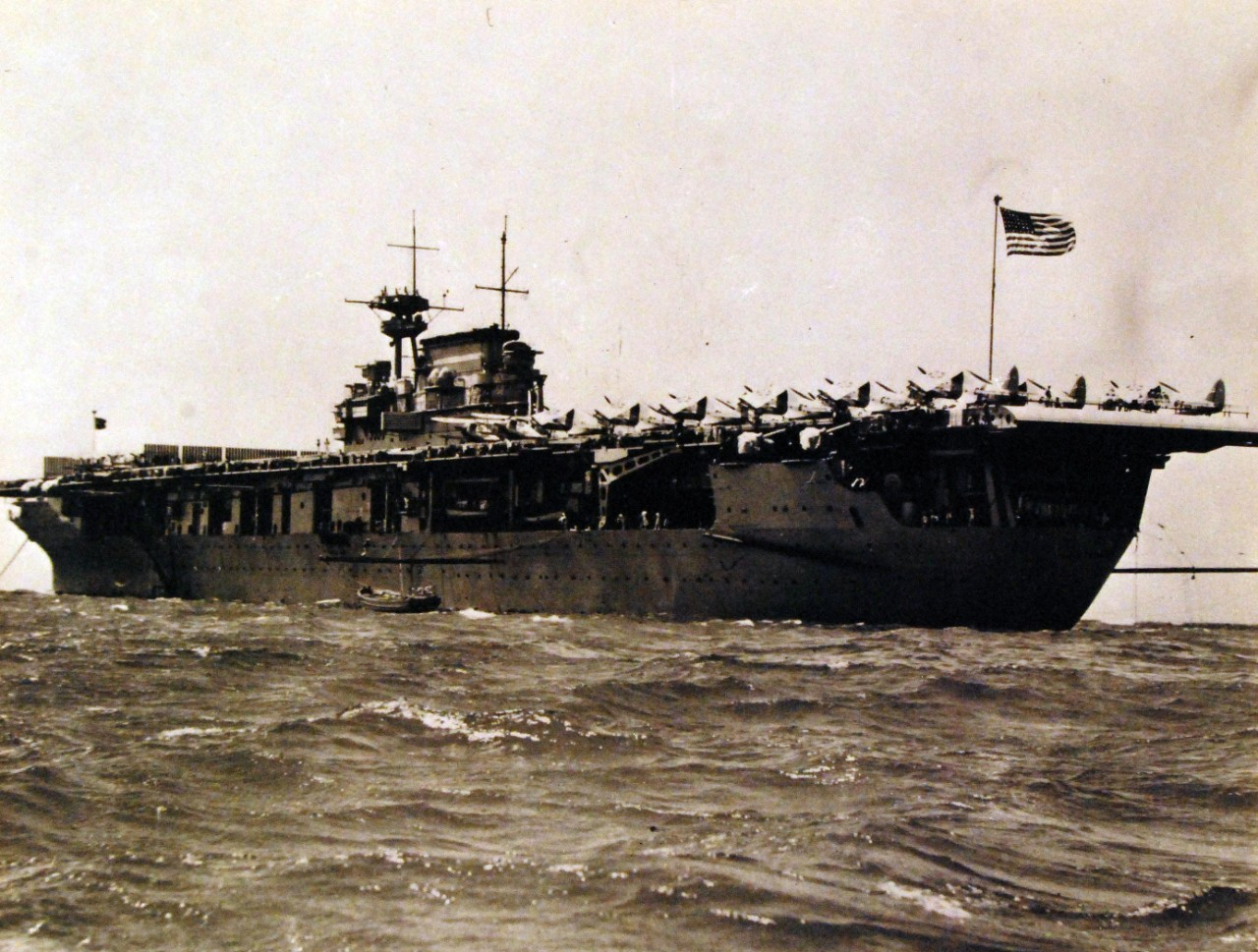
The ship fought from the first year of the Pacific War through multiple campaigns, including Midway, Guadalcanal, the Eastern Solomons, Santa Cruz, the Gilberts and Marshalls, the Marianas, the Philippine Sea, Leyte Gulf, Iwo Jima and Okinawa.
It was repeatedly damaged, repaired and returned to combat.
But even that ship’s history includes periods back at Pearl Harbor and other forms of maintenance, training, repair and rest. Combat ships required: maintenance, repairs, resupply, rearming, training, crew replacement, medical care, shore facilities. And, whenever operational circumstances permitted, liberty.
The idea that WWII sailors simply stayed locked aboard ships for years with no ports, no mail, no relief, no maintenance cycle and no human contact is a Hollywood caricature—not military history.
And here’s the irony: The men you invoke to shame today’s sailors are precisely the men whose commanders understood that morale had to be protected.
And the Department of Defense explicitly recognized the psychological burden of those tours.
In 1969, the Defense Department reported that personnel in Vietnam were generally given an opportunity for an out-of-country rest-and-recuperation leave of five to seven days during their 12-month tour.
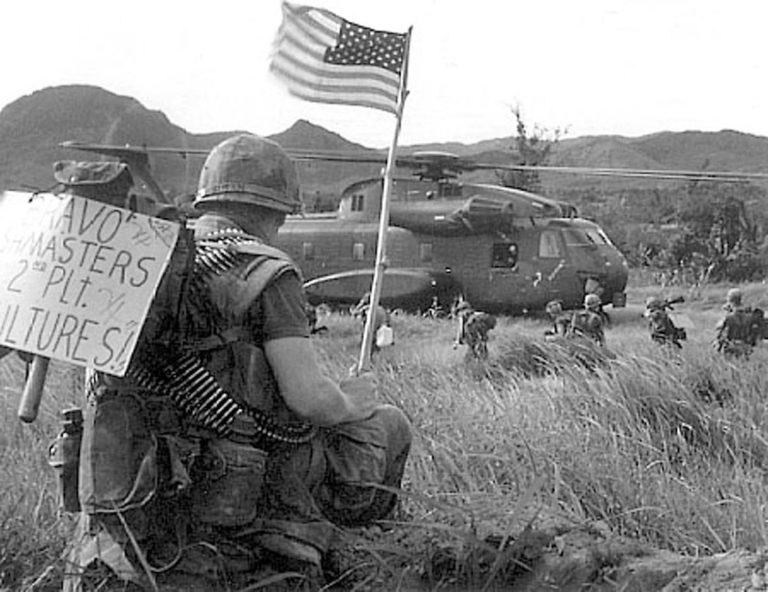
So when somebody says: “Vietnam! Twelve months! Mail call! No email! They sucked it up!”
“Vietnam was worse.” Yes, Vietnam was horrific. But again, the mythology is wrong. The normal U.S. military tour in Vietnam was 12 months.
My response is: Exactly. They had a 12-month tour. They had mail. They had R&R. And the military recognized that those things mattered.
You are proving the opposite of what you think you’re proving.
And Iraq and Afghanistan? This is even more embarrassing. Because the military formally created R&R programs for those deployments. During Operation Iraqi Freedom, the Department of Defense authorized two weeks of R&R leave for personnel serving one-year tours.
The Army later documented R&R programs and additional non-chargeable rest and recuperation benefits for personnel serving arduous deployments in Iraq and Afghanistan.
Why? Because commanders understand something that the social-media tough guys don’t: A human being is not a machine. You can push people extraordinarily hard. You can ask them to endure extraordinary danger. You can demand sacrifice. But eventually fatigue, mental-health deterioration, sleep deprivation, family separation, poor nutrition, broken sanitation, and suicide attempts- all of it becomes a readiness problem.
This isn’t “wokeness.” It’s military readiness.
And a carrier is not a forward operating base in Iraq- This comparison is also intellectually lazy.
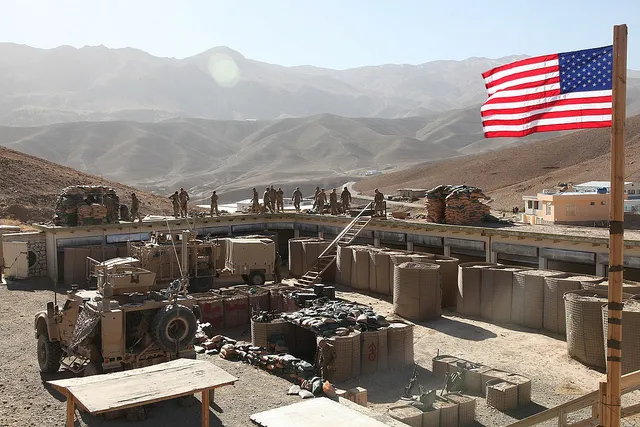
Someone writes: “Every Infantry soldier and Marine who did 12–16 month deployments at COPs in Iraq and Afghanistan are rolling their eyes and laughing.”
No. They shouldn’t. They should understand the difference. A soldier at a COP in Iraq or Afghanistan could have extraordinarily difficult conditions. Of course. Some endured terrible combat. Some experienced years of repeated deployments. Some experienced horrific trauma. But there were rotation systems. There were R&R programs. There were opportunities for leave. There were bases with access to land-based facilities. There were eventually established communications systems. And there was the possibility—depending upon location and mission—of physically leaving the combat environment.
The Lincoln is a ship. You can’t simply walk outside. You can’t go for a drive. You can’t take your family to dinner. You can’t spend the afternoon somewhere else. You can’t get off the installation and breathe different air. You are living and working inside the same steel structure. At sea for months. Under wartime operational demands. With thousands of other people. That makes a huge difference.
“But they have video calls!” And? That’s supposed to prove what? Video communication makes separation disappear? Does a FaceTime call make your wife able to hug you? Does a Zoom call let you hold your child’s hand? Does a video call give you eight hours of sleep? Does it repair a broken toilet? Does it make inadequate food nutritious? Does it turn nine months of continuous operational tempo into six months? Does it give you liberty? Does it change the fact that you’re still on the ship?
Of course not.
Technology changes the form of communication. It does not eliminate the human need for connection. And again, this is precisely why the WWII comparison is so stupid. Letters were normal because letters were the technology of the moment. Video calls are normal because video calls are the technology of ours. The human need is the same.
And here’s where the “veterans” need to think carefully- Some of the people making these comments claim to have served. If you really did serve, then you should understand something: You don’t throw your fellow service members under the bus because you dislike the politics of the administration or because you need to defend them.
You don’t call sailors “woke” because they report deteriorating conditions. You don’t call them “weak” because their families are worried. You don’t call them “whiners” because they say they are exhausted. And you certainly don’t attack them because acknowledging their suffering would complicate your political narrative.
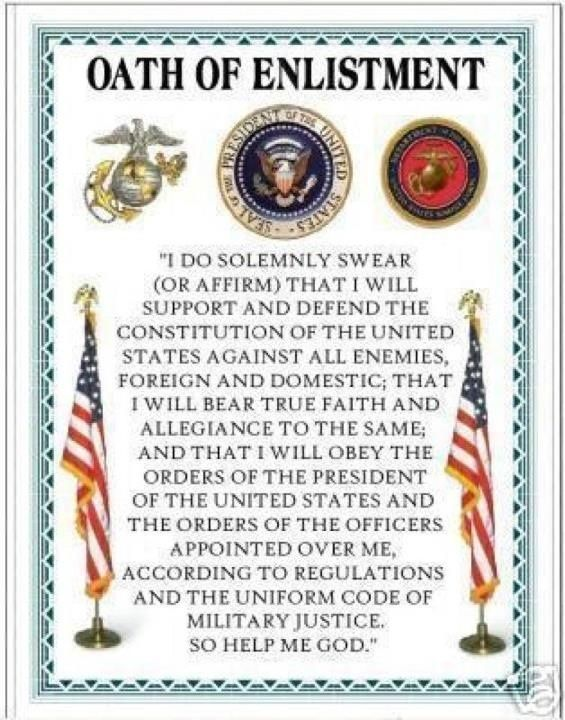
You took an oath. Not to Donald Trump. Not to Pete Hegseth. Not to Marco Rubio. Not to MAGA. Not to the Republican Party. And for that matter, neither to the Democratic Party.
Your oath was: To support and defend the Constitution of the United States against all enemies, foreign and domestic.
And part of the moral culture of military service is looking after the person beside you. That doesn’t disappear when you retire. Your fellow sailor is not suddenly your political enemy because you disagree with him. Your fellow Marine does not become a traitor because she says the ship’s conditions are unacceptable. Your fellow veteran does not become “woke” because he thinks the government should take better care of service members.
That’s not brotherhood. That’s tribalism. And it is deeply anti-American.
The real betrayal- If you are willing to sacrifice the welfare of American service members because acknowledging their suffering makes your political hero look bad, you have inverted the entire meaning of military service.
You have placed the politician above the soldier, the party above the institution, the leader above the Constitution, the narrative above the facts. And, ultimately, yourself above the people who are actually carrying the burden. That is not patriotism. That’s political cultism.
If someone has reached the point where Donald Trump can say, essentially, “The deployment wasn’t nearly long enough,” and that becomes more credible to them than the testimony of sailors’ families, then we have a serious problem.
Trump’s comment was especially remarkable given that the Lincoln had already been deployed for more than 260 days and had spent more than 200 days in a combat zone.
And Defense Secretary Pete Hegseth has similarly dismissed or disputed accounts of deteriorating conditions.
Fine. Investigate the allegations. Prove the families wrong. Release the relevant findings. Demonstrate that the sailors are receiving adequate food, medical care, sanitation, mental-health services and rest.
That’s what competent leadership does.

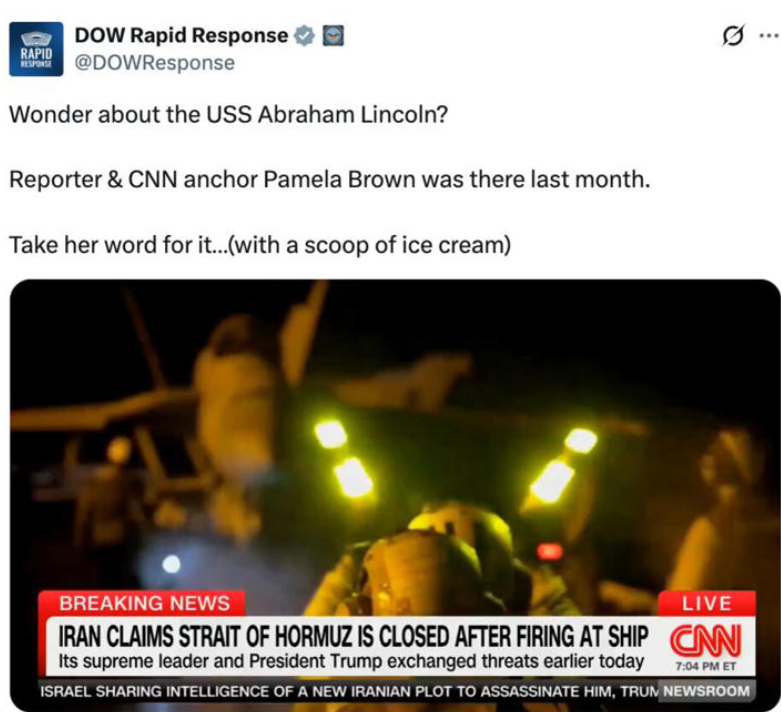
It doesn’t make memes about ice cream (which by the way was a huge thing back in WWII). It doesn’t treat sailors’ families as liars. It doesn’t tell people that because sailors in 1944 ate worse food, today’s sailors have no right to complain.
That’s not leadership.
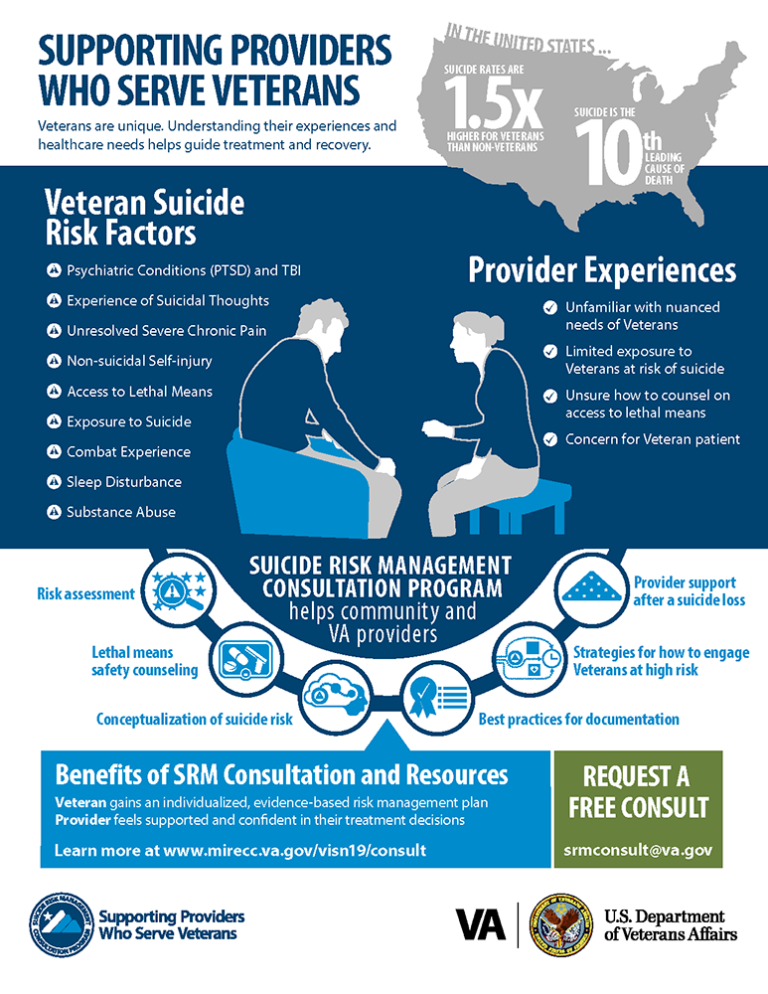
And don’t tell them “suck it up.” Because that phrase has helped destroy generations of veterans. We now know much more about PTSD, traumatic brain injury, depression, moral injury, substance abuse and suicide than previous generations did. That doesn’t mean previous generations were weak. It means we know more. That’s called progress. And caring for the people we send into combat.
The military itself has learned this lesson the hard way.
The VA’s latest data show 6,398 veteran suicides in 2023—an average of 17.5 every day. Sixty-one percent of those veterans had not received VA health care during the year before their deaths.
Seventeen and a half. Every. Single. Day.
So when some fake-ass internet warrior tells a veteran experiencing psychological trauma to: “Suck it up.” “Be a man.” “Stop whining.” “You’re weak.” “You’re woke.” he is not demonstrating toughness. He is perpetuating one of the oldest failures in military culture: teaching people to hide their wounds until the wounds become fatal.
We have done this for generations. From the Civil war to World War I, World War II, Korea, Vietnam…
And every generation eventually discovers that pretending psychological trauma doesn’t exist doesn’t make it disappear. It merely makes it harder to treat- and leads to more broken and lost lives.
Calling service members “unpatriotic” is especially dangerous and such an offense I find it hard to write about it. There is something historically disturbing about the argument that a soldier who says “I am suffering” is somehow betraying the country. Military organizations have always struggled with this temptation.
In authoritarian systems, political officers and ideological enforcers have often treated expressions of exhaustion, fear or dissent as evidence of insufficient loyalty. The Soviet military famously used political officers and ideological discipline to enforce political conformity. Nazi Germany likewise equated loyalty with ideological obedience and brutally punished those deemed defeatist or disloyal.
Obviously, the United States is not the Soviet Union or Nazi Germany. But the psychological mechanism is worth recognizing: “If you say the institution is failing, you are betraying the nation.” No. In a constitutional republic, it should be the opposite. A citizen who identifies a failure is exercising citizenship. A sailor who says the ship’s conditions are unsafe is not anti-American. A soldier who says his unit needs help is not unpatriotic. A veteran who demands better mental-health care is not weak. And a military family that says, “Something is wrong with my loved one,” is not the enemy. They are doing precisely what citizens in a free society are supposed to do.
The “tough guy” fantasy is actually profoundly anti-military. Real military toughness isn’t pretending you’re invulnerable. Real toughness is:
knowing your limits.
looking after your people.
telling the truth to your commander.
maintaining readiness.
getting help when you need it.
fixing the problem before it becomes a catastrophe.
The toughest commanders I have studied in military history were not the ones screaming that their men were pussies. They were the ones who understood logistics, morale, rotation, food, ammunition, medical care, sleep, communication and unit cohesion. Because they understood something fundamental: You cannot fight effectively with broken people. And a bad leader does exactly that- breaks the people entrusted to him.
And that’s what makes the current situation so infuriating- The United States is asking its military to do more and more around the world while stretching personnel, ships, aircraft, munitions and logistics. The Lincoln has flown more than 10,000 sorties during this deployment, according to reporting on the operation. That is an extraordinary operational accomplishment. And that is precisely why the sailors deserve to be taken seriously.
You don’t protect readiness by pretending the people generating that readiness don’t have human limits. You protect readiness by keeping them healthy enough to continue doing the job.
So to the people attacking the Lincoln crew: You want to talk about patriotism? Start there. You want to talk about toughness? Learn military history. You want to talk about veterans? Stop using veterans as props in your political arguments. You want to talk about sacrifice? Look at the families. You want to talk about duty? Remember the oath.
And if you actually served, remember the person who stood beside you. Because the sailor you’re calling a “whiner” today might be the same kind of person who would have carried your wounded ass off a burning ship yesterday.
That’s the brotherhood you are betraying.
And if your political loyalty has reached the point where you will attack your fellow service members simply because their suffering makes your preferred political leader look bad, then I have news for you: You didn’t become more patriotic. You simply found a politician to whom you transferred your patriotism and now follow with blind obedience.
And that is one of the most dangerous things that can happen in a constitutional republic. The United States military does not exist to protect the reputation of the president. It does not exist to protect the secretary of defense. It does not exist to protect a political party. It exists to defend the Constitution and the nation- the will of the people.
And the people who serve it are not expendable props in somebody else’s political theater.
They are the United States.
Treat them accordingly.
Continue reading: Honor Is Earned, Not Demanded: Doris “Dorie” Miller Was a Damn American Hero


[…] Continue Reading: No, the USS Abraham Lincoln Is Not a Cruise Ship. That Is Precisely the Point. […]
LikeLike