Jason Arday is dead. He was 41 years old. A tragedy.
On August 5, he resigned from the University of Cambridge after weeks of increasingly serious questions about his scholarship, his academic record, and elements of the extraordinary personal narrative that had helped propel him to international prominence. Nine days later, on August 14, he was found unresponsive at a property in Battersea, south London. The Metropolitan Police have described the death as unexpected but not suspicious. We do not yet know the medical cause of death.
His family says the campaign of misinformation and harassment had become too much for him.
So let me be very clear about something before making the argument that will inevitably offend people: I do not know that the attacks killed Jason Arday. Nobody knows that yet. But it is not a stretch to assume that the stress of the last few months may have something to do with it.
But I believe something else did. Academia killed Jason Arday—not necessarily by attacking him, but by creating him. And then, when the story it had created began to unravel, academia failed him again.
That is the tragedy. And it is much larger than Jason Arday.
The extraordinary man became an extraordinary story.
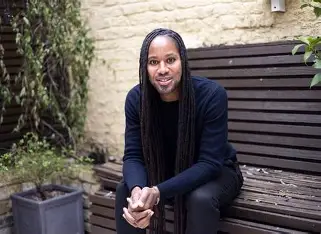
Arday’s rise really was remarkable.
He grew up in south London in a Ghanaian family. He was diagnosed with autism and global developmental delay as a child and has described being unable to speak until around age 11 and learning to read and write only much later. He nevertheless obtained degrees, completed a doctorate at Liverpool John Moores University, became a professor and, in 2023, at age 37, became the youngest Black professor in Cambridge’s history.
There is nothing about that trajectory that should not inspire admiration. But somewhere along the way, something very dangerous happened. Jason Arday stopped being merely an academic who had accomplished something extraordinary and became an institutional symbol of extraordinary accomplishment.
He was not simply a professor. He was the Black professor. The youngest Black professor in Cambridge history. The autistic child who supposedly could not speak and eventually became a Cambridge professor. The working-class child who conquered elite academia. The activist. The race scholar. The philanthropist. The extraordinary endurance athlete. The diversity success story. The proof that the academy was changing.
The story was almost too perfect. And that should have been precisely when someone in academia asked the most boring and important question of all: Is it all true, and does the scholarship withstand scrutiny? Apparently, we did not ask that question soon enough. Or those who did were sidelined.
Cambridge did not merely hire a professor. It hired a narrative. This is where the Arday affair becomes an indictment of contemporary academia.
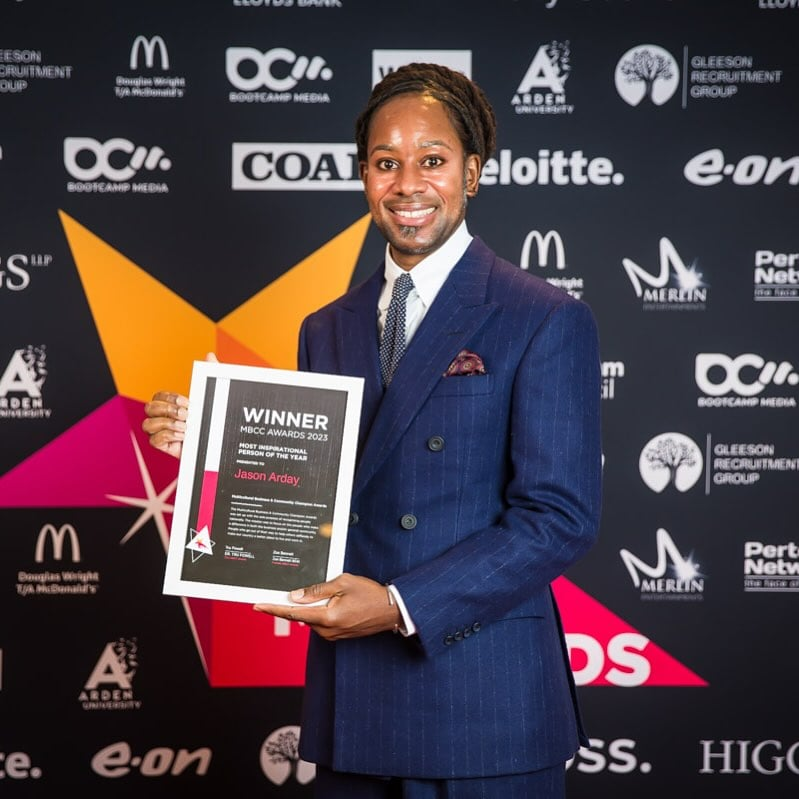
Cambridge hired Arday into its Faculty of Education in 2022. His appointment was announced with enormous publicity in 2023. At a university facing sustained criticism about its racial diversity, he became a spectacular symbol of institutional transformation.
At the time of his appointment, Cambridge had only five Black professors, according to reporting on the controversy.
That context matters. Because there is an enormous difference between: “We found an outstanding scholar who happens to be Black.” and “We need a Black scholar who can embody our institutional commitment to diversity.”
The first is scholarship. The second is public relations. And when an institution desperately wants the second, it becomes dangerously easy to overlook inconvenient questions about the first.
Then people began asking questions. The plagiarism allegations are not simply the invention of one internet provocateur. That distinction matters enormously.

In 2023, emeritus professor Dave Harris contacted Arday about similarities he had identified between a 2018 Arday paper and an earlier study by epidemiologist Anjum Memon and colleagues.
Harris then asked sociologist Martyn Hammersley of the Open University to examine the material. Hammersley independently concluded that there was substantial plagiarism and raised concerns with Cambridge’s Faculty of Education and its Head of Policy, Governance and Integrity.
There were also questions about research methodology.
One 2018 article described focus groups involving 32 Black and minority ethnic university students. Questions were subsequently raised about the provenance of quotations attributed to participants and about similarities between the article and earlier work. Later changes to the article altered or removed some of those quotations and methodological descriptions.
The controversy then expanded dramatically in 2026.
Philosopher Nathan Cofnas independently examined Arday’s 2015 doctoral dissertation and identified dozens of passages that he argued were taken almost verbatim or closely paraphrased from a 2009 dissertation by Paula Zwozdiak-Myers of Brunel University London. Retraction Watch reported that David Sanders, a Purdue biochemist who had reviewed a 63-page dossier of textual comparisons originally prepared for Times Higher Education, concluded that there was extensive plagiarism.
And this is important: Arday denied plagiarism.
He acknowledged mistakes but blamed inadequate doctoral supervision and other circumstances contributed to problems in his work. Liverpool John Moores University had previously investigated the thesis and concluded that plagiarism had not been established. Cambridge initially relied upon that investigation in defending him.
So we should not pretend that every allegation has already been adjudicated as fact– although the evidence for sustained plagiarism seems very strong. But neither should we pretend that nothing happened. There was enough evidence and enough disagreement among academics that Cambridge eventually announced an investigation into the circumstances of Arday’s appointment and his time at the university.
That is not a racist conspiracy. That is academic scrutiny. And academic scrutiny is supposed to be normal. And yes, some of the people who raised the questions have controversial views about race. This is where the discussion becomes especially revealing. Nathan Cofnas is not politically neutral.
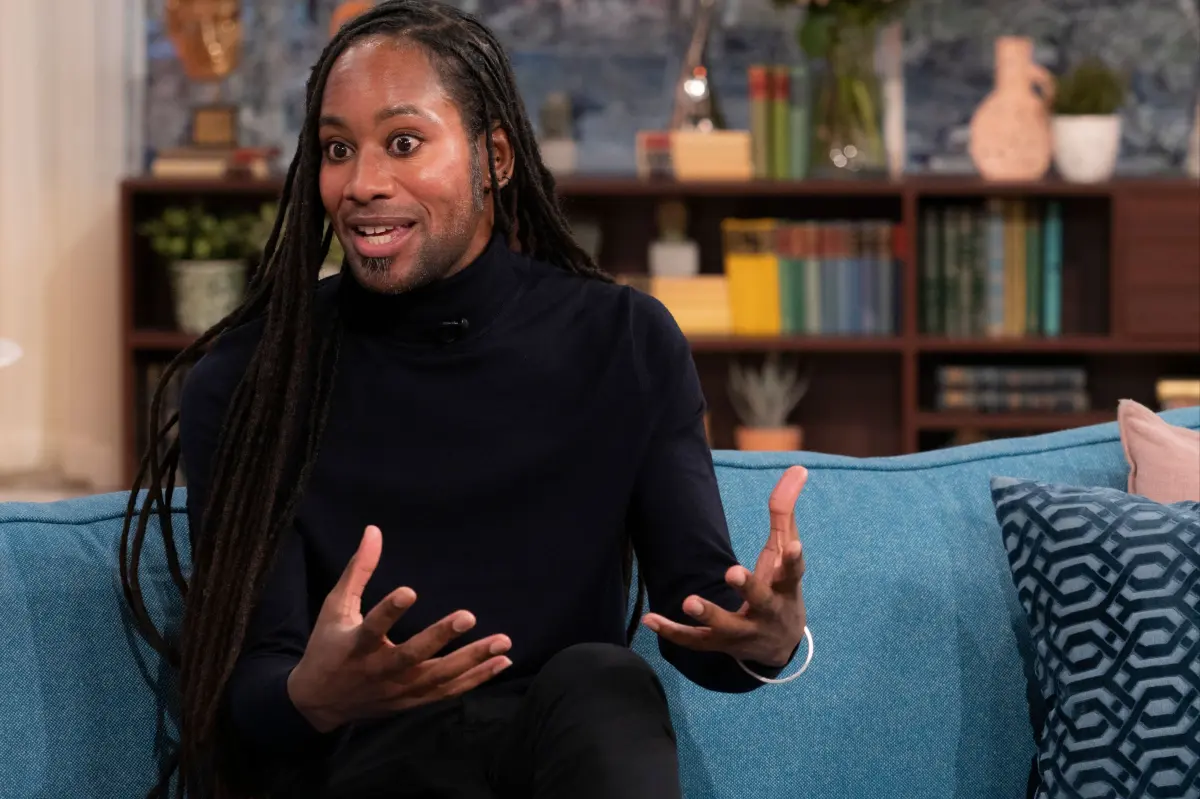
He has published controversial (one may say -racist) arguments about racial differences and hereditarian explanations for intelligence. His views have generated significant controversy, and Cambridge itself investigated complaints about his publications in 2025. The university concluded that, although many considered his views offensive, they did not breach the law or university regulations concerning free speech.
Dave Harris has also been involved in controversies surrounding race scholarship and critical race theory. The Guardian reported that he published a book on critical race theory and that his university had temporarily removed his emeritus title during an administrative dispute, later reinstating it.
Excellent. Challenge, criticize, disagree with them. Demonstrate where their racial assumptions are wrong.
But please, for the love of intellectual honesty, do not confuse the politics of the person making an allegation with the validity of the evidence being presented.
If Nathan Cofnas produces a textual comparison, we examine the textual comparison. If Dave Harris identifies a suspicious passage, we examine the passage. If Martyn Hammersley identifies methodological problems, we examine the methodology.
The correct academic response is not: “But he’s a racist.” It is: “Let’s look at the evidence.”
Otherwise we have abandoned scholarship. And this is precisely where the Arday affair exposes something deeply rotten in contemporary academia.
The White Gaze has an unexpected twin- I have spent enough time in academia to recognize this phenomenon.
There is a particular form of white liberal, progressive—and sometimes radical or anarchist—academic paternalism and colonialism that desperately wants its next diversity hero:
The “magic Negro.” The exceptional immigrant. The extraordinary “Latinx” (and God forbids that I write Latino lest a non-Latino over-privileged white liberal scold me). The Indigenous intellectual. The brilliant colonial subject. The queer scholar of color. The working-class minority who somehow conquered the institution.
The person who can be placed on the university website, photographed with the president, invited to the keynote, featured in the fundraising campaign, and presented as evidence that the institution has finally transcended its racist past.
Sometimes the person really is extraordinary. Sometimes the scholarship is brilliant. Sometimes the appointment is entirely deserved.
In fact- more often than not the appointment and accolades are more than well-earned and deserved.
But sometimes the institution falls in love with the identity and the narrative before it has adequately evaluated the person.
And that is not equality. It is another form of racialization. The person becomes a representative before being allowed to remain an individual. The Black professor becomes the Black professor. The Latino scholar becomes the Latino voice. The immigrant becomes the immigrant success and radical (“on their own terms” ) story.
And eventually the institution is no longer merely defending an academic. It is defending its own diversity narrative.
That is when things become dangerous. Because now non-personal criticism of the scholar can be interpreted as criticism of the community. Criticism of the research becomes racism. Questions about methodology become epistemic violence. Questions about qualifications become xenophobia. Questions about plagiarism become an attack on non-white and non cis-male intellectual achievement.
And the university becomes trapped defending someone because of what the person represents, rather than because it has independently verified the quality of what the person produces.
That is how institutions create impossible expectations. And that is how they create impossible falls. It used to be that for a non-white person – being exceptional was a minimum requirement just to take over a mundane position among mediocre people.
But the pendulum has shifted so much that now academia buys the background story of individuals so they can tell an exceptional story- and ever more often- these individuals are average but expected to perform exceptionally and be stars. That’s a recipe for endless stress and ultimate failure.
The Identity Trap
This problem is particularly acute in some corners of area, ethnic and racial studies. Let me be clear: these fields are essential. I have spent much of my own professional life studying communities and histories that traditional academia ignored, marginalized or misunderstood.
The answer was never to abandon those fields. The answer was to make them better. More rigorous, International, comparative, empirically grounded, and more intellectually diverse.
Instead, some parts of the academic enterprise have developed an extraordinarily unhealthy relationship with identity. The scholar does not merely study a community. The scholar becomes the community.
“I am Black, therefore I speak for Black people.” “I am Latinx, therefore I speak for Latinxs.” “I’m Puerto Rico, therefore I possess Puerto Rican truth.” “I study Indigenous history, therefore criticism of my interpretation is an attack on Indigenous people.”
No. A scholar is not the community.
A scholar studies, interprets, argues. A scholar can be wrong- in fact- scholars are often wrong. It is part of studying. And a scholar must be allowed to be wrong without dragging an entire population into the courtroom with them. This is one of the fundamental principles of intellectual life.
The professional people of color are watching.
And this is where the whole thing becomes particularly insulting. There are extraordinarily talented scholars of color throughout American and British academia. I’ve applied to many positions and after the search was completed, and who applied to it and who got it comes through the grape vines-I couldn’t believe the number and quality of the applicants. Likewise, I’ve been part of searches that were incredibly difficult to conclude because of the many truly exceptionally brilliant, accomplished, and dedicated candidates in the pool.
People who read widely, know their archives, understand different methodologies, can distinguish evidence from interpretation, who can criticize their own communities without hating them, who can defend their communities without romanticizing them, who can read authors with whom they disagree and establish meaningful constructive dialogue. People- for example- who understand that the global experience of race cannot be reduced to a handful of fashionable American theories.
People who understand that scholarship is not activism. And people who understand that activism is not scholarship. At least not in the sense that your activism comes first and your scholarship must serve it.
Many of these scholars watch as institutions elevate people who fit the diversity narrative while subjecting their own work to extraordinary scrutiny.

Why? Because they refuse to perform. Because they will not turn themselves into mascots. Because they will not reduce complicated communities into oppressed-versus-oppressor cartoons. Because they do not tell administrators what administrators want to hear. Because they insist upon evidence.
Because they know that the people they study deserve better than intellectual paternalism.
And sometimes because they are simply better scholars. That is the great irony.
Lowering standards in the name of inclusion does not help minorities. It insults them.
It says: “You need special standards because you cannot meet ours.”
I reject that completely. The Black scholar who is genuinely excellent does not need lowered standards. The Latino scholar who is genuinely excellent does not need lowered standards. The immigrant scholar who is genuinely excellent does not need lowered standards. In fact- they reject and resent the crumbs of lower standards.
They need exactly what everybody else needs: a fair opportunity and ruthless intellectual scrutiny. Nothing less. Nothing more.
Mediocrity can be a form of control– Here is a proposition that will make many people uncomfortable: Promoting mediocrity in the name of diversity can itself become a mechanism of power. It looks progressive and it sounds progressive. It produces wonderful photographs. It generates press releases. It allows administrators to announce that the institution has changed.
But underneath it, the old structures remain.
The institution decides who is acceptable, who gets elevated, and which identities are useful. And the institution decides which minority voices are sufficiently safe.
That isn’t liberation. It is patronage. And patronage is one of the oldest technologies of power in human history. The face changes. The hierarchy remains.
And then there is narcissism- Another problem I have encountered increasingly in academia is the transformation of scholarship into performance. In many cases pathological performances.
The academic becomes a protagonist, every disagreement becomes an attack, every criticism becomes oppression, every correction becomes violence. Every opposing argument becomes evidence of ideological malice.
And eventually the scholar becomes incapable of doing the one thing that distinguishes an intellectual from a propagandist: changing one’s mind when confronted with evidence.
The result is a peculiar form of intellectual narcissism. The scholar reads—but selectively. The scholar cites—but predictably- and questionably. The scholar travels through the same intellectual ecosystem of authors, theories and ideological assumptions.
The “scholar” knows an enormous amount about the literature that confirms the thesis and remarkably little about the scholarship that challenges it.

That is not intellectual breadth. It is confirmation bias with footnotes.
The problem becomes catastrophic when universities reward it. Because then the narcissist is not merely producing bad scholarship. The narcissist is teaching students that disagreement with they is immoral. The professor uses the classroom not to expose students to competing arguments but to identify the correct political conclusions. Indoctrination by any metrics. Students who challenge the professor become problems. Students who repeat the professor’s vocabulary become allies. The classroom becomes a political sorting mechanism.
And the university wonders why the public no longer trusts it.
The first responders- There is another phrase that increasingly makes me cringe: “first responder.” Everyone is suddenly a first responder. The academic is a first responder to racism, to colonialism, to patriarchy, to transphobia, to climate injustice, to capitalism.
Perhaps. But what exactly did you do? Did you build an institution? Did you organize people? Did you teach children? Did you feed anyone? Did you defend someone’s rights? Did you create a community organization? Did you risk your career? [No- you were rewarded and promoted for standing on a soap box],.
Did you actually help somebody? Or did you write a twelve-page article about helping a community- or edited a mediocre booklet on first-hand “experiences” exploring one’s own feelings about the real suffering of real people in real catastrophes in your fight against “disaster capitalism” in the process replacing it with academic protagonism, colonialism, and porno-misery?
There is a difference. And the university has become remarkably good at confusing the two.
What happened to Arday’s personal story? The controversy eventually expanded beyond scholarship.
Questions were raised about claims concerning his endurance running and fundraising. University biographies reportedly changed descriptions of some of those achievements. His claims about running 300 miles in three days and 600 miles in six days came under scrutiny.
Questions were also raised about aspects of his childhood story. Former schoolmates gave conflicting accounts about whether he spoke as a child. Some remembered him as talkative and funny; others supported accounts that he was largely nonverbal until later childhood.
And perhaps most disturbing were questions surrounding claims of extreme harassment. Arday described threats, physical intimidation, bullets, bananas, corrosive substances and mutilated animals being sent to him or his family. He specifically described a severed pig’s head being delivered to his parents’ home.
The Guardian investigated those claims and reported that the Metropolitan Police found no record of the alleged investigation into the pig’s head and that the butcher Arday identified said police had never contacted him.
These are extraordinarily serious questions. But again: questions are not verdicts.
We should not turn journalism into a court. And we should not turn sympathy into a substitute for evidence. That standard must apply to everyone.
But the attacks did not kill him. This is the point where I depart from both camps.
The people attacking Arday will want this story to become: “We exposed a fraud.” The people defending Arday will want it to become: “A Black academic was murdered by racism.” Neither conclusion is established.
The first ignores the institutional failures that helped create the conditions for the controversy. The second makes an extraordinary claim about causation that we cannot presently establish.
What we can say is this: Arday was placed into an extraordinarily visible position before his scholarship, biography and institutional narrative had apparently received the level of scrutiny appropriate to that position.
Then, when scrutiny finally arrived, it came not as patient academic review but as a spectacular public confrontation. That is the institutional failure.
And that failure existed long before Nathan Cofnas wrote anything. It existed before the newspapers, before the resignation, before the death.
The attacks did not create the problem. They exposed it.
Academia created the pedestal- That is why I keep returning to the phrase: Academia killed Jason Arday. Not because I know what caused his death. I don’t. Not because every accusation against him has been proven. It hasn’t. And not because racism doesn’t exist. It obviously does. I mean something more profound.
Academia helped build the pedestal from which he eventually fell. The institution wanted the story. The media wanted- heck- craved the story. The diversity industry wanted the story. The administrators wanted the story. The activist-academic ecosystem wanted the story. And perhaps Arday himself came to inhabit the story.
But a human being cannot safely live as an institutional mythology. Eventually reality catches up with mythology. And when it does, the fall is brutal.
This is bigger than Jason Arday- This is about the collapse of public trust. Every time a university elevates someone because they are politically fashionable rather than intellectually excellent, the public notices. Every time an institution protects a scholar because criticism threatens its DEI narrative, the public notices. Every time a university treats ideological disagreement as misconduct, the public notices. Every time a professor tells students what they are permitted to think, the public notices. Every time a scholar manipulates evidence to make reality fit a political narrative, the public notices. And every time academia demands that the public believe something because a professor says it, while refusing to show the evidence, the public learns one more reason not to trust professors.
Eventually people stop believing us. Not only when we are wrong. When we are right too. And that is the catastrophe. Because universities are among the few institutions in modern society that are supposed to exist precisely for the purpose of telling uncomfortable truths.
We need universities. Democracy and civil society need them. Students need them. Underserved and minority communities need them. Especially minority communities. They don’t need academic mascots. They need knowledge- access to the tools that enable us to engage in the production of knowledge. They (We) don’t need symbolic representation.
They need opportunity. They don’t need professors who speak for them. They need scholars who study their histories honestly. They (We) don’t need lowered standards. They need institutions that will give them a fair shot and then judge them by the quality of what they produce.
Equality means the right to be ordinary- Perhaps the greatest insult to any historically excluded community is the insistence that every successful member must be extraordinary.
I don’t want a Black professor because he is Black. I don’t want a Latino professor because he is Latino. I don’t want an immigrant professor because his biography makes a wonderful press release. I want a professor who is good. Maybe brilliant. Maybe ordinary. Maybe terrible. Because that is what equality actually means.
It means that a Black professor can be mediocre without becoming evidence against Black people. It means a Latino professor can be brilliant without becoming the representative of every Latino. It means an immigrant can fail without becoming evidence against immigration. It means not having to carry the burden of a whole community on your shoulders 24/7. In fact, it means being allowed to be human- warts and all.
It means a woman can make a mistake without making feminism responsible. It means a gay scholar can be wrong without making the LGBTQ community wrong. And it means a Black academic can be accused of plagiarism without that accusation becoming an attack on Black scholarship itself. That is equality. Anything else is essentialism wearing progressive clothing.
We have to choose- Jason Arday’s death should therefore force academia to ask a question far more uncomfortable than: “Was he a victim of racism?” or: “Was he a fraud?” The question should be: Why did we need him to be either?
Why couldn’t he simply be a human being who became a professor?
Why did he have to become the youngest Black professor in Cambridge history?
Why did his personal biography become part of his academic credential?
Why did his race become part of the institutional marketing?
Why were his critics so easily dismissed?
Why did legitimate questions apparently take years to receive serious attention?
Why did the scrutiny eventually become a public spectacle?
And why does contemporary academia so often seem more interested in appearing progressive than in being intellectually honest?
Because that is what I fear we are witnessing.
Academia has turned diversity into branding.
It has turned identity into capital.
It has turned activism into a credential.
It has turned moral certainty into an intellectual substitute.
And it has turned the university into a place where being on the correct side of the political divide can sometimes matter more than being correct.
That is not progressive. It is anti-intellectual. Deeply anti-intellectual.
And it is ultimately racist in the most paternalistic sense of the word: it treats people from historically marginalized communities as symbols who must be protected from the ordinary demands of intellectual life. I reject that. Completely.
Give me the Black scholar who wants his work attacked. Give me the Latina scholar who welcomes disagreement. Give me the immigrant professor who says, “Show me the evidence.” Give me the Indigenous historian who tells me that some of the cherished stories of her own community are wrong. Give me the white professor who admits that he was wrong. Give me the conservative who can change their mind. Give me the radical who can change theirs.
Give me the scholar who can say: “I don’t know.” And then: “Let’s find out.” That is academia. Everything else is theater. And theater and pathological performances is exactly what we have too much of.
Jason Arday deserved better than to become a symbol. His students, Black British academia, Cambridge, and the public deserved better.
Perhaps the most tragic lesson is that the people who wanted so desperately to demonstrate that the academy had changed may have reproduced one of its oldest sins: deciding what a person represents before deciding what that person actually knows.
The old gatekeepers excluded people because they were Black, female, immigrant, working-class or otherwise “different”. The new gatekeepers sometimes make the opposite mistake. They elevate people because they are those things. And we create stories in which that difference makes you exceptional without having done anything yet- that is intro to essentialism 101.
Neither is equality. Both reduce the human being to an ideologically and politically compromised and public-relations convenient identity.
And somewhere between those two failures stands the university—supposedly the place where evidence is more important than ideology.
If we cannot restore that principle, then Jason Arday’s tragedy will not be an isolated tragedy. It will be a symptom. Because academia is not merely losing credibility. It is helping dismantle one of the foundations upon which democratic civil society depends: the belief that there are institutions where evidence matters more than tribe.
And that leaves us with the question I cannot shake: If academia continues dismantling the intellectual foundations of civil society in its desperate pursuit of relevance, representation, ideological conformity and institutional self-congratulation, what collapses first?
Civil society—or the academia that helped dismantle it?

