[This is the third installment of a series of essays: From the Great Depression to the Korean War: Puerto Rico’s Greatest Generation—and the Global Nature of the Puerto Rican Soul]
Part I — Hurricanes, Hunger, and the Strike That Broke the Silence
“Puerto Rico’s problems had started before the Great Depression. As the Depression castigated the U.S. mainland, it aggravated preexisting conditions on the island. Puerto Rico’s dire economic picture—an unemployed or overworked, underpaid, malnourished rural population and a rapidly failing urban sector—stirred widespread discontent. As hunger- became the norm, the economic situation led to political violence.” (HFR, Soldiers of the Nation, 2018)
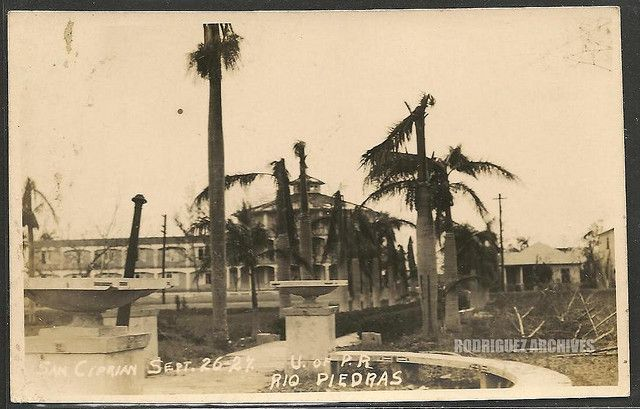
By the time Wall Street collapsed, Puerto Rico was already staggering. Hurricane San Felipe had crippled the coffee highlands in 1928, dropping production from 32 million pounds to just 5 million the next year and wiping out the island’s remaining European markets as global trade froze. The hills still bore the scars when San Ciprián arrived on September 26, 1932, ruining small fruit producers along the northern coast — one of the main agricultural zones producing food crops — killing 225 people, injuring more than 3,000, and leaving over 100,000 Puerto Ricans homeless.
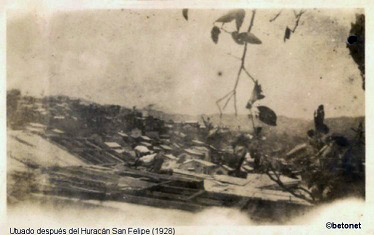
The early 1930s landscape was a panorama of broken trees, ruined fincas, and families rebuilding with nothing but their own labor. When the Great Depression reached the colony, Puerto Rico was in no shape to withstand its assault.
Daily life became a constant hustle — scavenging for wild tubers, fishing camarones de río, eels, and freshwater fish, doing whatever was necessary to put food on the table. Hunger was not a metaphor; it was the rhythm of survival.
Structural Causes: Land, Sugar, and Colonial Machinery.
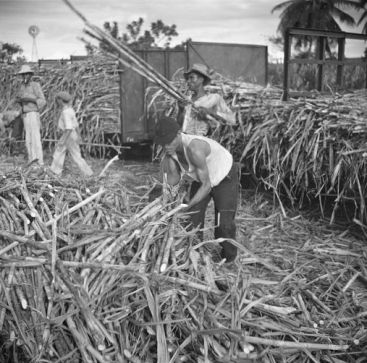
Under American rule, land concentration and the proletarianization of the peasantry advanced hand in hand. Absentee‑owned sugar corporations monopolized nearly half of Puerto Rico’s arable land, pushing jíbaros and cane workers into deeper poverty and making the island increasingly dependent on imported food. Land concentration, high population density, and dependence on exports exacerbated economic hardships and gradually pauperized the Puerto Rican peasant.
In 1930, the Brookings Institution published its 700‑page study Porto Rico and Its Problems, describing the island’s economic situation as “deplorable” and noting rural families’ annual income averaged $250–$275. Urban families earned slightly more, but higher costs and the absence of home orchards left them equally vulnerable to hunger and malnutrition.
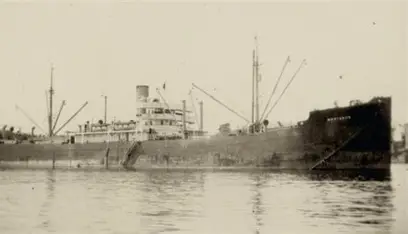
The Organic Acts — Foraker and Jones — used to govern the island- required that imports be carried exclusively by the U.S. merchant marine, one of the most expensive in the world. Food on the island cost 8–14 percent more than in New York, even though Puerto Ricans earned less than one dollar a day. In New York, workers earned four to ten dollars and still paid less for food and manufactured goods.
Manufactured goods were so inaccessible that “in 1930 only one person in four had ever worn shoes.”
In 1937, Enrique Esteban Bird López calculated that cane cutters spent 94 percent of their income on food, leaving a daily budget of 12 cents per family member — only four cents more than the daily food expense for feeding a hog in the United States. (Ayala, American Sugar Kingdom, citing Esteban Bird)
By 1930, 400,000 people — 25 percent of the population — lived on lands dedicated to sugar cane production, which represented 13.3 percent of total land. That translated into sugar cane taking 50 percent of the arable land and 35 percent of the agrarian population. (Mathews, La política puertorriqueña y el Nuevo Trato, 150)
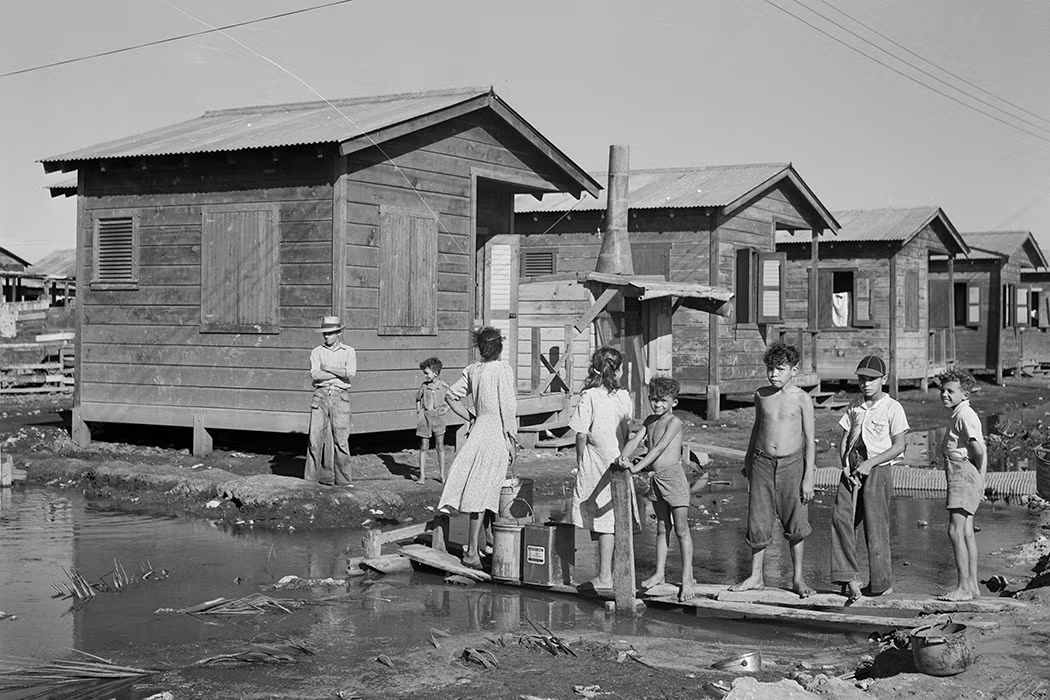
Puerto Rico muddled through these calamities, largely left to its own devices. And those least responsible for the crisis — the agrarian and urban working classes and their families — paid the highest price.
As hunger — the most tangible expression of poverty — spread across the countryside, low wages and food scarcity reached the urban centers as well. Penury soon gave way to social unrest and political violence.
The Sugar Workers’ Strike
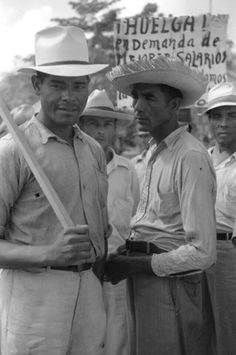
“In 1934, a general strike of sugar cane workers in Puerto Rico allied this labor sector (for the very first time) with the Nacionalistas and effectively ended the era of political stability on the island.” (HFR, Soldiers of the Nation, 104)
Workers requested assistance from Pedro Albizu Campos, who negotiated on their behalf. But shortly after the strike was resolved, he lost their support. Fixated on independence, the Nacionalistas had not developed a labor ideology that could win permanent loyalty from the working classes.
Still, the strike mattered. It forced Washington to confront the crisis. Hunger, hurricanes, and structural collapse had pushed Puerto Rico to the edge.
Washington responded with the imperial stick and carrot. (See Installment 2: A Walk Through el Tiempo Muerto)
Part II — The Imperial Stick and Carrot
Aware of Governor Gore’s inability to govern and the endless cycle of strikes, President Franklin Delano Roosevelt feared Puerto Rico was on the brink of anarchy. Persuaded by Luis Muñoz Marín’s personal plea to remove Gore, Roosevelt chose retired general Blanton Winship to replace him. Winship assumed office on February 5, 1934.
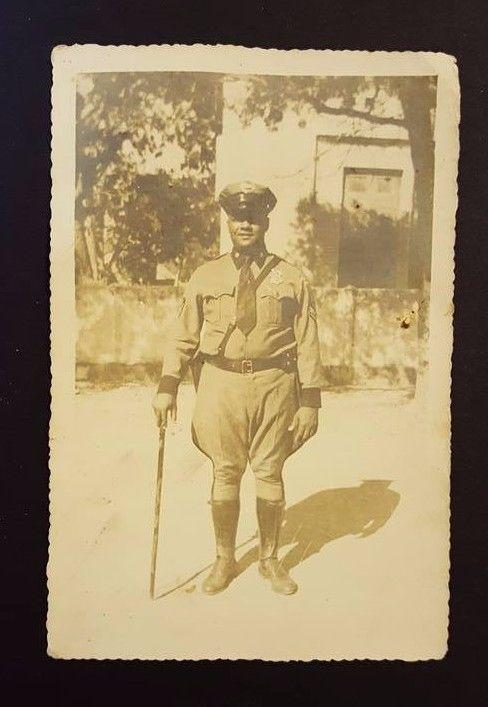
Before leaving, Gore was pressured by Senator Millard Tydings to appoint his close friend Elisha Francis Riggs as chief of the Insular Police. Riggs had served in the War Department’s Military Intelligence Division and retired as a colonel.
Under Winship, the militarization of the Insular Police acquired special relevance, especially after 1935. Police were issued submachine guns and riot‑control gear, and their training intensified under Winship’s personal supervision. FBI agents and officers and sergeants from the 65th Infantry — the Borinqueneers — trained police at Fort Buchanan. The regiment’s intelligence section, S‑2, produced weekly reports on “subversive activity.”
One of the darkest chapters in Puerto Rican history was about to be written. (HFR, Soldiers of the Nation)
The Carrot: The stick, however, would be accompanied by a carrot: the New Deal.
The stick, however, would be accompanied by a carrot: the New Deal.
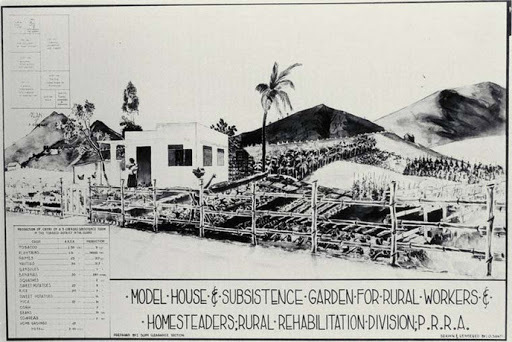
Once fully extended to Puerto Rico, it would gradually expand in scope and, in many respects, become more democratic than its mainland counterpart. Ironically, the broad powers the federal government exercised over an unincorporated territory — an outright American colony — allowed Washington to move faster than it often could within the states. Puerto Rican administrators reshaped agencies and programs to meet the island’s particular needs.
But that would take time and effort.
In the meantime, Puerto Ricans continued to endure impossible and implausible conditions.
Part III — Lamento Borincano
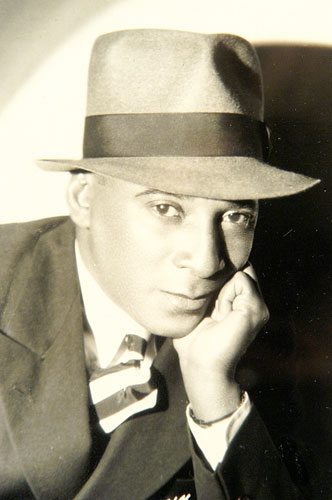
Lamento Borincano cuts deep for Puerto Rican. The song was composed by Rafael Hernández– the island’s greatest compositor and WWI veteran (one of very few Puerto Ricans to make it to the Western Front in France during the Great War)- in 1929 while living in Spanish Harlem.
The song is a profound yet hopeful lament that shows the reality of most Puerto Ricans during that time and the subsequent decades. It never went away — and it regained meaning in view of the new calamities affecting Puerto Rico since the early 2000s: nature and manmade disasters, another exodus, people leaving the island once more because no matter how hard they work, they can’t make it.
It showed our reality in the 1930s, during the first true Puerto Rican exodus of the 1940–60s, and again in the twenty‑first century.
That constant hard work to no avail — the whole family working from sunrise to sunset just to be at the whims of global markets and unable, despite their best efforts, to survive a natural disaster — that was the reality of the Puerto Rican worker in the 1930s.
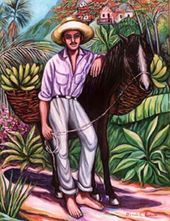
The Jíbaro’s Story- The song tells the story of a nameless jíbaro — our peasant folk, our yeoman without title to the land — full of hope and happiness, loco de contento, with nothing but goodwill toward his family and fellow Puerto Ricans.
On his way to town to sell the product of his labor, thinking that if he sells his load he might buy a dress for his mom — a rare luxury indeed— he finds the town almost deserted. No one willing or able to buy his load. Everyone afflicted and lamenting cruel hardship.
And yet on his way back — saddened, crying — he worries not about himself but about his children and his Puerto Rico. He sings to the island: Borinquen, tierra del Edén, perla de los mares, now that you are dying in hardship, let me sing to you.
The song is more than an ode to the impoverished jíbaro. It is our first song about the heartbreaking decision of leaving your home — tu casa — because you need to feed your family and help your community. It is very likely that Hernández understood that many fellow Puerto Ricans would follow his own steps.
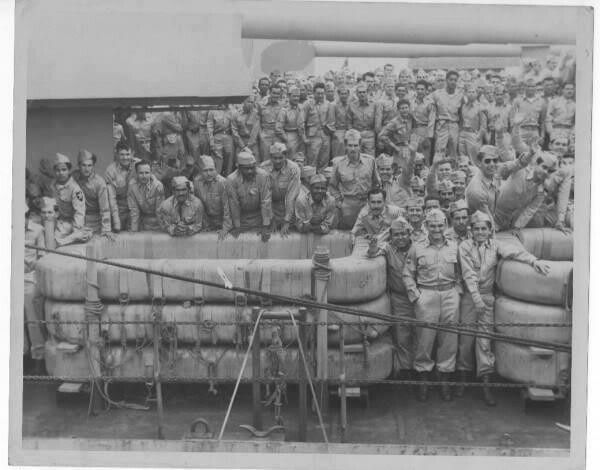
In the early 2000s, I interviewed dozens of Puerto Rican WWII and Korean War veterans, and this was the story of many. They mostly came from the hills of the interior, the countryside, the coastal plains. They left in the morning to sell their load in the local market, returned with the load almost intact, and had enlisted in the military- just to say goodbye to their mothers and siblings, or wife and children.
At least they were able to come back — most of them anyway — and were able to subsidize their jíbaro way of living and even buy the lands where they grew up.
Toward El Nuevo Trato- But we are not there yet. World War II — the event that would profoundly transform Puerto Rico — was still half a decade away, at least for the United States. In the meantime, the Puerto Rican people continued with their Lamento Borincano, which was never truly a lament. It was a declaration of love for the patria, a cry of defiance, and an affirmation of pride in being hijos de Borinquen.
Yet neither hurricanes nor hunger would define Puerto Rico’s future. A new experiment was about to begin. One born not in San Juan… but in Washington. Colonialism is full of ironies– and thus, Puerto Ricans would adopt the brainchild of New Deal progressives and turn it into something truly Puerto Rican.
Next Episode: Ironies of Colonialism: Reconstruction and el Nuevo Trato in Puerto Rico.
Lamento Borincano by Rafael Hernández
Sale loco de contento,
con su cargamento para la ciudad,
¡ay! para la cuidad.
Lleva en su pensamiento
todo un mundo lleno de felicidad
¡ay!, de felicidad.
Piensa remediar la situación
del hogar que es toda su ilusión, sí
Alegre, el jibarito va pensando así,
diciendo así, cantando así por el camino:
“Si yo vendo la carga, mi Dios querido
un traje a mi viejita voy a comprar”
Alegre también su yegua va
al presentir que su cantar
es todo un himno de alegría.
En eso le sorprende la luz del día
y llegan al mercado de la ciudad.
Pasa la mañana entera sin que nadie
quiera su carga comprar
¡ay! su carga comprar.
Todo, todo esta desierto,
el pueblo esta muerto de necesidad
¡ay! de necesidad.
Se oye este lamento por doquier
en mi desdichada Borinquen, sí
Y triste, el jibarito va pensando así,
diciendo así, llorando así por el camino:
“Qué será de Borinquen mi Dios querido
que será de mis hijos y de mi hogar.”
Borinquen, la tierra del Edén,
la que al cantar, el gran Gauthier
llamo la perla de los mares.
Y ahora que té te mueres con tus pesares
déjame que te cante yo también.


[…] Next Installment: Depresión Tropical: A Tale of Natural and Manmade Disasters and Defiance. […]
LikeLike