Every World Cup triggers the same academic performance. The self‑appointed guardians of anti‑racism, anti‑colonialism, and anti‑imperialism suddenly insist that sports should be enjoyed “without politics”—but only when the team in question fits their ideological preferences. This year, that team is Argentina.
And once again, the scholars who lecture everyone else about structural analysis, privilege, and historical accountability are sprinting away from their own standards.

This is not an essay about soccer. It is an essay about the selective morality of academics who demand ideological consistency from everyone except themselves. Public trust in academia is collapsing, and while many attacks are grossly exaggerated, the charge of selective outrage is not. I see it daily from inside the belly of the academic beast—especially in the humanities, social sciences, and the activist‑scholar enclaves of ethnic studies.
These are the people who denounce privilege when you post a beach selfie, yet when the World Cup arrives, they adopt the same “keep politics out of sports” stance they ridicule in conservative football fans attacking Colin Kaepernick.
Argentina vs. España became the flashpoint, and the usual suspects rushed to defend Argentina with the same unexamined fervor they claim to oppose.
Why Argentina Became the Flashpoint
For many Latinamericanists, Caribbeanists, and Latinx scholars, rooting for Argentina is treated as mandatory. The moment I posted mild comments about why I couldn’t support Argentina, I was accused of parroting lies, repeating the “Black Legend,” and told to “study history.” Funny, considering I’m a historian who actually reads beyond theory and conducts REAL research.
Some of the defensiveness is personal—nostalgia, ancestry, political trauma. But the broader issue is ideological. Argentina occupies a privileged place in the academic imagination: the “European,” “cultured,” somehow “left‑leaning” Latin American nation. When Argentina contradicts that fantasy, scholars lash out rather than confront the mismatch between myth and reality.

And the reality is clear: in 2023, Argentina elected Javier Milei with 55.65% of the vote. A decisive majority. A landslide!
If scholars insist Americans must “own” Trump, Israelis must “own” Netanyahu, Hungarians must “own” Orbán, and Salvadorans must “own” Bukele, then Argentinians must “own” Milei. Either electoral outcomes matter or they don’t.
The Myth of Latin American Pan‑Nationalism
Here is where academic hypocrisy becomes structural. Academia clings to a romanticized idea of Latin American unity—a pan‑national identity that supposedly binds the region into a coherent political bloc. This myth collapses under even minimal scrutiny.
There is no such thing as a unified Latin American political identity. Chile and Peru don’t see history the same way. Argentina and Paraguay certainly don’t. Mexico and Cuba have different foreign policy traditions. Puerto Rico’s political experience is entirely different from that of independent republics.

Latin America is a geographic expression with a shared yet different colonial past and culture. And it certainly isn’t a unified political consciousness or people. Yet scholars deploy this myth selectively: they invoke “Latin American solidarity” to excuse Argentina’s choices while applying entirely different standards to the U.S., Britain, or Spain.
The insistence that a mythical Latin American solidarity excuses what they would condemn anywhere else isn’t scholarship. It’s advocacy and demagoguery dressed up as expertise.
This myth is not analysis. It is ideological convenience. It is a shield used to protect Argentina (in this case) from the scrutiny scholars demand everywhere else.
Argentina’s Historical Project of Whitening — and Why Scholars Suddenly Forget It
Argentina’s national identity was built through a deliberate whitening project: European immigration, Indigenous displacement, Afro‑Argentine marginalization, and a state‑driven narrative of “civilization” through Europeanization.
This is not fringe history. It is foundational. And it is something that we collectively denounce elsewhere- be it European colonization or its continuation under the American flag.
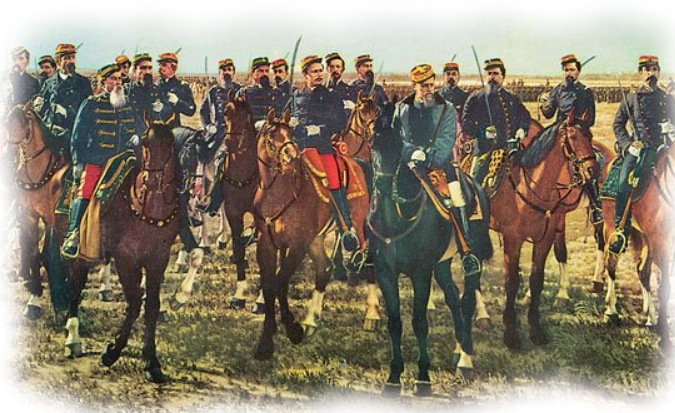
- Article 25 of the 1853 Argentinian Constitution encouraged European immigration.
- Law 817 (1876) subsidized European settlement.
- Between 1870 and 1930, 6–7 million Europeans arrived aided by the state’s polices.
- By 1914, nearly 30% of the population was foreign‑born.
- All this while persecuting immigrants from neighboring countries.
- The Conquest of the Desert (1878–1885) violently seized Indigenous lands for European settlers.
Argentina’s whitening project shaped national mythology, erased Afro‑Argentines, and produced longstanding xenophobia toward Bolivians, Paraguayans, and Peruvians.
It also produced the racist football culture that continues into 2026.
For example: “Argentine journalist Eduardo Feinmann declared on air, after Mexico was eliminated in a close match with England: “I detest Mexicans, I detest them with my soul. … The envy they feel for us, not only in football but in everything.”
Feinmann’s comments sparked such widespread ire that Mexican President Claudia Sheinbaum weighed in, calling his remarks “appalling.”
Later, Feinmann said his words were not directed at the Mexican people — while musing that Sheinbaum had bigger things to worry about, like combating narco-trafficking, violence and corruption.”
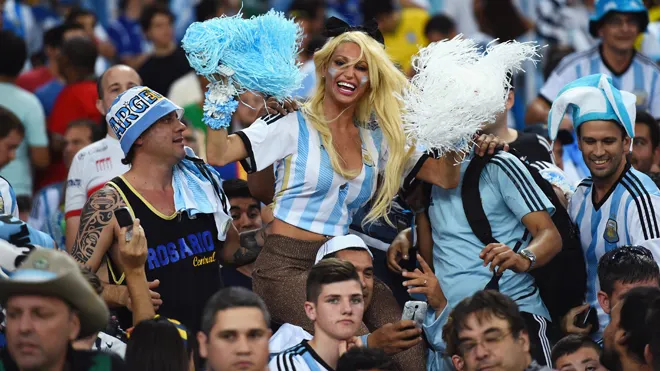
The incident comes two years after Argentinian midfielder Enzo Fernández shared a video of the team making racist chants against French players of African descent on the team bus after winning Copa America. A clear example of the racist anti-blackness and Eurocentric views that dominate Argentinian politics and sports.
Yet scholars who spend their careers denouncing whiteness and structural racism suddenly pretend Argentina is a racially inclusive nation. They ignore the absence of Black players- and grossly deflect by claiming that the presence of Black players in team USA and European teams is itself colonialism and racism.
The argument is that European teams with non-white players do not represent integration or diversity but rather their colonial past. This is intellectually dishonest. The comment is meant to distract from Argentina’s sordid past with race and the absence of Black players in their team even though what is now Argentina has once a large Black population.
Make it make sense.
They ignore the historical decline of Afro‑Argentines through war casualties, epidemics, demographic assimilation, and state invisibilization. They ignore racist chants and insults that are still common in Argentine football.
Instead, they deflect by pointing to Spain’s colonial past—as if Argentina didn’t continue European imperial expansion after independence.
This selective amnesia is not accidental. It protects a cherished myth.
Milei and Contemporary Argentina
Argentina today is not a neutral cultural symbol. It elected Javier Milei with a decisive majority, and Milei’s government is not simply “right‑wing” or “libertarian.” It is authoritarian, anti‑democratic, and openly aligned with global autocratic movements.
Milei has attacked democratic institutions, concentrated executive power, demonized the opposition as “deranged socialists,” undermined judicial independence, and adopted rhetoric straight from the global authoritarian playbook. His government embraces ultra‑nationalist narratives, encourages political polarization, and frames dissent as treason.
And crucially: he enjoys broad support.
Democracies are judged by the governments they elect. Milei’s foreign policy is aggressively pro‑U.S. and pro‑Israel, including:

- Recognizing Israel as a principal strategic ally.
- Abstaining on Gaza ceasefire resolutions.
- Planning to move the embassy to Jerusalem.
- Supporting U.S.–Israeli military actions against Iran.
Like Trump, he frames global politics as a battle between democracies and authoritarian regimes — while simultaneously eroding democracy at home. This contradiction is not unique; it is the hallmark of modern illiberal leaders who claim to defend “Western civilization” while dismantling democratic norms from within.
Argentina is not just a soccer team. It is a country that has chosen to empower a government aligned with the global axis of authoritarianism and neo-Fascism.
Why This Selective Blindness Damages Academia’s Credibility
This is where everything converges- there is a method to my madness after all.
This essay was never about whether anyone should root for Argentina. People can cheer for whatever team they want. It was about intellectual honesty and integrity. If scholars demand moral consistency from everyone else but suspend their own standards whenever ideology or cultural romanticism gets in the way, they shouldn’t be surprised when the public stops trusting them.
This is not scholarship. It is selective morality masquerading as expertise.
And the stakes are global. We are living through a worldwide struggle between democracies and autocracies. When academics selectively excuse authoritarianism in Argentina because it fits a cherished myth of Latin American solidarity, they undermine their own credibility and weaken the intellectual defenses of democracy itself.
Every time scholars suspend their own frameworks to protect a preferred narrative, they reinforce the perception that evidence matters less than ideology. They hand ammunition to those who argue that universities have abandoned truth for opportunistic and hypocritical political tribalism.
The erosion of public confidence in academia is not born solely from anti‑intellectualism. It is also fueled by moments like these, when hypocrisy becomes impossible to ignore.
When scholars abandon their own principles to protect Argentina (in this case) from scrutiny, they reveal that their moral commitments are conditional — applied rigorously only when convenient, abandoned when uncomfortable.
The insistence that a pan-Latin American identity somehow exempts Argentina from the very frameworks these scholars apply elsewhere is not scholarship; it is ideological special pleading. Latin America has never been a politically or culturally unified nation, and pretending otherwise to excuse one country’s history or present-day politics is itself a distortion of the historical record.
If academia wants to reclaim credibility, assessing Argentina- and many other protected oppressors- with the same analytical rigor it demands of everyone else would be a good start. It must acknowledge the country’s whitening project, its racial mythology, its xenophobia, its authoritarian present, and the global implications of its political choices. It must abandon the myth of pan‑Latin unity and embrace the complexity of Latin American histories.
Anything less is not scholarship. It is selective outrage dressed up as moral clarity. And the world — especially in this global struggle between democracy and autocracy — cannot afford scholars who only tell the “truth” when it flatters their ideology.

