Follows: (El Grito de Lares-Lares Uprising-in Public Memory and History and the Making of a Pueblo.)
Lares’ Aftermath
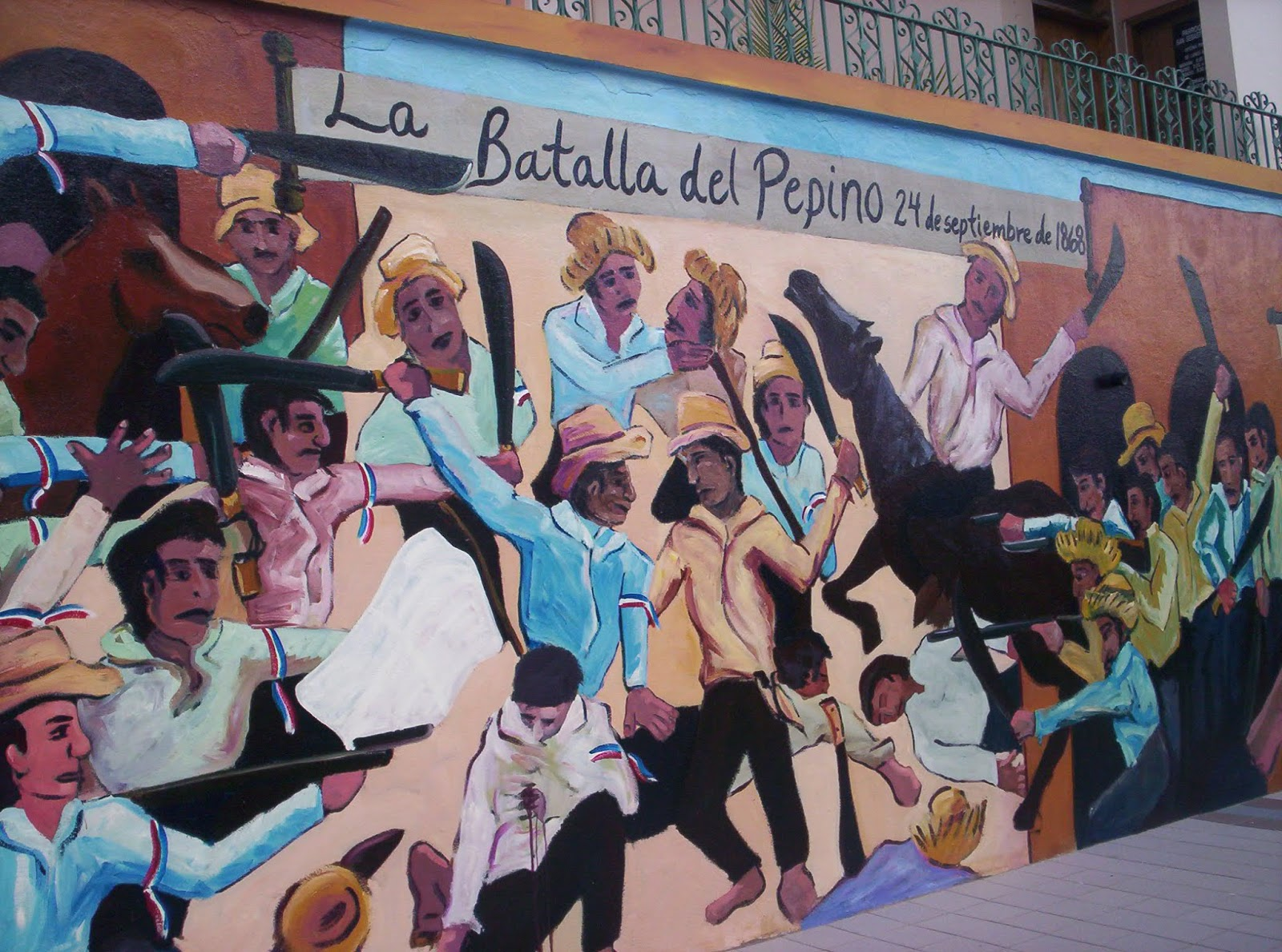
As discussed in the previous article: “From a strictly military standpoint, the revolt was a fiasco. Lares was the only town taken by the rebels, and the Spanish authorities crushed the revolt in roughly twenty-four hours. The brevity of the uprising is even more damning when taking into account that the rebel army was defeated by milicianos, who were an auxiliary corps manned almost exclusively by Puerto Ricans.
Furthermore, the rebels did not enjoy broad support from the island’s inhabitants, who were either unaware of the events or chose to remain neutral or loyal to Spain.
Lack of communication and coordination and poor leadership just accentuated the absence of support from the island’s community in general.
More than 60 percent of the participants were jornaleros, peasants, or slaves, many of whom declared that they were forced to join the rebels under pain of death.
Though a failure from a military point of view, some view the Lares uprising as a defining moment for Puerto Rican nationality, a moment when the island’s people ceased to see themselves as Spaniards.
And to this day, el Grito de Lares remains an integral part of Puerto Rico’s foundational mythology.” (See; Soldiers of the Nation, Birth of a Nation)
While the Lares uprising may have not been a national movement, the policies followed by the Spanish colonial authorities in its aftermath promoted the emergence of distinct Puerto Rican national identities.
From this standpoint Lares had undeniable important consequences. If the revolt itself did not separate Puerto Ricans from Spaniards, Spanish colonial policies would make the differences between them all too clear.
Following the insurrection, the newly appointed Governor and Capitán General of Puerto Rico, General Laureano Sanz, moved to exclude natives of the island (“los hijos de este país”) from teaching positions while promoting the españolización of public and private instruction.
Sanz also sought to ban Puerto Ricans from the clergy and from all administrative posts except the most “subaltern ones” and only after having “unequivocally proved their unblemished” loyalty to Spain.
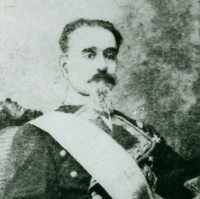
Sanz wrote; “Puerto Rico needs to reform its public education, conveniently Hispanicizing it, and to this end it is necessary to get rid of the professors born in this country . . . [and] to ban the people of this country from certain positions. Those born in this province should only be allowed to occupy the most subaltern positions, and only after unequivocally proving their unyielding españolismo.” Memoria presentada por el Gobernador supr. Civil de Puerto Rico D. Laureano Sanz. [1]
These measures created even more friction between peninsulares and the criollos for they closed traditional routes to socio-economic and political improvement. There is a vast historiography highlighting the dichotomy between peninsulares and criollos and their political and class struggles.
Then again, such struggles affected relatively small elite which depended on the metropolis as a warrantor of their status in the island.
Spain’s exclusionary policies, however, were not restricted to the political realm and the colonial administration. Los hijos de este país, who had not only served faithfully for over 300 years, but who had also suppressed the Lares revolt, found themselves excluded from the military.
Soon after the revolt the colonial administration proceeded to ban Puerto Ricans from its armed forces in an attempt to forestall other insurrections. Unlike the political suppression of the criollo elites, the demobilization of the local population directly affected a large sector of the population.
As part of a larger colonial project, after 1868, and especially under Sanz’s leadership, the Iberian metropolis was invested in preventing the emergence of strong nationalist feelings. In essence, Spain embarked in what can be described as an anti-nation building project.
Political repression, demobilization of the population, and the españolización of the island were some of the tools with which to avoid the emergence of strong Puerto Rican national identities that could be used to rally those born on the island against Spanish domination.
Sanz’s plans had the opposite effect.
By closing the military to natives of Puerto Rico the Spaniards created a common denominator for those born on the island; exclusion by birthplace.
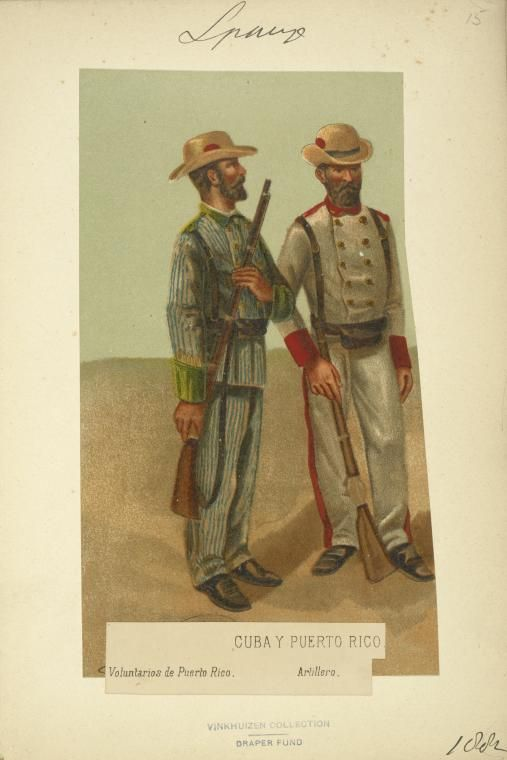
Since 1810- the Spanish colonial authorities had tried to reduce, eliminate, or at least defang the Puerto Rican militias. That led to the creation of the Instituto de Voluntarios which existed on the island between 1812 and 1898 as a paramilitary corps made of mostly peninsular volunteers. The origin of this corps lay in the fear of the colonial authorities that sooner or later both the milicias urbanas and disciplinadas would become the nucleus of a rebel army.
Hence the instituto was intended to counterbalance and eventually replace the militias. In its inception this volunteer corps was exclusively for civilians born in Spain. Later it was divided into two battalions of voluntarios distinguidos, one for those born on the island and another for peninsulares. More than a counterbalance to the militias- they became one of the most oppressive and hated tools of the Spanish colonial authorities.
Barring los hijos de este país from the military was more damaging than any other form of exclusion by the colonial administration since it affected the majority of the population not just a small criollo elite.
The milicias puertorriqueñas were composed (at first) of free males between the ages of twelve and sixty. Furthermore these militia men, unlike the regular army garrison troops, had settled on the island, were part of communities, and were part of families.
The milicias existed in every single town and organized around the capitán de milicia- a community patriarch who was in charge of organizing the defense of the town. They were pillars of their communities.
Moreover- service in the militia, also served as rite of passage from boyhood into manhood for all free men in Puerto Rico.
Its elimination- the demobilization of hijos de este país– as Sanz aptly called them- affected the majority of the Puerto Ricans negating them a rite of passage and of social ascendancy, and community belonging. It eliminated a pillar of every Puerto Rican community which until then had served Spain faithfully and kept Puerto Rico Spanish.
By following exclusionary policies the Spanish colonial authorities made more obvious the differences between peninsulares and Puerto Ricans, lost the opportunity to co-opt Puerto Ricans into serving Spain, and ultimately promoted the development of Puerto Rican national identities.
In effect the combined exclusion of Puerto Ricans from the colonial administration and the military undermined the loyalty of the inhabitants of the island and kindled the development of a sense of national unity vis-a-vis the Spaniards.
The development of distinct national identities under Spanish sovereignty, however, was a slow, confusing, and ambivalent process because of socio-economic and demographic factors and because of the Puerto Rican elites’ real or imagined cultural affinity with Spain.
Even as Spanish control over Puerto Rico was coming to an end, the criollo elites continued to pride themselves of the cultural legacy and affinity, such as blood, race, traditions, language, religion, and history they thought to share with their Iberian counterparts.[2] Moreover, most of the criollo elite saw Spain as “indispensable for their survival.”[3]
After the American invasion of puerto Rico of 1898 and writing for the Boletín Histórico de Puerto Rico, the Puerto Rican Liberal leader Cayetano Coll y Toste lamented with ambivalence bidding farewell to “our parents’ and grandparents’ flag. It was cruel with us; thoughtlessly, they often flagellated our faces with her, handled by unjust hands and desecrated by retrograde hands; and, that notwithstanding, we loved her.”
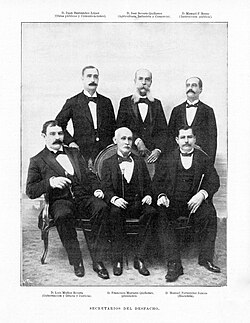
This is not surprising. Soon after the Grito de Lares, most of the criollo leadership, which comprised the liberal movement, opted for a policy of autonomismo or a higher degree of political freedom as opposed to independence from Spain.[4]
Román Baldorioty de Castro and Luis Muñoz Rivera, leaders of the Autonomist Liberal Party (pro-autonomy) in Puerto Rico talked openly about the impossibility of obtaining independence through war. One of the reasons was the state of illiteracy and poverty of the peasantry which they thought would not allow for an effective revolt or the survival of an independent republic.
The lack of faith in the peasantry – and even the disdain some elites showed for it- played a role in the reluctance of the criollo leadership to sever its ties to Spain.
That, along with degrees of cultural affinity with Spain that the elite seemed to embrace, and the reliance on the metropolis to guarantee their position on the island- may have slowed the development of Puerto Rican national identities and explains the political choices of the criollo elites within the liberal movement.
This is not to say that the criollos that stayed in the island had many other options. The demobilization of the Puerto Ricans hindered the political choices of the criollo leadership. In fact the criollos’ position was weakened by the absence of Puerto Rican militias.
Military exclusion provided Puerto Ricans with a common experience that may have moved them towards a shared identity, a shared sense of grievance. But it also weakened the criollos and liberals for the simple fact that by disarming the local population the colonial authorities suppressed the threat of armed rebellion allowing them to focus on the surveillance and repression of the criollos.
Controlling access to the military and paramilitary apparatus and seeking to curtail the power of the liberals and criollos in the island were not new colonial strategies. Nor was military service wasn’t a marginal issue for the inhabitants of the island. It had been the Puerto Rican militias- in their many forms- which had kept Puerto Rico within the Spanish empire. But the exclusionary policies of the Spanish colonial administration, as early as the 1810s, when the rest of the empire except Cuba and Puerto Rico revolted and finally won independence, had created tensions between criollos and peninsulares at the highest levels of power.
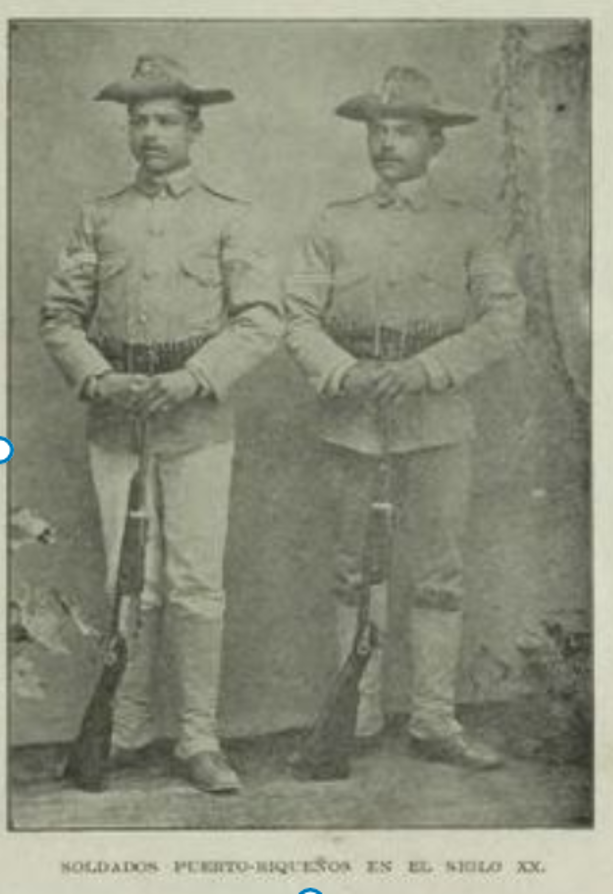
“The emergence of the instituto and the final suppression of the milicias sent a message to those born on the island; they were not to be trusted for they were not really Spaniards. More important, the male population that did not belong to the elite found itself ever more excluded from access to socioeconomic power, and even adulthood and manhood, for if they could not defend their land, they remained in a childlike state, especially given the colony’s military character and tradition.
Removing the natives of Puerto Rico from the colonial armed forces, a very restrictive policy, and dearth of a common education were some of the patterns of exclusion that led to the slow development of a distinct national identity on the island.
Thus it was not the Lares revolt itself, but the policies followed by the colonial authorities afterward that fueled the developing of distinctive Puerto Rican national identities. However, this was embryonic, greatly in part to the Puerto Rican elites’ need of a state to guarantee their commanding position in society and because of their perceived cultural affinities vis-à-vis Spain such as language and religion.
The developing of a separate identity was also slowed by the criollo elite’s reluctance to move toward independence, which was itself a consequence of the weakening of the criollo elite by the demobilization of the inhabitants of the island.
Nonetheless, the landslide victory of the autonomistas in 1898 shows that the majority of the inhabitants rejected the incondicionalismo español. This is even more important when considering that the autonomistas of 1898 were not sponsoring the watered-down version defended by the liberals right after the Lares revolt, but a more radical stance which among other things declared the right of the Puerto Ricans to govern their island as they saw fit.
When the first U.S. soldiers landed on the island in 1898, most Puerto Ricans had no reason to support the colonial administration. Initially the majority openly embraced the invaders. Soon afterward, resistance against the American occupation materialized.” Soldiers of the Nation
The demobilization of the popular sectors in Puerto Rico had fueled the emergence of distinctive national identities. And most Puerto Ricans were ready to embrace the promise of change and a brighter future. Those promises were soon to be broken.
______________________________________________________________________
This article is based on Excerpts from Harry Franqui Rivera’s Soldiers of the Nation
See: Brief Read on the Carta Autonómica of 1897
[1] “Puerto Rico necesita reformar su instrucción pública españolizandola convenientemente y para ello se hace indispensable prescindir por completo de los profesores naturales de este país”. He also argued for the “conveniencia de prescindir de ciertos puestos de empleados hijos de este país. Nunca pueden dar aquí buen resultado”. He added “… en esta Provincia [Puerto Rico] sólo deben admitirse los empleados [born on the island] más subalternos, siempre que hayan dado pruebas inequívocas de un acendrado españolismo.” See, Leg. 5112. Expediente 15 Memoria presentada por el Gobernador supr. Civil de Puerto Rico D. Laureano Sanz, in Gautier Dapena, Trayectoria del pensamiento liberal, 46-47.
[2] Writing for the Boletín Histórico de Puerto Rico,the Puerto Rican Liberal leader Cayetano Coll y Toste lamented with ambivalence bidding farewell to “our parents’ and grandparents’ flag. It was cruel with us; thoughtlessly, they often flagellated our faces with her, handled by unjust hands and desecrated by retrograde hands; and, that notwithstanding, we loved her.” Cubano Iguina argues that the fin de siècle criollos, in general, assumed Spanish nationality and identity consciously and identified Spain as a greater or “sublime” “Nation”, a “Motherland” in which the “regional” patria (Puerto Rico) had a space. This regional patria was in turn “more intimate, and it is loved with passion”. See; Cubano Iguina, Criollos ante el 98, 7-8, 10-11, 17, 20-21, 29.
[3] See; Bergard, Toward Puerto Rico’s Grito de Lares, 640-642; and, Cubano Iguina, Criollos ante el 98: 5-6.
[4] Román Baldorioty de Castro and Luis Muñoz Rivera, leaders of the Autonomist Liberal Party (pro-autonomy) in Puerto Rico talked openly about the impossibility of obtaining independence through war. One of the reasons was the state of illiteracy and poverty of the peasantry which they thought would not allow for an effective revolt or the survival of an independent republic. According to Jiménez de Wagenheim’s findings, of the men taken prisoners after the revolt who were asked about their literacy 40% responded negatively. Jiménez de Wagenheim, El grito de Lares, sus hombres y sus causas, 79. Cubano Iguina describes the Autonomistas as a movement of nativist inclination which, in search of political hegemony, sought to establish a distinction vis-à-vis the peninsular newcomers whom they perceived as representatives of metropolitan domination. Cubano Iguina, Criollos ante el 98,2-3. And, Astrid Cubano Iguina, “Política radical y autonomismo en Puerto Rico: conflictos de intereses en la formación del Partido Autonomista Puertorriqueño (1887)”,(Anuario de Estudios Americanos, Tomo 1.1. núm. 2. 1994, 155-173),155-157.


[…] greatest poets and untamable fighter for Puerto Rico’s independence, described the revolt as the day Puerto Rico became a nation. Of course, that vision is possible in hindsight, which also allows for the reformulation of Puerto […]
LikeLike
[…] Continue reading: El Grito de Lares’ Aftermath: An Emerging Nation […]
LikeLike