Imagine living in the United States. In fact, imagine that you, your parents, your grandparents, and even your children were born here. And by most measurable standards, you aren’t doing half bad.
You enjoy freedoms and liberties that, if you are being intellectually honest, you know are not guaranteed elsewhere. In some countries, you would have to hide who you really are to avoid persecution, danger, or harm.
Yet, because of identitarian politics, insular worldviews, and an inferiority-victim complex mentality, you mock the very civic institutions, democratic traditions, and rule of law that allow you to have a voice and publicly express who you are.
Why? Why would entire sectors of the American public go out of their way to make themselves outsiders in their own country? To accuse the United States of practically every evil imaginable, often unfairly, while washing their hands of any responsibility for the society they inhabit and the benefits they enjoy?
As if they had no agency. As if they had no choice but to be here. As if they weren’t beneficiaries of the very system they so enthusiastically condemn.
And let’s be honest- many know perfectly well that they don’t have a better alternative. They have never had it better. Yet, they imagine and miss a romanticized utopian place or past – a memory of something that never existed- yet they were happy there and then. If it sounds like MAGA slogans is because they are the other coin of these infantile and civically, intellectually and morally-challenged identitarian politics.
So, every time something “bad” happens in the United States, they cheer. They mock. They compare the country to places they haven’t visited, societies they don’t understand, and political systems they have never had to live under.
They rejoice in declaring how terrible, retrograde, and doomed the United States supposedly is. Imagine that. What an extraordinary projection of deep-seated self-hatred.
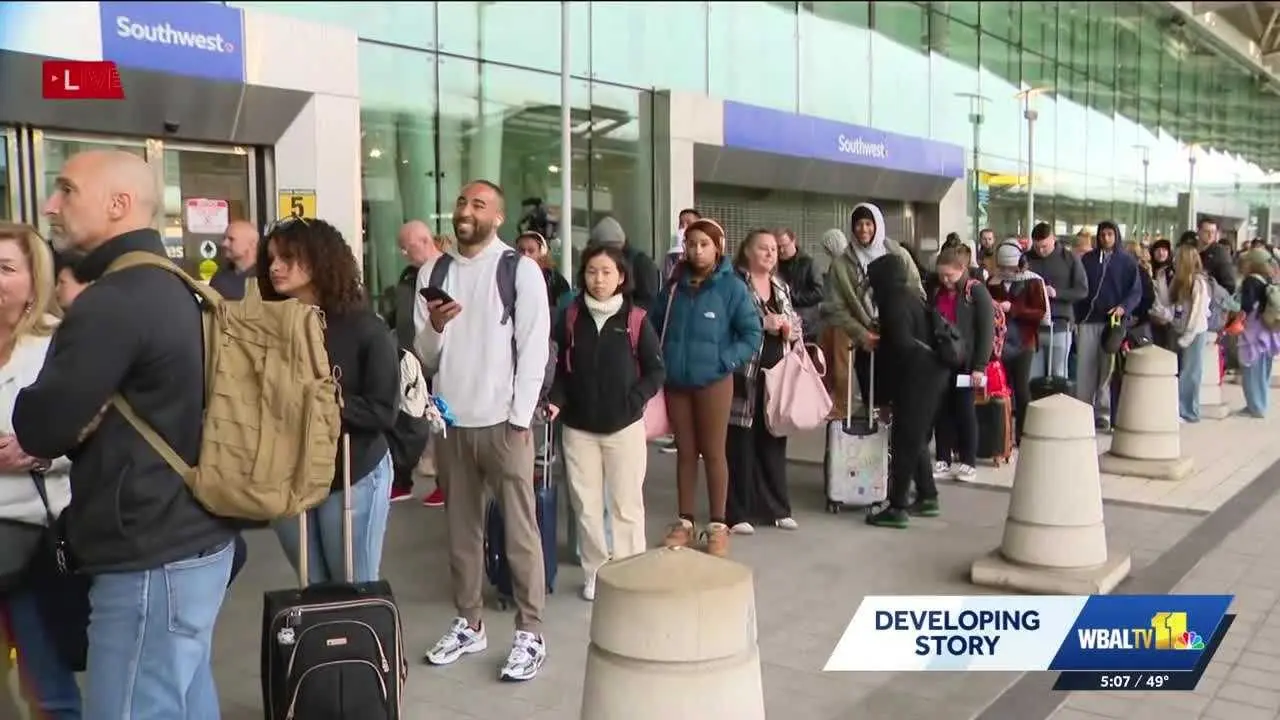
The latest episode is the nationwide grounding of airplanes, apparently prompted by what may have been a cyberattack.
Sure, there is a theory that the system is antiquated, that it relies on a patchwork of different technologies, and that layering AI onto an already outdated infrastructure may have contributed to its failure. But more than likely, that is the explanation being offered for public consumption. We still don’t know the full story.
But let’s entertain the possibility that the system simply crashed, without any external attack. Let’s say it was a technological failure in an infrastructure badly in need of an overhaul.
Why would anyone rejoice over that? Why would you mock it?
Imagine if this had been another widespread blackout in Puerto Rico and gringos started making fun of it. Most Boricuas bestiales would have gotten so upset they might have had a stroke.
Yet, somehow, the same people who would find that kind of mockery insulting have no problem celebrating every American setback they believe might hurt someone else.
Really? I find this utterly disgusting. And so does most of the American public.
I can’t even imagine how deliriously happy some of these people would be if a dirty bomb detonated here and killed hundreds of thousands, perhaps millions, of gringos. And then demand they are the first ones to be evacuated and protected- “where’s FEMA?”

That is precisely the problem.
At some point, political criticism becomes something else entirely. It becomes an almost pathological resentment toward the society that made your own life possible. It becomes the inability to distinguish between holding a country accountable and wishing it harm.
Undoubtedly, you are part of the reason Trumpism emerged in the first place.
You, and a Democratic Party that for decades allowed its own political spaces to be commandeered by people whose primary political identity revolves around resentment, identitarian separatism, a pathological hatred of the United States, and an unwillingness to engage with the country as a shared civic project.
The Democrats allowed these voices to become disproportionately influential, particularly in certain urban centers of power, while losing sight of the broader American public they were supposed to represent.
Fortunately, the midterm elections offer an opportunity to change course.
The Democratic Party needs to move away from these insular political ecosystems where elites feed identitarian politics to an increasingly alienated and, frankly, politically exploited constituency. It needs to stop mistaking grievance for political vision, separatism for diversity, and contempt for critical thinking.
It needs to embrace the full diversity of the American experience.
Not a diversity defined by competing identities, inherited grievances, or who can claim the greatest victimhood, but one grounded in the recognition that we share a country, a civic tradition, and a common stake in its future.
You can criticize the United States. You should. You can demand accountability, challenge its history, expose its injustices, and fight to make it better.
But there is a fundamental difference between wanting your country to live up to its ideals and celebrating its destruction.
And that is a distinction some people desperately need to learn or rediscover.

