During World War I, Puerto Ricans were drafted, recruited, or volunteered while residing in the continental United States. Within the segregated U.S. military, Puerto Rican soldiers were often assigned to Black or white units according to how military authorities classified their skin color. Their experiences reveal how race shaped military service, even for men who shared a language, culture, or place of origin.
One of the most fascinating stories of Puerto Rican participation in the Great War involves the 369th Infantry Regiment, originally New York’s 15th Infantry Regiment, and its celebrated regimental band. Known as the Harlem Hellfighters, the regiment became famous for its combat record and for introducing European audiences to jazz.
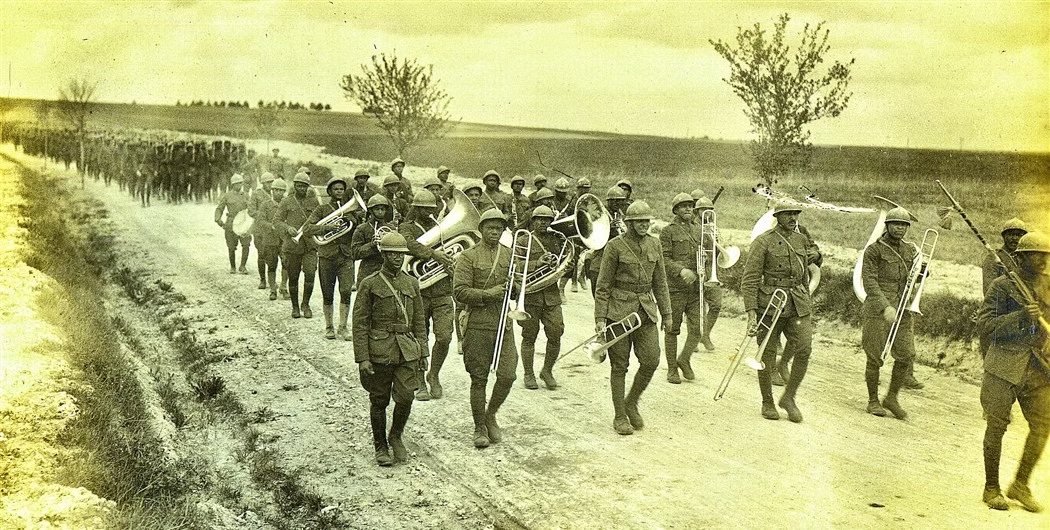
Its history also reveals the institutional racism African American soldiers confronted before, during, and after the war—and the remarkable cultural exchanges that emerged despite it.
At the center of this story are two musicians: James Reese Europe, the African American bandleader who organized the regiment’s celebrated orchestra, and Rafael Hernández Marín, el aguadillano, who would become one of Puerto Rico’s most beloved composers. Their story connects Harlem, Puerto Rico, and Europe through military service, music, and the struggle for recognition.
The Old Fifteenth: Harlem’s Black National Guard Regiment– The 369th began as the 15th Infantry Regiment of the New York National Guard, authorized in 1913 and formally organized in 1916. It was New York’s first Black National Guard regiment, established amid the long struggle of African Americans to participate in the nation’s military institutions.
The regiment drew heavily from Harlem and other Black communities throughout New York, eventually recruiting more than 2,000 men from New York City, upstate New York, New Jersey, Pennsylvania, and beyond.
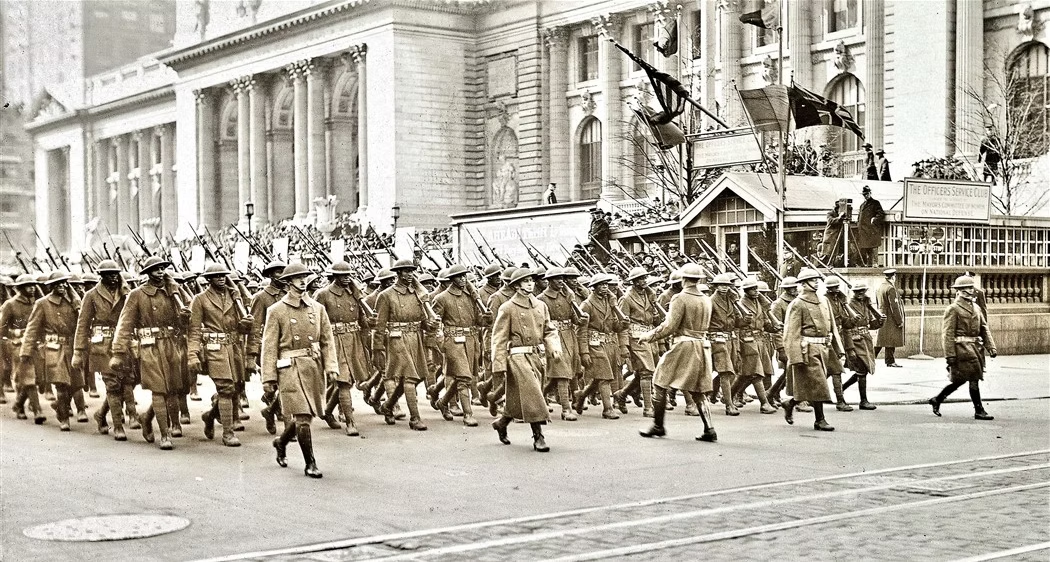
Source of Photograph: National Archives RG 111- 369th Infantry Regiment Harlem Hellfighters WWI – Guerre 1914 – 1918
The unit was initially commanded by white officers, including Colonel William Hayward, who helped secure political and institutional support for its organization. Its formation represented a significant achievement for Black New Yorkers who sought to demonstrate their patriotism and claim the rights and recognition that military service was supposed to embody.
When the United States entered World War I in April 1917, the regiment was mobilized for federal service. Its soldiers trained at Camp Whitman in New York before being sent to Camp Wadsworth in Spartanburg, South Carolina. There, they encountered the entrenched racial segregation and hostility of the Jim Crow South.
After repeated incidents of discrimination and harassment, the regiment was transferred back north for further training.
The unit eventually sailed for France. In March 1918, the 15th was redesignated the 369th Infantry Regiment. Its soldiers nevertheless retained a strong attachment to the identity of the Old Fifteenth.
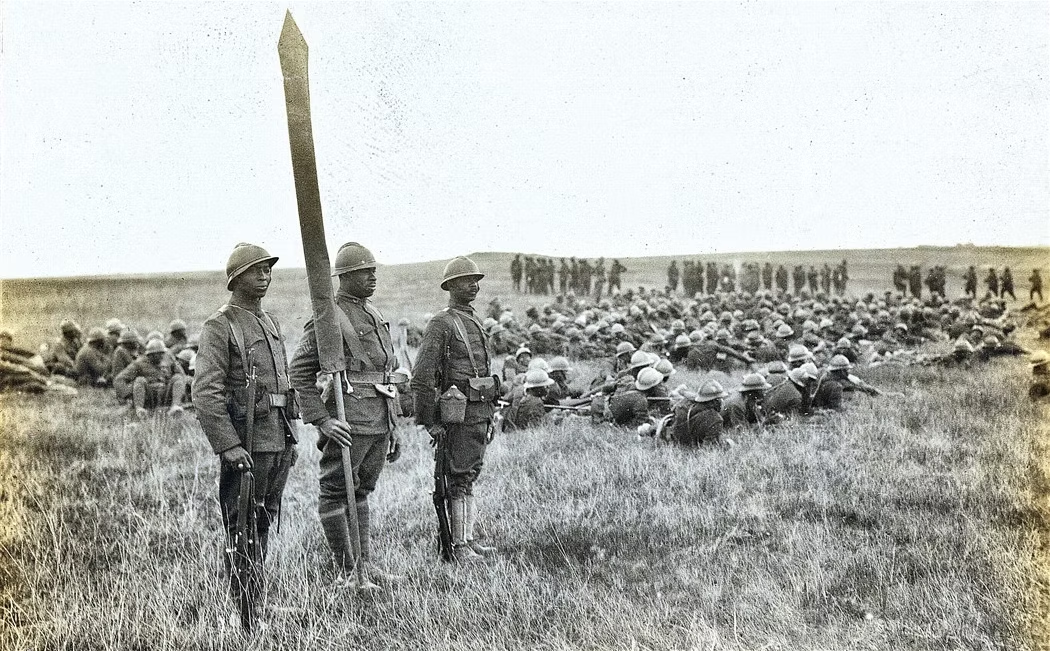
The regiment’s path to combat was not straightforward. American military authorities initially assigned Black troops to labor and support duties rather than treating them as equals to white soldiers. The 369th’s eventual combat service became possible in large part because the regiment was placed under French operational command.
The French Army, having suffered enormous casualties since 1914 needed reinforcements. France would lose a full generation of men by the war’s end. French commanders were also more willing than American military authorities to deploy Black soldiers in combat. In fact, by 1918 the French military was relying heavily on troops from its colonies particularly Black Africans.
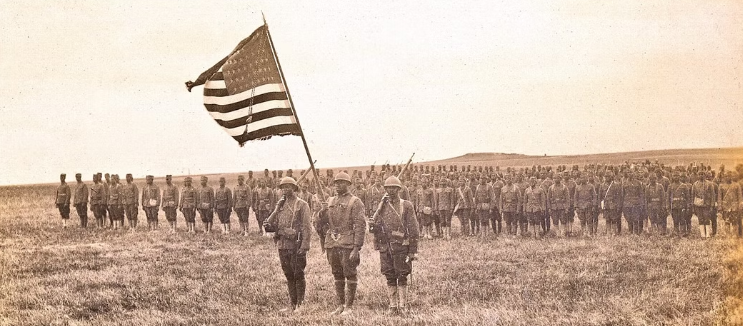
Source of Photograph: National Archives RG 111- 369th Infantry Regiment Harlem Hellfighters WWI – Guerre 1914 – 1918
The 369th entered the trenches in 1918 and fought in major operations, including the Champagne-Marne, Aisne-Marne, and Meuse-Argonne offensives.
Its soldiers earned a reputation for courage and tenacity. The regiment received French military honors, including the Croix de Guerre citation, and more than 170 of its members were individually cited for bravery.
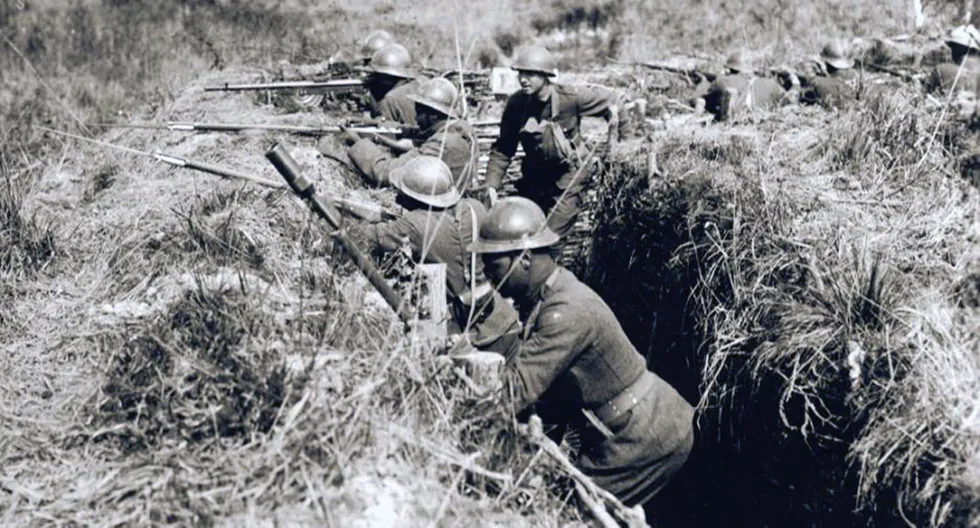
The unit became internationally known as the Harlem Hellfighters; French observers also referred to its men as Hommes de Bronze, or Men of Bronze.
The regiment’s combat record was extraordinary, but its history cannot be separated from the discrimination that made its service more difficult. These men fought an enemy abroad while confronting a racial hierarchy at home that denied them the equality their sacrifices were supposed to defend.
Institutional Racism and Violence: Fighting for Democracy Abroad– The experience of the Harlem Hellfighters illustrates a central contradiction of American participation in World War I. President Woodrow Wilson presented the conflict as a struggle to make the world safe for democracy, yet the U.S. military remained segregated and many of its leaders sought to preserve white supremacy even while African American soldiers were risking their lives.
The resistance to Black military service was not limited to recruitment or assignments. It extended to the question of how Black soldiers should be treated by their allies.
In August 1918, a secret directive circulated to the French Military Mission stationed with the American Army conveyed the racial attitudes American military authorities wanted French officers to accommodate.
The document, titled Secret Information Concerning Black American Troops, warned against relationships between French and Black American officers that might offend white Americans.
It instructed French officers not to treat Black officers on the same social plane as white officers, cautioned against praising Black troops too highly in the presence of Americans, and urged French authorities to discourage excessive familiarity between Black soldiers and French civilians.
The directive reflected a deeper anxiety: that Black Americans might return home with expectations of equality reinforced by their experiences overseas. In France, African American soldiers encountered civilians who were often less committed to American-style segregation. They could be welcomed, respected, and treated with a degree of social familiarity that challenged the racial order they knew at home.
American military authorities feared the implications. The issue was not simply whether Black soldiers could fight effectively. It was whether their service, recognition, and treatment as men worthy of respect might undermine the racial hierarchy to which white American leaders remained committed.
The French military mission directive should not be confused with a blanket prohibition on French decorations. Black soldiers, including members of the 369th, did receive French honors. Rather, the document reveals the effort to limit the social consequences of their service and to prevent military recognition from translating into broader claims to equality.
The contradictions continued when the soldiers returned to the United States.
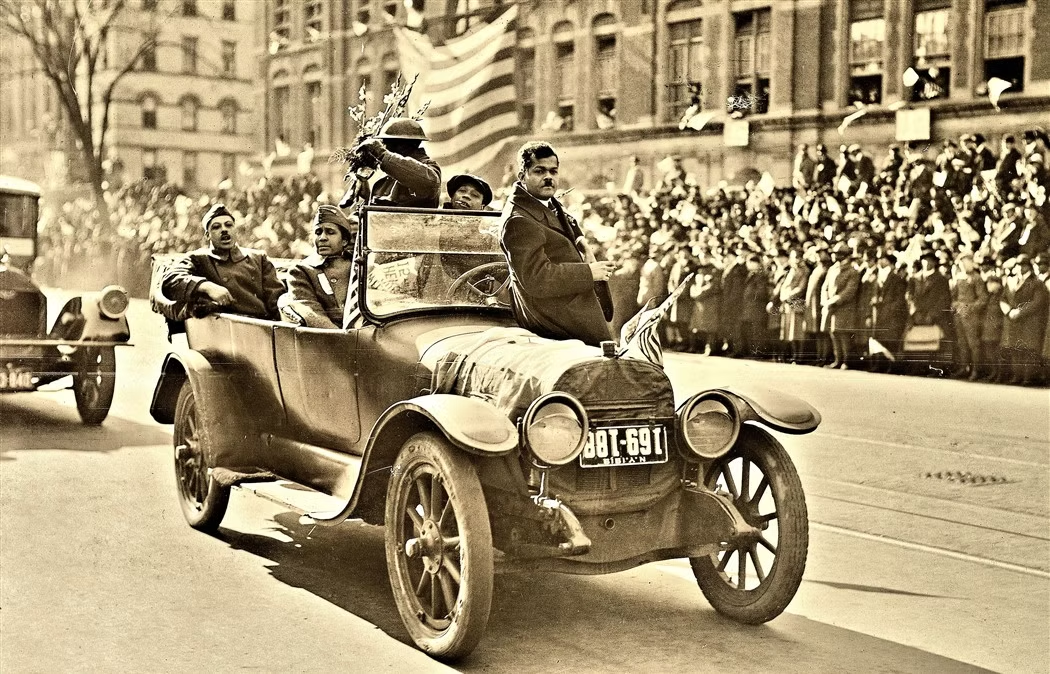
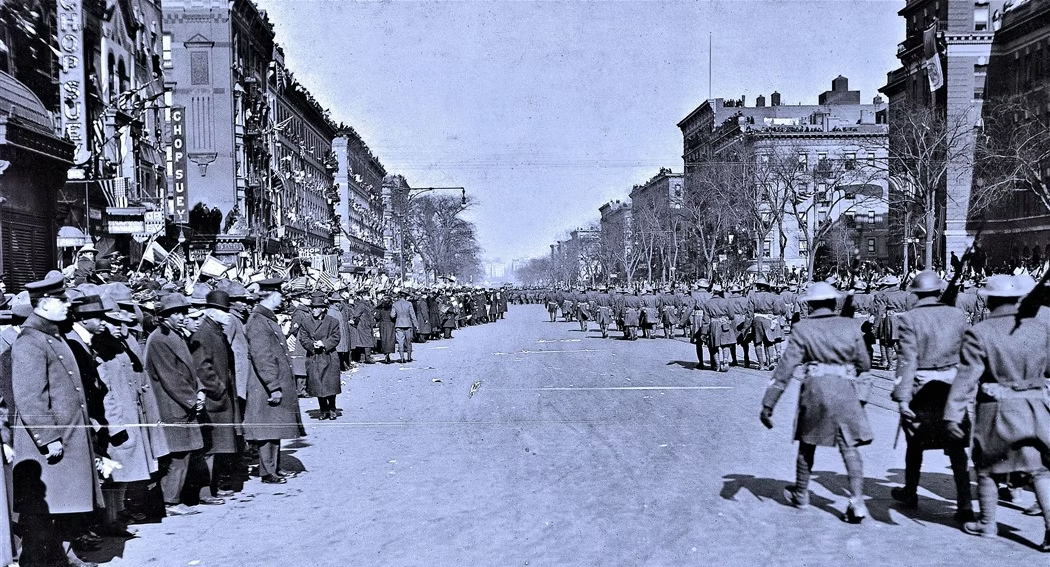
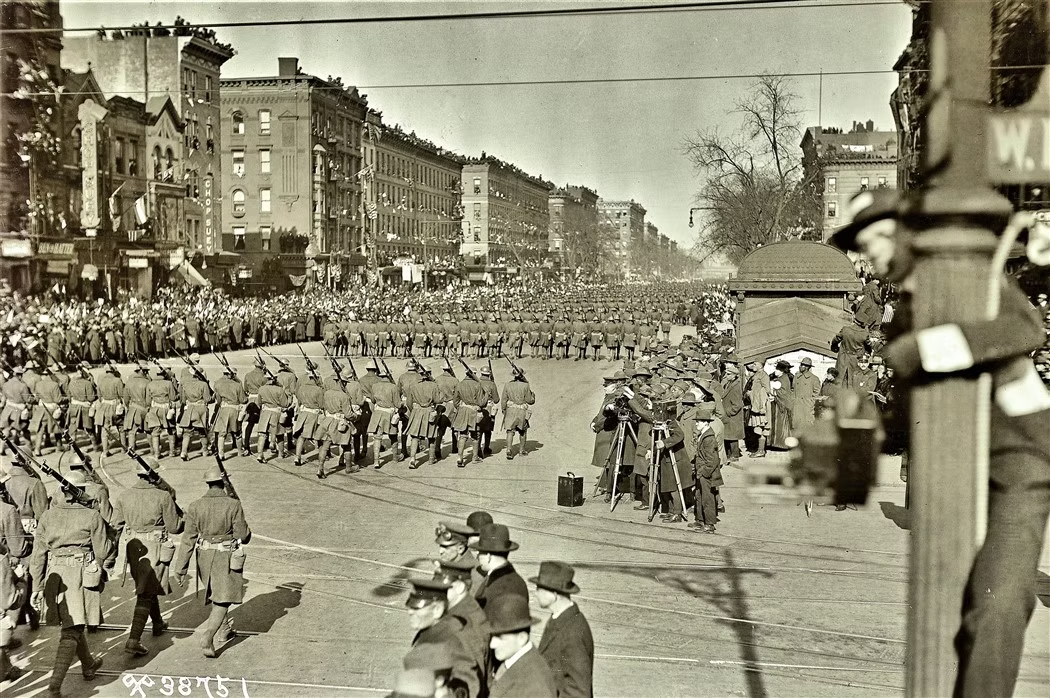
On February 17, 1919, the 369th returned to New York and received a triumphant homecoming. More than 2,000 soldiers marched in full military dress, their uniforms, equipment, and bayonets on display as the regiment proceeded up Fifth Avenue toward Harlem. Their celebrated band, led by Lieutenant James Reese Europe, accompanied the procession. Hundreds of thousands of spectators turned out to cheer them, and city officials formally honored the regiment.
The parade was a powerful public statement. These were men who had fought for the United States and earned the respect of their French allies. They returned not as anonymous laborers but as decorated soldiers whose courage had become part of the nation’s military history.
Yet the welcome offered in New York stood in stark contrast to the violence facing Black veterans elsewhere in the country.
In the South, returning servicemen who wore their uniforms and asserted the dignity their service had earned could become targets of white hostility.
In 1919, Black veteran Wilbur Little was reportedly beaten to death in Blakely, Georgia, after refusing to remove his military uniform. Other Black veterans faced beatings, shootings, and mob violence during the wave of racial terror that accompanied the postwar period, including the violence surrounding the Red Summer of 1919.
The exact number of Black veterans attacked or killed for wearing their uniforms is difficult to establish, and some individual cases remain disputed. The broader pattern, however, is unmistakable: military service did not protect African Americans from racial violence.
The Harlem Hellfighters’ parade thus embodied both achievement and contradiction. New York celebrated the regiment’s courage, while across the country Black veterans were reminded that their sacrifices had not dismantled white supremacy. They had fought for democracy abroad, only to return to a nation that continued to deny them equal protection and full citizenship in practice.
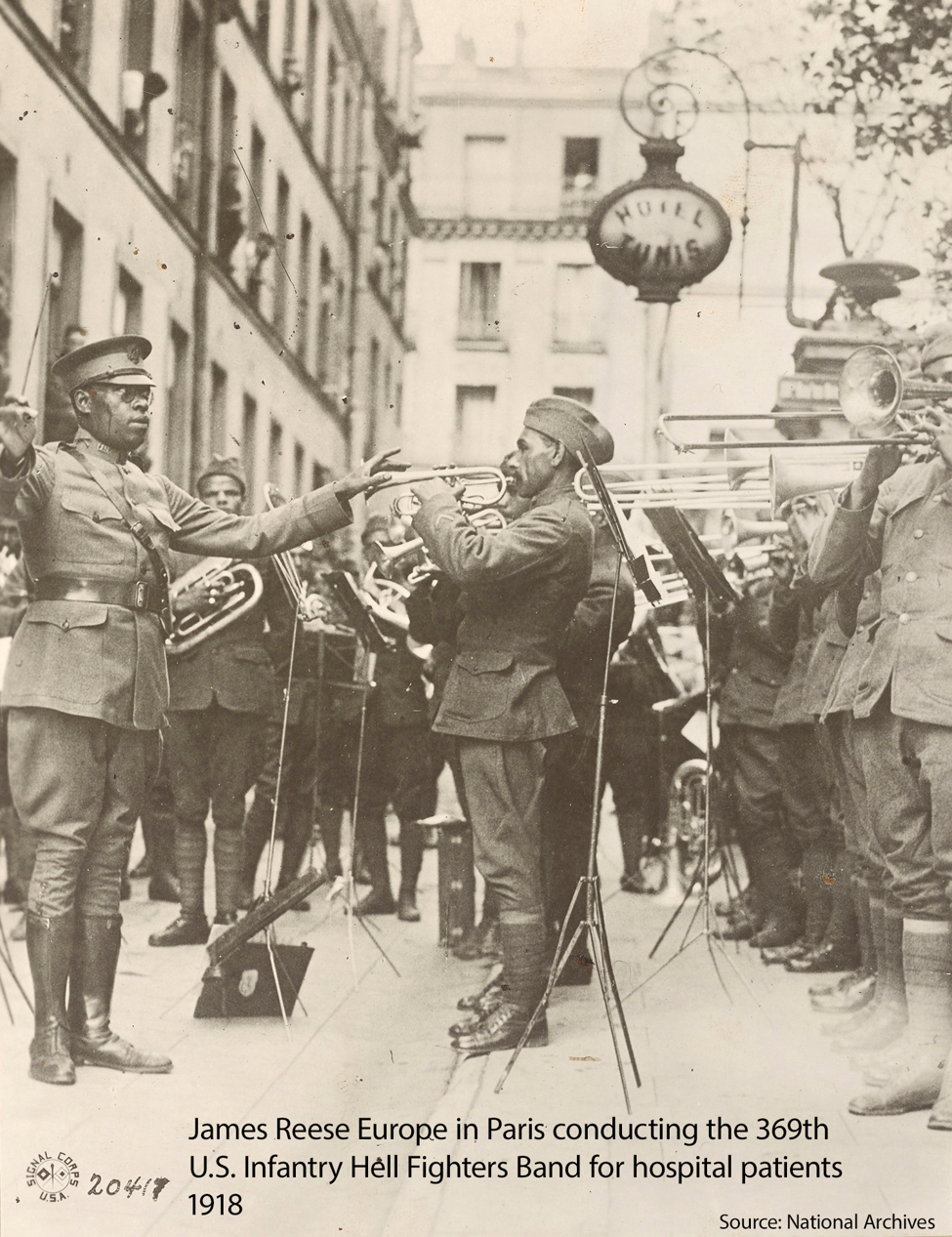
James Reese Europe and the Making of the Hellfighters’ Band– The regiment’s military history is inseparable from its musical legacy. Its celebrated band was organized under the leadership of James Reese Europe, an African American composer, arranger, and bandleader who had already achieved prominence in New York’s music scene before the war.
Europe was one of the most influential Black musical figures of the 1910s. He led the Clef Club, an organization that promoted African American musicians, and directed ensembles that brought Black music to audiences beyond the communities in which it had developed. His work helped establish the professional and institutional foundations on which later jazz musicians would build.
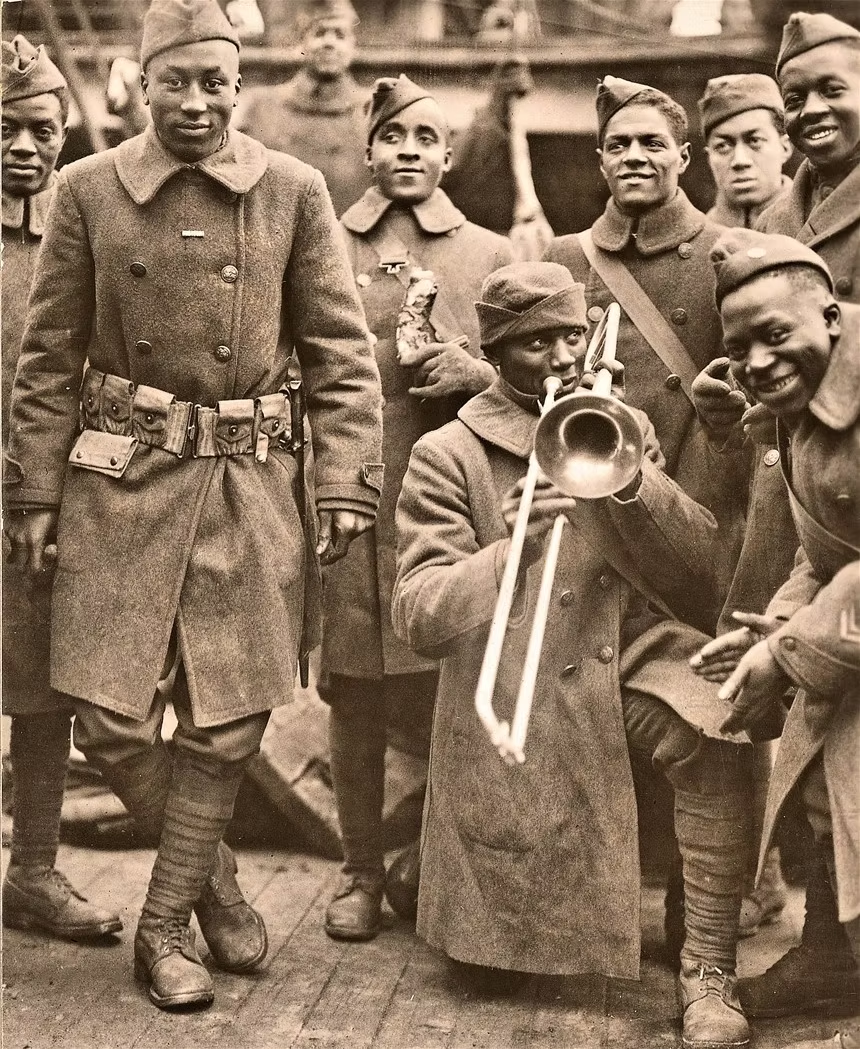
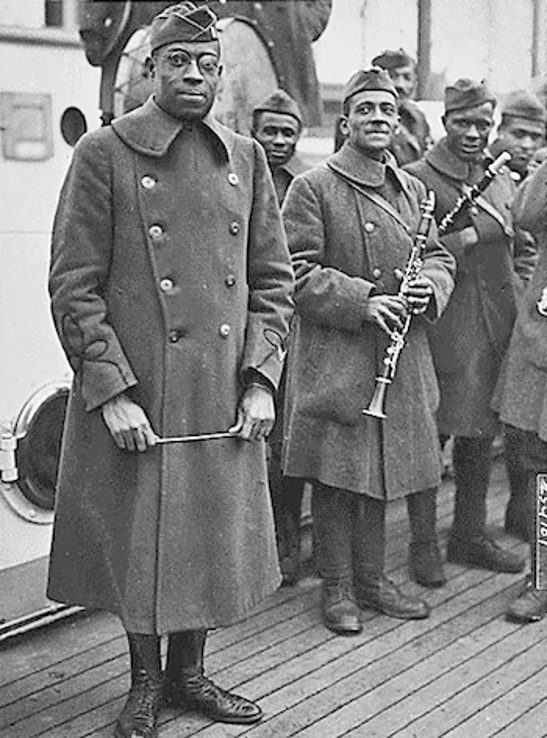
Europe joined the 15th Infantry and became a lieutenant. He was involved in the regiment’s musical organization while also serving as an infantry officer- leading a machine gun company. The regimental band became a central part of the unit’s public identity, raising morale, supporting military ceremonies, and performing for troops and civilians.
Europe understood music as more than entertainment. The band represented Black accomplishment, discipline, and collective pride. It demonstrated that African American musicians could master complex arrangements, perform across musical traditions, and command audiences internationally.
Europe also insisted that his musicians receive military training. They were soldiers as well as performers, and some served in combat roles. His own military service included command responsibilities in a machine-gun company. The band was not merely an orchestra attached to an army unit. Its musicians were part of a regiment whose members endured the same institutional discrimination and dangers as other soldiers.
In 1917, Europe traveled to Puerto Rico to recruit musicians for the band. His visit was not an arbitrary detour. Puerto Rico had a strong tradition of bandas municipales and formal musical education, producing musicians trained in theory, sight-reading, and a range of instruments.
These musicians brought skills that were particularly valuable to a large military ensemble. They could read complex arrangements, adapt to different musical styles, and move among brass, woodwind, and percussion instruments. Such versatility also suited the developing musical language of jazz, which drew on African American traditions, improvisation, ragtime, blues, and other influences.
Europe’s recruitment trip resulted in the enlistment of approximately eighteen musicians from Puerto Rico, according to surviving records and scholarship, although published accounts differ in their totals and in the names listed. Their arrival strengthened the regiment’s band and helped create a musical ensemble that combined African American and Puerto Rican talent.
The story is a reminder that the development of jazz was never confined by national borders. It emerged through encounters among musicians, communities, and traditions. The Hellfighters’ band became one of the vehicles through which those exchanges reached European audiences during the war.
Puerto Rican Musicians in the 369th– Europe’s recruitment effort brought several Afro-Puerto Rican musicians into the regiment. Among them were Rafael Hernández and his brother Jesús, as well as Rafael Duchesne Mondríguez, Gregorio Félix, and other musicians whose contributions remain less widely recognized than those of the regiment’s most famous American figures.

Their participation complicates any account of Puerto Rican military history that focuses exclusively on the island’s own military formations.
Puerto Ricans who had migrated to the continental United States could find themselves in units shaped by American racial classifications- perhaps with more rigidity than on the island.
Darker-skinned Puerto Ricans were often assigned to Black units, while lighter-skinned men might be placed in units classified as white.
The musicians of the 369th therefore occupied a distinctive position. They were Puerto Rican, Afro-Caribbean, and part of a Black American military institution.
Their service connected the island’s musical traditions with Harlem’s African American cultural world and the broader transatlantic circulation of music.
They were not simply carrying an established Puerto Rican tradition overseas. They were participating in a new cultural encounter, one shaped by military service, migration, race, and the demands of performance. Their work helped make the regimental band an international phenomenon and contributed to the wider dissemination of jazz in Europe.
Among these musicians, Rafael Hernández would go on to achieve extraordinary recognition.
Rafael Hernández: From the Hellfighters to the Musical Memory of Puerto Rico– Rafael Hernández Marín, known as el aguadillano (1892–1965), is widely regarded as one of Puerto Rico’s greatest composers. His musical career extended across Puerto Rico, the United States, and Latin America. He composed songs that became enduring expressions of Puerto Rican identity, longing, and cultural pride.
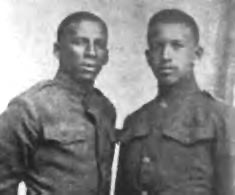
Hernández grew up in Aguadilla and developed his musical skills through Puerto Rico’s tradition of formal musical instruction. He learned several instruments (violinist, trombonist, and pianist) and performed in musical groups before joining the U.S. Army in 1917. His military service placed him in the 369th Infantry Regiment, where he served as a musician in James Reese Europe’s celebrated band.
Accounts of how Europe first encountered Hernández vary. Some narratives place Hernández in North Carolina before Europe traveled to Puerto Rico; surviving enlistment records and passenger documentation, however, connect Hernández’s recruitment to the broader effort to enlist musicians on the island. The precise sequence of their first encounter is less certain than the documented fact that Hernández joined the regiment and served in its musical organization.
His experience with the Hellfighters placed him in a remarkable cultural environment. He encountered African American musical traditions, performed for European audiences, and participated in the circulation of music across linguistic and national boundaries.
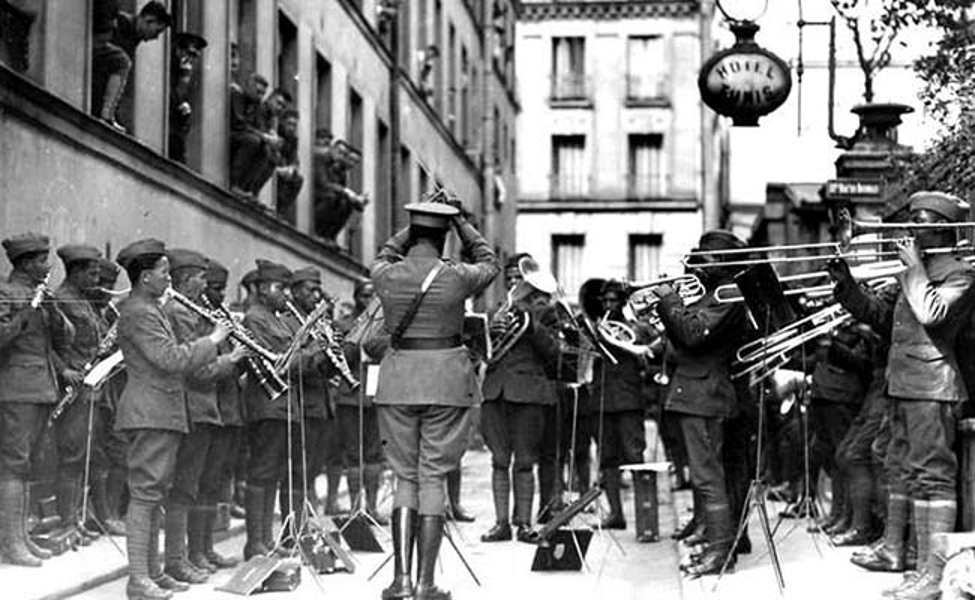
Hernández’s time with the 369th and in Europe expanded his stylistic range. Exposure to French and European musical traditions combined with Puerto Rican and African-American jazz and other rhythms and genres, enriching his compositional palette. The contrast between Puerto Rican traditions and European audiences shaped his later works, which often combined both Caribbean and cosmopolitan sensibilities.
His career after the war illustrates the international dimensions of Puerto Rican music. Hernández worked in New York and elsewhere, composing and performing for audiences across the Americas. His music drew on Puerto Rican traditions while engaging the broader musical worlds in which he lived and worked.
Two of his best-known compositions, Lamento Borincano and Preciosa, both dating to 1937, demonstrate the emotional and cultural range of his work.
Lamento Borincano portrays a rural Puerto Rican peasant (el jibarito) whose hopes of selling his goods in town collapse into disappointment. The song became a powerful expression of hardship and social vulnerability during a period marked by economic depression and stark inequality. Its significance extends beyond the individual character- it evokes the precarious lives of ordinary Puerto Ricans and anticipates themes that would become central to the island’s experience of migration and diaspora.
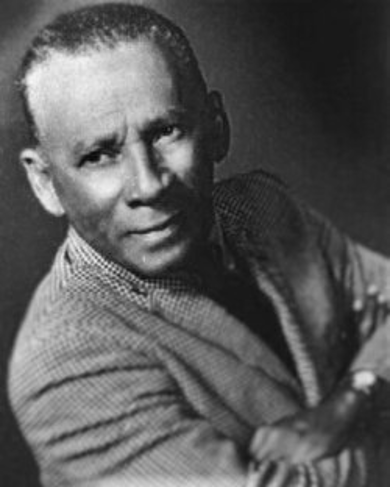
Preciosa, meanwhile, became an enduring musical tribute to Puerto Rico. Its celebration of the island’s beauty and emotional place in the lives of Puerto Ricans has resonated across generations, including among those living far from home.
These songs reveal Hernández’s ability to translate individual feeling into collective memory. His music could express suffering without reducing Puerto Rico to a litany of hardships while celebrating the island without ignoring the conditions under which its people lived.
Hernández’s career also reminds us that Puerto Rican cultural history cannot be understood solely within the island’s geographical boundaries.
New York was not merely a place where Puerto Rican culture was preserved after migration. It was a place where musicians encountered new audiences, collaborated with other traditions, developed professional networks, and created cultural expressions that became part of Puerto Rico’s own musical canon.
Hernández’s service with the 369th belongs to this broader history. It connected his Puerto Rican musical formation to African American cultural life and to an international audience, while placing him within the contradictions of a segregated military fighting a war proclaimed in the name of democracy.
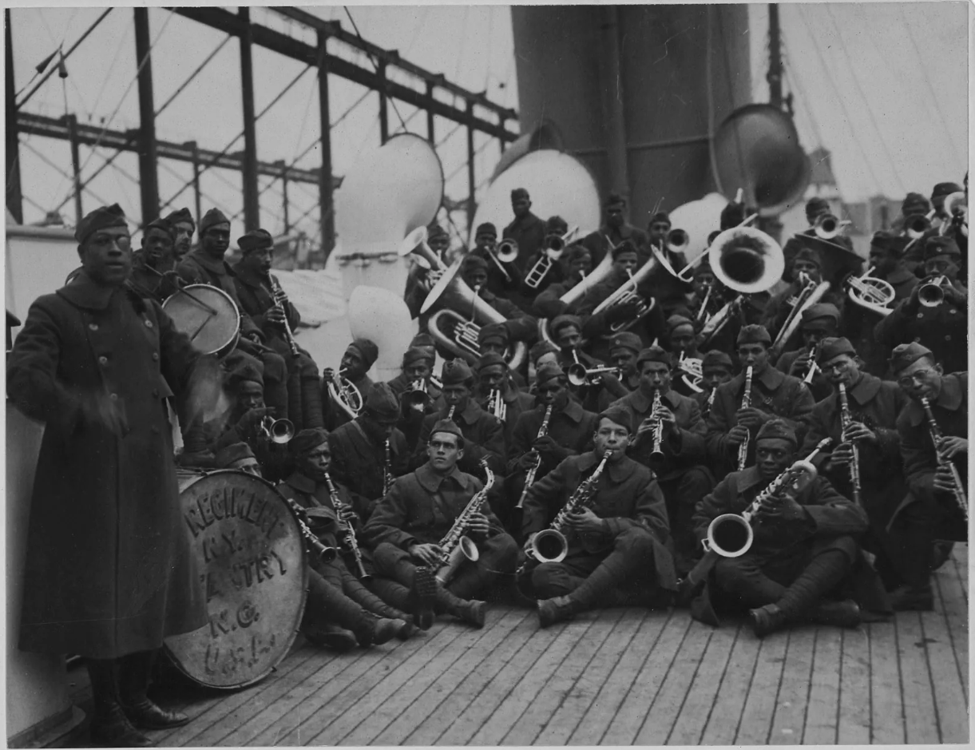
The Band Goes to War—and Brings Jazz to Europe– The 369th’s band became one of the most celebrated musical ensembles of the American Expeditionary Forces. Under Europe’s direction, it performed for American, British, and French troops, as well as European civilians. The musicians introduced audiences to ragtime and jazz-inflected rhythms that sounded unfamiliar to many listeners accustomed to European military and concert traditions.
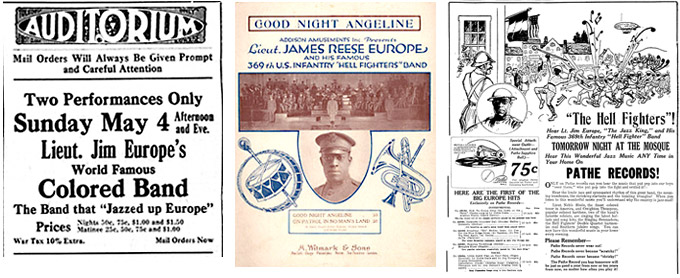
Their performances helped boost morale and gave the regiment a public presence beyond the battlefield. The band’s success also demonstrated the artistic sophistication of Black musicians at a time when American racial ideology routinely denied them equal recognition.
It is important, however, not to treat the story as a simple narrative in which jazz suddenly appeared in Europe because of one regiment. African American musical traditions had a much longer history, and the movement of musicians across the Atlantic involved multiple performers, venues, and institutions. The Hellfighters’ band was nevertheless a major and highly visible force in bringing these sounds to European audiences during World War I.
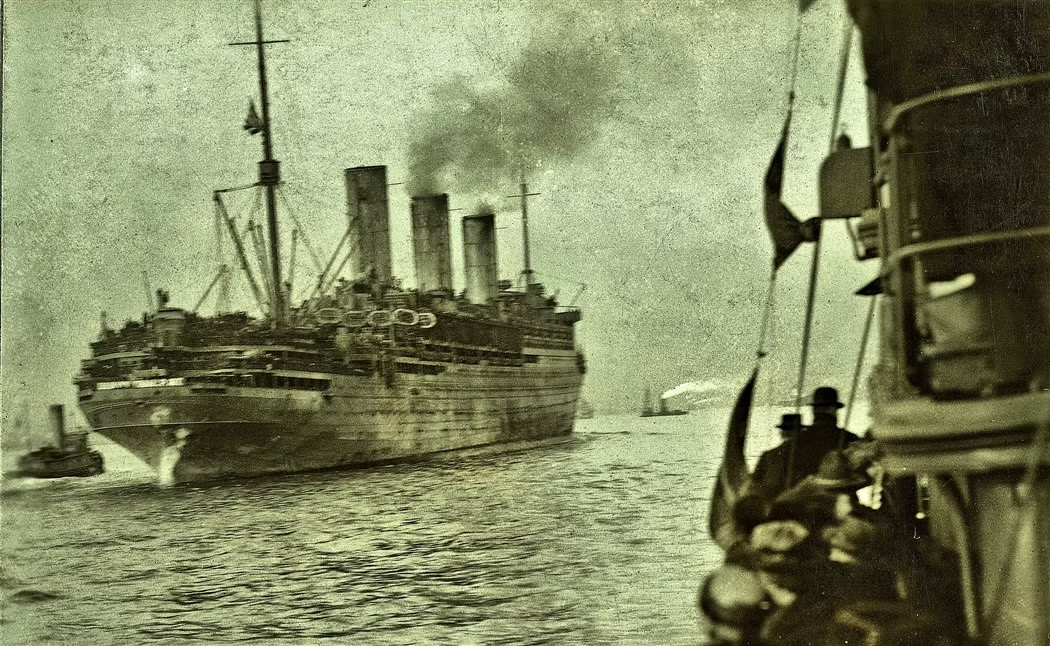
NARA111-SC-37321-ac, Source of Photograph: National Archives RG 111- 369th Infantry Regiment Harlem Hellfighters WWI – Guerre 1914 – 1918
Europe’s leadership was central to that achievement. His musical vision joined discipline with innovation and made the band an emblem of the regiment’s identity. The Puerto Rican musicians within it were part of that creative enterprise, helping produce a sound that emerged from the intersection of African American, Puerto Rican, and broader transatlantic musical traditions.
The band’s history also challenges the tendency to separate military and cultural (or social) history.
These musicians served in uniform, endured the racism directed at Black troops, and performed within an institution that often sought to restrict their status. Yet their music traveled beyond those restrictions, creating connections and leaving a cultural legacy that outlasted the war.
The Return Home—and the Unfinished Struggle for Recognition– When the 369th returned to New York in February 1919, the regiment’s homecoming parade became a landmark public event. The soldiers marched in full military dress, accompanied by the band that had helped make them famous. Crowds lined the streets as the men proceeded through Manhattan toward Harlem, where the regiment’s community and supporters welcomed them home.
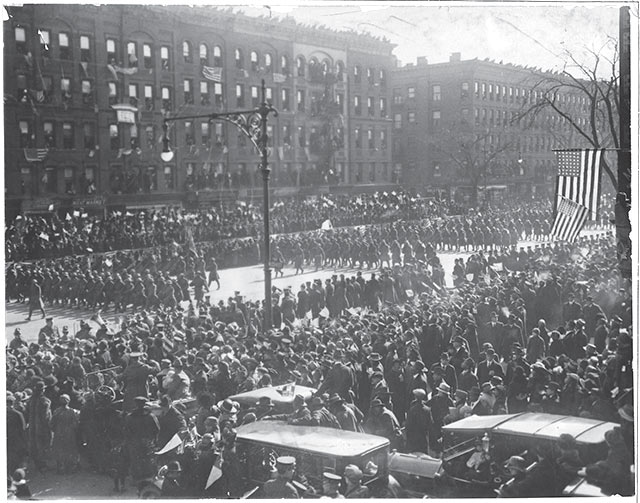
The parade offered a rare moment in which Black military achievement was publicly celebrated on a massive scale.
The soldiers’ uniforms and decorations testified to their service; their bearing and discipline challenged racist assumptions about Black Americans. The band, meanwhile, made audible the cultural achievement of a regiment whose history joined music with military service.
But the parade could not resolve the contradictions the men had faced. Black veterans returned to a country where segregation, disenfranchisement, racial terror, and unequal opportunities remained entrenched. The violence of 1919 made clear that the willingness of African Americans to fight and die for the United States did not guarantee that the nation would honor their claims to equality.
The legacy of the Hellfighters therefore lies in more than their battlefield record or their musical fame. Their story reveals the distance between democratic ideals and racial realities, while showing how Black and Puerto Rican servicemen asserted their agency within institutions that sought to limit them.
James Reese Europe: A Life Cut Short– James Reese Europe’s life ended tragically just months after the regiment’s return. On May 9, 1919, he was stabbed in the neck by Herbert Wright, a musician who had performed with him. Europe initially believed the wound was not fatal, but he died in the hospital after doctors were unable to stop the bleeding.
His death deprived American music of one of its most influential early bandleaders. Europe had helped organize a celebrated military band, brought African American music to international audiences, and created opportunities for musicians whose talents were often constrained by racial discrimination.
His legacy is inseparable from the Hellfighters and from the Puerto Rican musicians who joined their ranks. The ensemble he built demonstrated how musical creativity could emerge from collaboration across cultural boundaries, even within a military institution structured by racial inequality.
A Transnational Legacy of Music, Military Service, and Race– The story of the 369th Harlem Hellfighters is at once military history, African American history, Puerto Rican history, and music history. The regiment fought with distinction in France, received recognition from its allies, and returned to a celebrated homecoming. Yet its experience also exposed the institutional racism that shaped American military policy and the racial violence that Black veterans continued to face after the war.
James Reese Europe transformed the regiment’s band into an internationally recognized ensemble. His recruitment of Puerto Rican musicians, including Rafael Hernández, brought together musical traditions that were already rich and dynamic. Their collaboration helped carry jazz and related African American musical forms to European audiences while opening a chapter in Puerto Rican cultural history that deserves greater recognition.
Hernández’s later career demonstrates how cultural creation transcends national boundaries. His music emerged from Puerto Rico’s musical traditions, his experiences in the United States, and the wider world of performance and migration. Songs such as Lamento Borincano and Preciosa became enduring expressions of Puerto Rican hardship, affection, and identity. Hernández’s European service with the 369th was both a musical and cultural turning point. It broadened his artistic horizons, influenced his signature compositions, and cemented his role as a bridge between Puerto Rican music and the wider world. The global and diverse nature of Puerto Rican music is not a new phenomenon.
The Hellfighters’ legacy reminds us that cultural exchange does not take place outside history. It unfolds amid power, inequality, migration, conflict, and the pursuit of recognition.
The Puerto Rican musicians of the 369th were not simply supporting players in an African American story, nor were they merely representatives of an island tradition.
They were active participants in a shared historical experience that connected Harlem, Puerto Rico, and Europe.
Their story deserves to be remembered not only because they helped bring jazz to the world, but because they did so while serving in a segregated military, confronting racism, and insisting—through both their service and their art—on a place in the history of a nation whose democratic promises remained unfulfilled.
________________________________________________________________
Continue reading: The Color Line: Puerto Rico’s 94 Division and the 375 “Colored” Infantry Regiment in WWI. – in cOHERENT Thoughts
For the Puerto Rican military experience under the United States see Soldiers of the Nation–
For more details an in-depth look, visit:
New York State Military Museum — 369th Infantry Regiment: Unit history and combat service.
National Archives — Photographs of the 369th Infantry and African Americans during World War I: The regiment’s return and the broader historical context.
Elena Martínez — “Rafael Hernández and the Puerto Rican Legacy of the 369th Regiment’s Harlem Hellfighters”: Particularly valuable for the Puerto Rican musicians, enlistment records, and Hernández’s connection to the regiment.
The 1918 directive to the French Military Mission: The primary document on racial restrictions imposed on relations between French personnel and Black American troops.
National Park Service — American Latino Theme Study: Military: Broader context for Puerto Rican and Afro-Puerto Rican military service.

