Most discussions of Puerto Rico’s military history during World War I tend to focus on two familiar narratives: the myth of U.S. citizenship being extended to the Puerto Ricans to force them to serve in the Great War, and the often-glorified story of the Puerto Rican Regiment, sent to the Panama Canal Zone during the war and later redesignated the 65th Infantry—the legendary sesenta y cinco de infantería.
Far less attention has been paid to the soldiers mobilized as part of the Puerto Rican 94th Infantry Division, particularly its segregated “colored” regiment, the 375th. Their story reveals a different, and often overlooked, dimension of Puerto Rico’s wartime mobilization—one shaped by colonialism, institutional racism, and Puerto Ricans’ own demands for military inclusion and recognition.
As I have demonstrated elsewhere, Puerto Rican political leaders and the public took offense when Puerto Rico was initially excluded from the draft law. They demanded not only that the draft be extended to the island, but also that volunteers be accepted and that an entire Puerto Rican division be raised, manned, and trained in Puerto Rico.
These demands were about more than military manpower. They reflected a determination to claim the rights, responsibilities, and recognition associated with military service, even as the colonial government and the U.S. military continued to treat Puerto Ricans as unequal.
The War Department—the predecessor of today’s Department of the Army—was initially reluctant to accept Puerto Ricans into the military and had made no comprehensive plans for their mobilization.
Under pressure from President Woodrow Wilson, who was himself responding to Puerto Rican political leaders and the island’s press, the department initially favored mobilizing a limited number of Puerto Ricans and dispersing them among existing U.S. Army units.
Army officials believed this arrangement would dilute what they perceived as the potential negative influence of Puerto Rican recruits while exposing them to the discipline and standards of the continental U.S. Army.
Puerto Rican leaders, the press, and even the island’s appointed governor, Arthur Yager, a close friend of Wilson, rejected this limited approach.
Ultimately, Wilson facilitated the extension of the draft to Puerto Rico, the full mobilization of its eligible population, and the creation of a division to be raised and trained on the island.
The War Department was consequently compelled to authorize the 94th Infantry Division, initially envisioned as comprising four Porto Rican regiments, which would constitute the island’s contingent to the National Army.
The history of this division—and particularly the 375th Regiment—offers an opportunity to look beyond the familiar narratives of citizenship, mobilization, and the sesenta y cinco.
It allows us to examine how Puerto Rican soldiers navigated the contradictions of serving a nation that denied them equality, how race shaped their military experience, and how they understood their service, their obligations, and their place in the world.
The 94th Infantry Division– The 94th Division would consist of four regiments 373, 374, 375, 376, the first two were assigned to the Tactical Brigade 187 while the 375-Colored, and the projected 376 were to form part of Tactical Brigade 188.
A Home Guard “Guardia de la Patria” was also established to take over defense of the island in the unlikely case the Porto Rican division was sent overseas.
Though unconvinced of their value as first line combat troops, the War Department came to believe that mobilizing Puerto Ricans would prove useful.
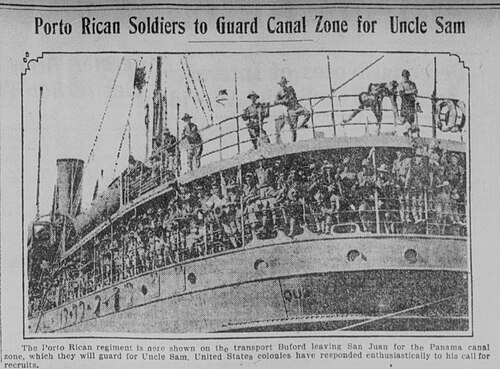
These soldiers could relieve White Continental American soldiers from non-combat assignments freeing them for combat duty, while inspiring loyalty among the population of the island. And that in fact was the mission of the Puerto Rican regiment (65th) as it deployed to the Panama Canal zone.
The political and economic value of mobilizing as many Puerto Ricans as possible was well understood by the War Department. In December of 1917, Frank McIntire, Chief of the Bureau of Insular Affairs (a branch of the War Department tasked with the administration of the island), wrote a memorandum to the Chief of War Plans Division informing him of the political, economic, and social benefits of mobilizing Puerto Rico’s, “…large surplus population, that is, a population for who in the present there is no continuous employment.”
After making clear that his views were not of a military nature, McIntire reported that the men who had gone through military training on the island, “…have been very much improved, physically and otherwise, and are better off for having had it and to that extent are of greater economic value.”
Freeing “White” Troops to do the Real Fighting -The role of Puerto Rican troops was to be subordinated to labor lest their equal participation undermine the racialized rationale behind imperial expansion.
McIntire, Chief of the Bureau of Insular Affairs, debating whether to train the Puerto Ricans had reminded Yager that training in the U.S. would “make them [Puerto Ricans] better men on returning to Porto Rico, physically and otherwise, this, even though they should not go abroad at all for service.”
“Yager’s efforts to secure more spaces in the military for the Puerto Ricans were generally applauded. Only the issue of race gained him real criticism during this period.
White continental officers and Yager himself expressed pro-segregationist views to McIntyre. In one of his letters, Yager informed him that it had been necessary to “keep the blacks out because of prejudice amongst the soldiers of the [Puerto Rican] regiment themselves who did not want blacks in the regiment.” This was very likely the case. The disdain lighter skin countryside Puerto Ricans felt for Afro-Puerto Ricans is well documented- for example, in n Francisco Pico’s study of police reports in Santurce y su gente.
However, Yager argued, “blacks are anxious to join the regiment and I’m told they make excellent soldiers under white officers and I’m confident a full regiment of them could be formed in the island.”
In further correspondence Yager complained: “Many Porto Ricans seem to feel that the Governors and officials in the states consider all Porto Ricans as Negro troops: but that of course touches the sensibility of the white people here.” This is an accurate observation as until very recently- most Puerto Ricans had sought to prove their whiteness with an overwhelming majority self-identifying as white in the first census of the 21st century.
The governor, referring to “our race problem, just as they have it in South Carolina,” agreed to train black and white soldiers together if absolutely necessary but warned that “they must be separated.”
However, whether or not Yager wanted to segregate Puerto Ricans in the military by race was mostly irrelevant, since it was the policy of the U.S. Army to segregate troops racially. To that effect, the 375th Regiment was designated to train and field black Puerto Ricans.” [Excerpt from Soldiers of the Nation]
The United States military was still a segregated organization during the war– and would continue to be until the Korean War when it finally started implementing Executive Order 9981, signed by President Harry S. Truman on July 26, 1948 and which established equality of treatment and opportunity regardless of race, color, religion, or national origin.
Regarding the decision to segregate the troops on the island, the newspaper Justicia commented: “Under the administration of Arthur Yager the line separating the men of color is finally established in Puerto Rico” followed by “the old racist fart from Kentucky accused of being the instigator.”
El Diluvio, a local publication very critical of island Governor Yager took special interest in the 375th Porto Rican Colored Regiment and wrote a series of articles highlighting their training and progress.
An editorial asserted that those soldiers were not “the less intelligent, nor the less smart, neither the ones less disposed to learn and ready themselves to defend with honor the name of Puerto Rico.” Instead, “… the more apt, humble and the most attentive of the recruits are those of the 375.”
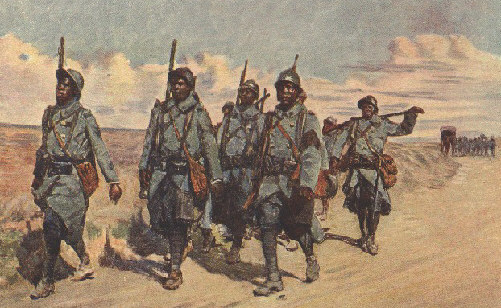
The editorial also mentioned that “the boys of the 375 will one day respond to the call of arms with the same unconditional bravery and tenacity shown by the colonial French troops and the brave Black soldiers of America.” It is important to highlight that the editorials from El Diluvio noted the colonial nature – and the racial component- of these men and their service and linked their participation to broader decolonization struggles.
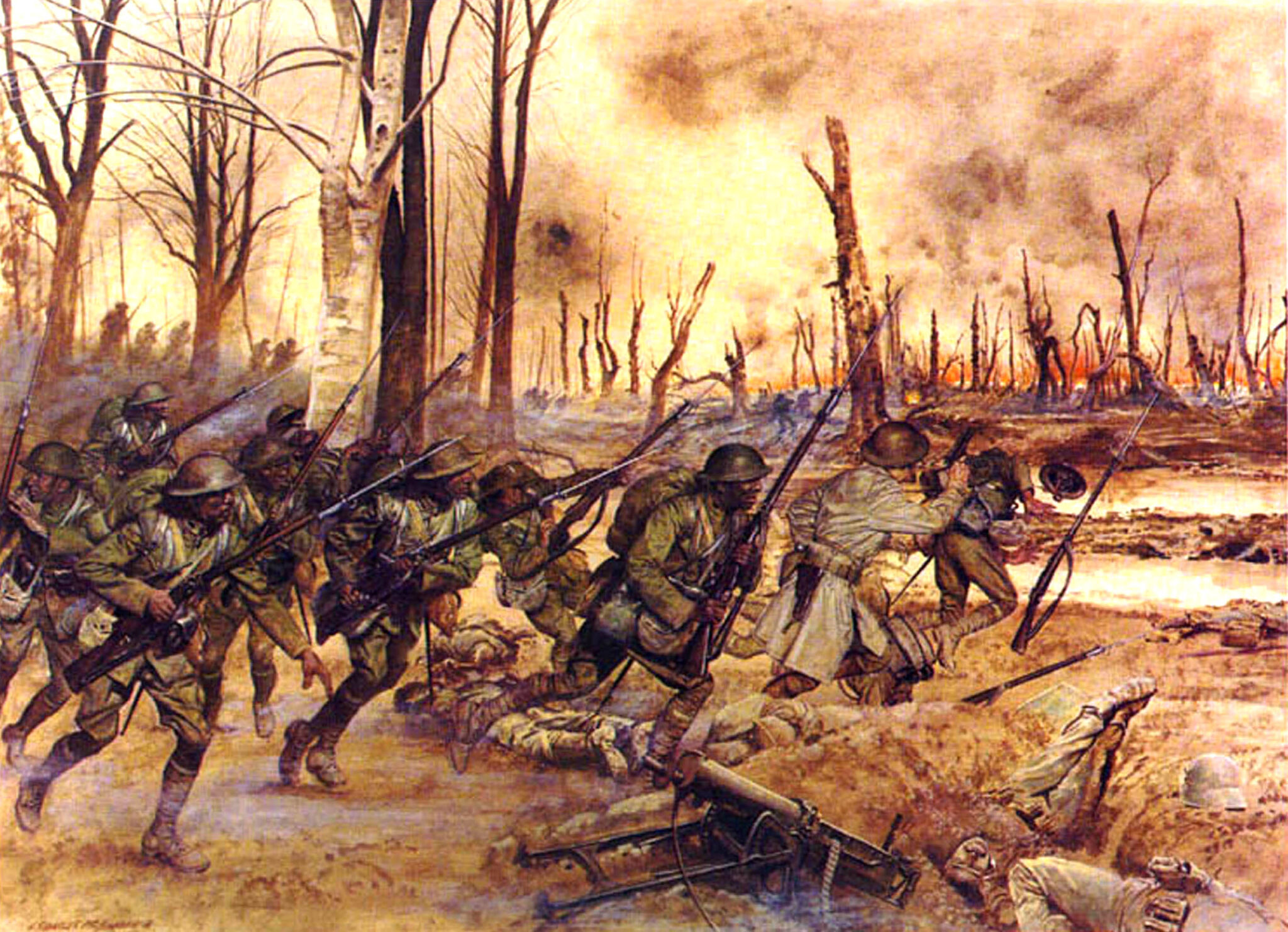
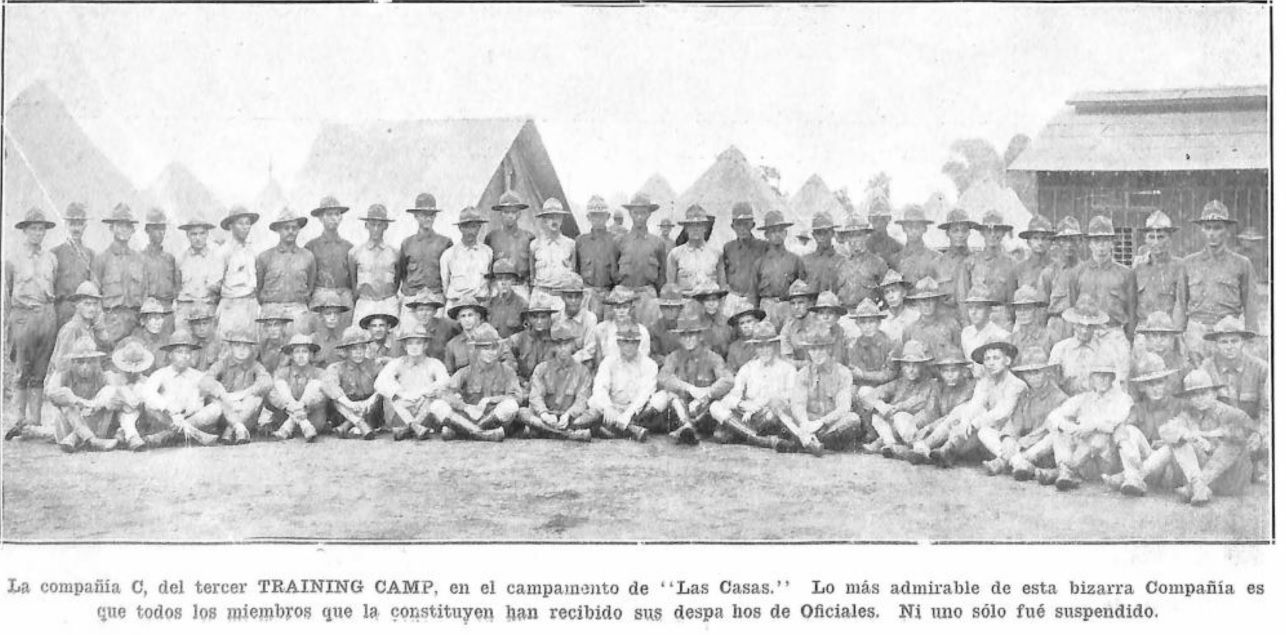
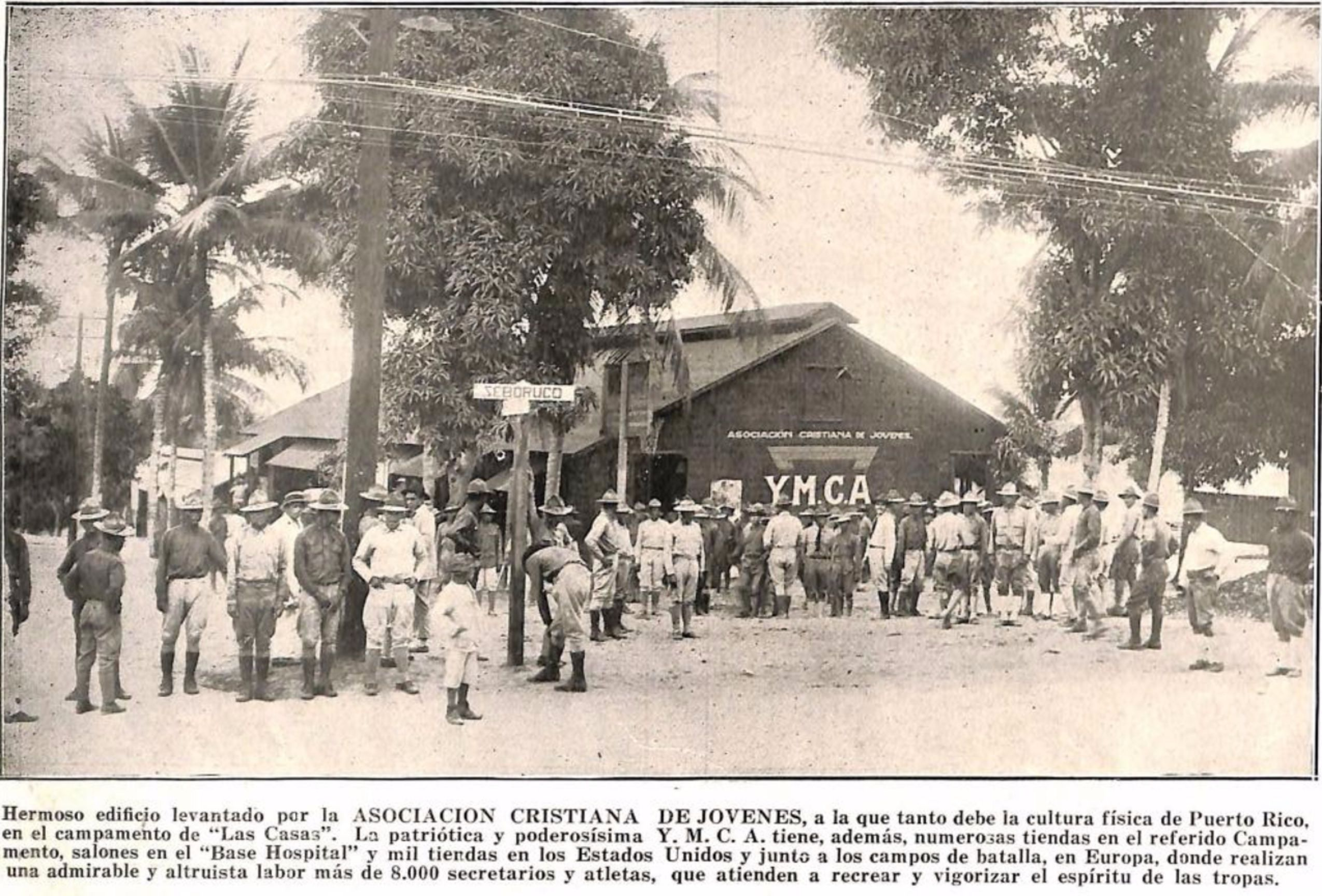
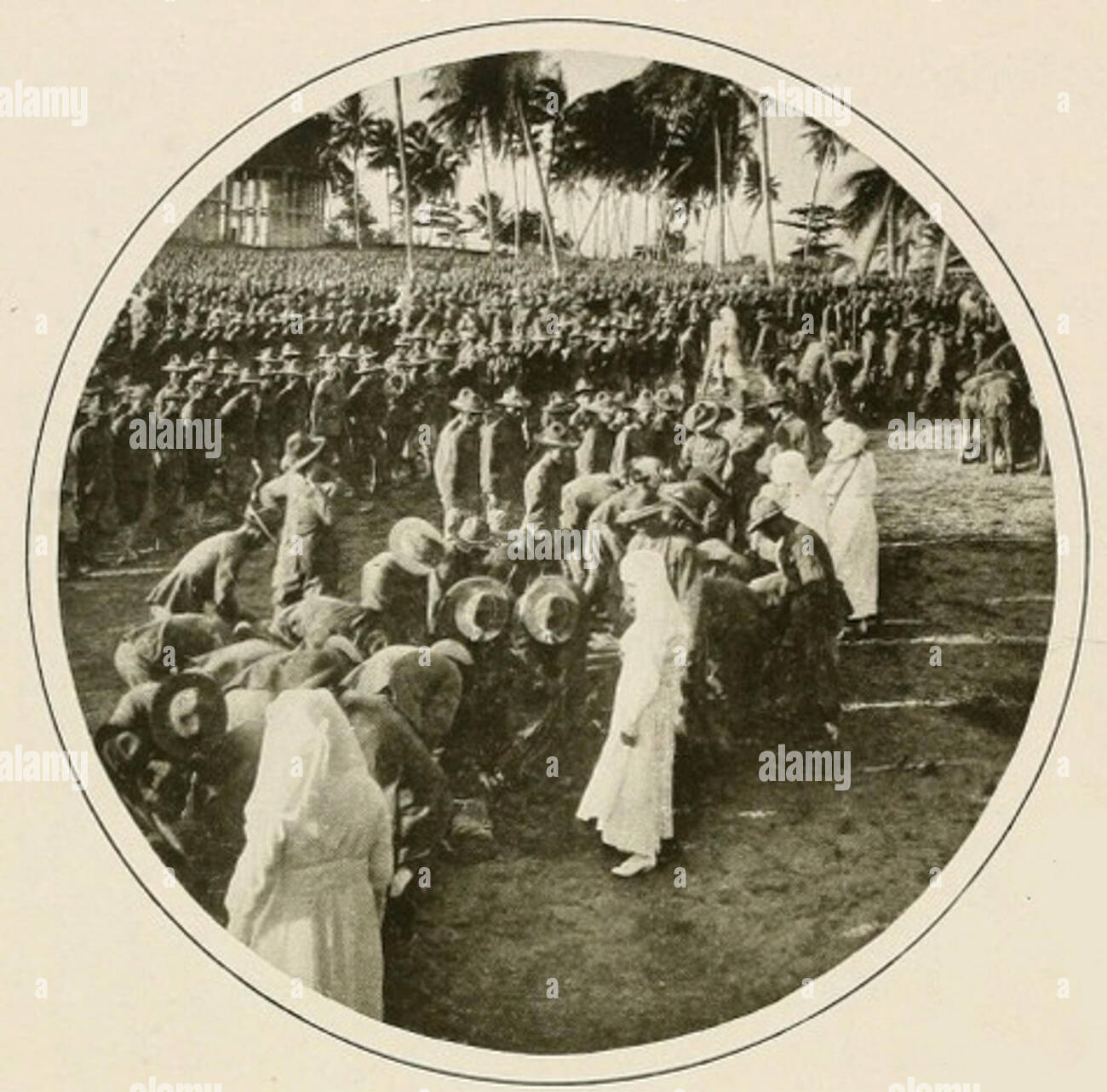
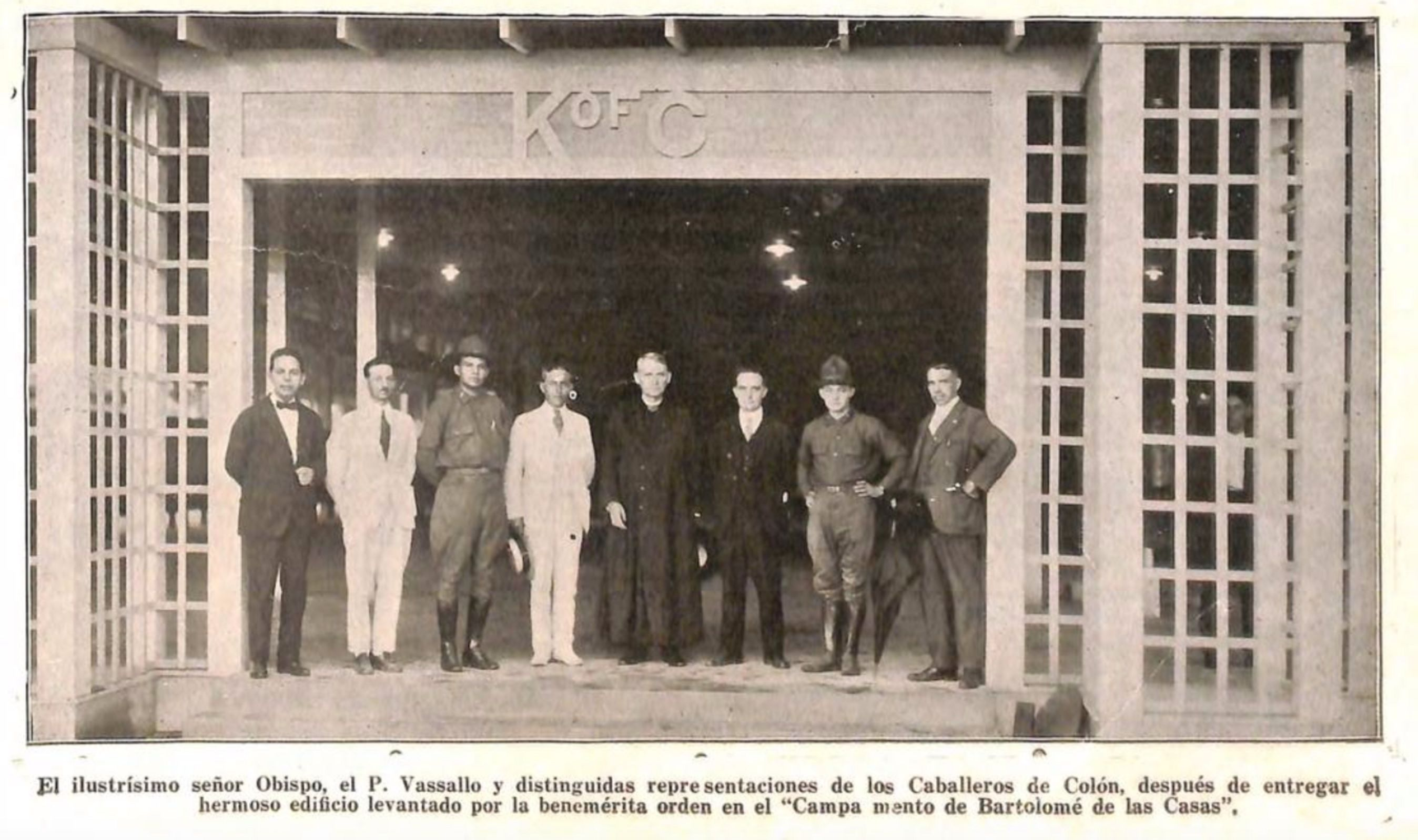
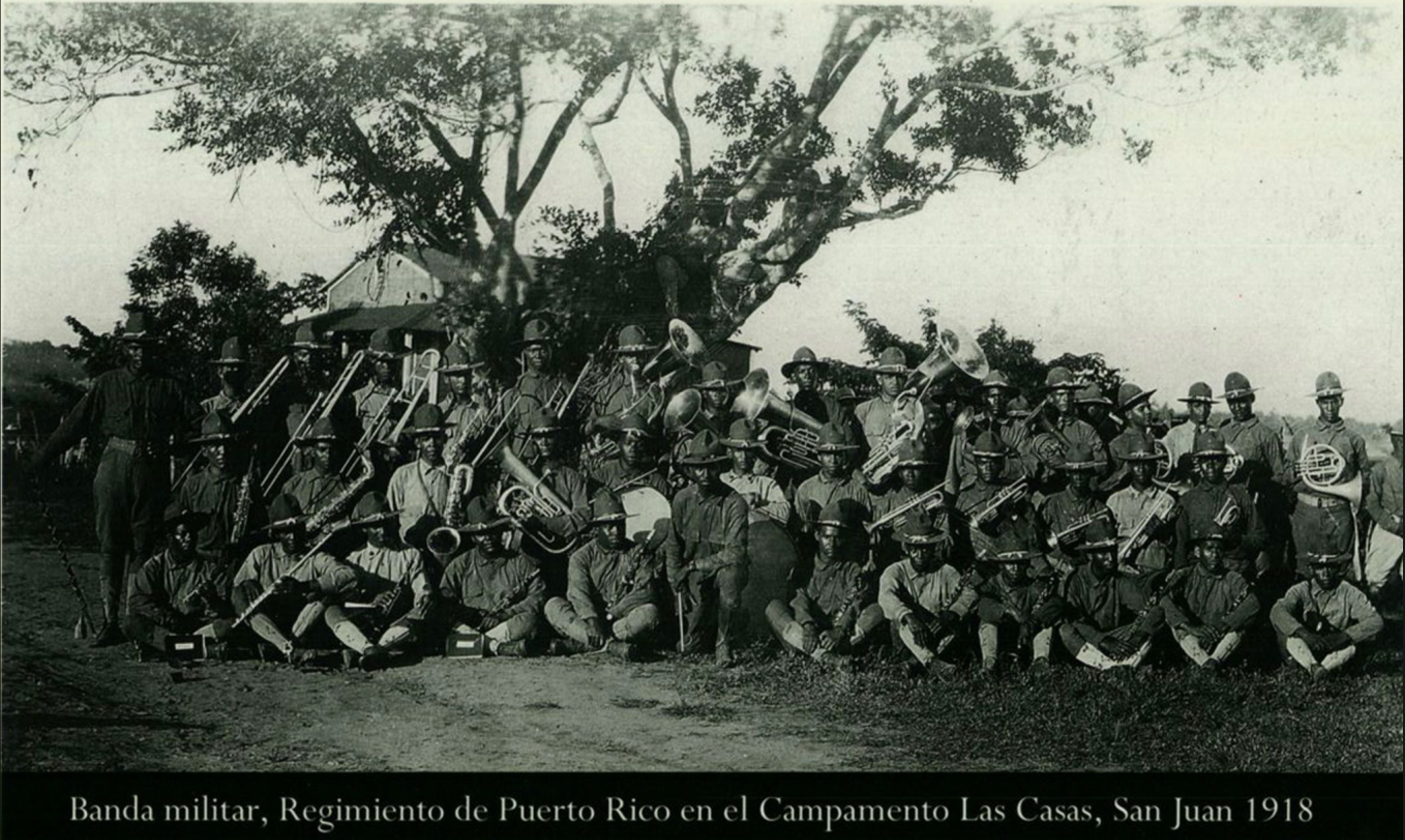
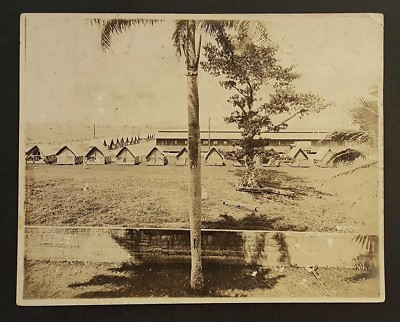
The mobilization effort required training Puerto Ricans as junior officers to lead the division. Officer training camps took place in Puerto Rico. Puerto Rican recruits trained in Camp Las Casas (Champion of the Indians) to become soldiers along with the white Puerto Rican cadets training to become commissioned officers. Located in Santurce, east of San Juan, and with an area of 537 acres, Camp Las Casas served to train more than 500 Puerto Ricans as officers of the U.S. Army and roughly 18,000 soldiers.
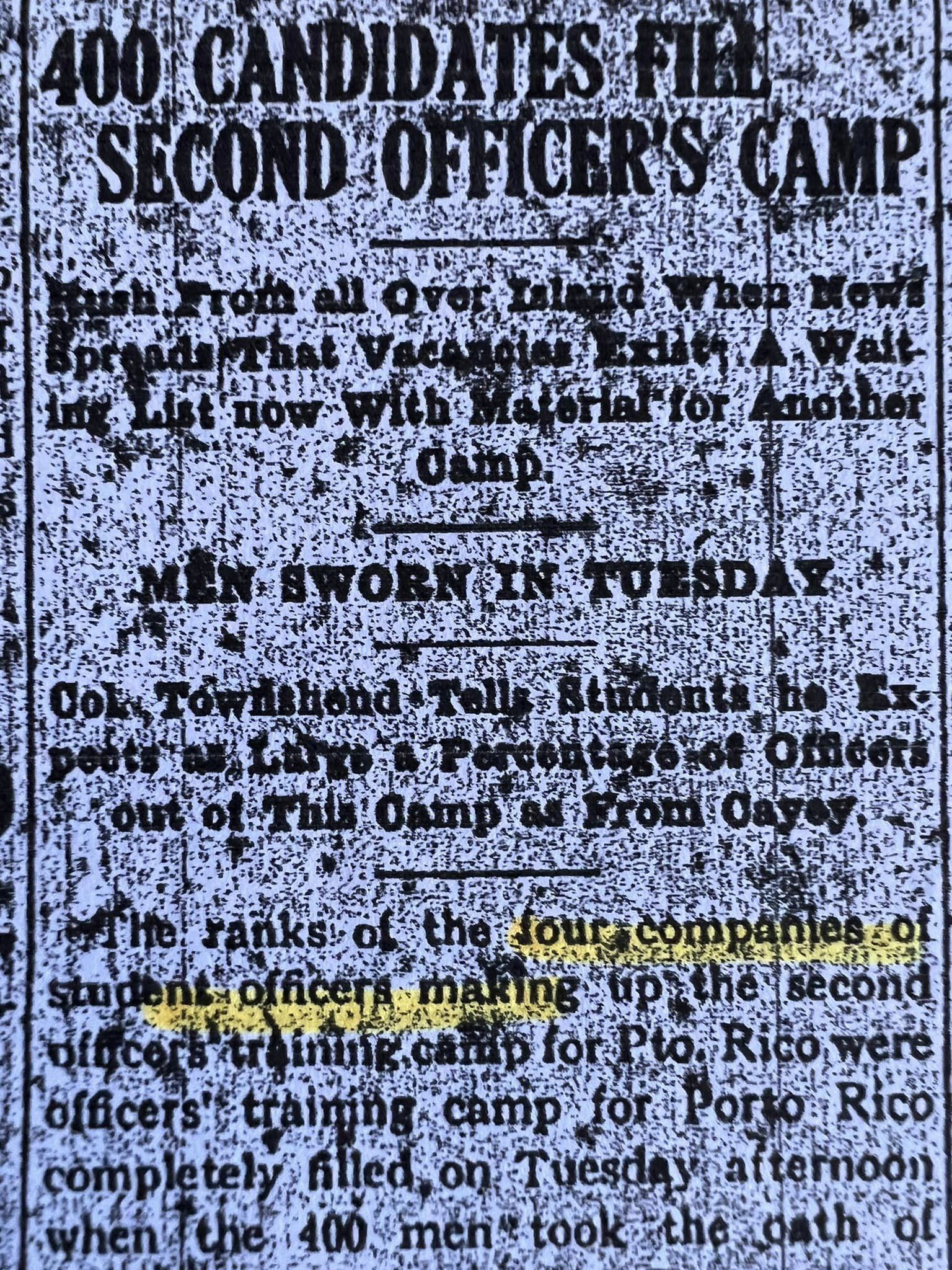
The Black Puerto Rican cadets training to become officers were initially housed in San Felipe del Morro Castle in San Juan.
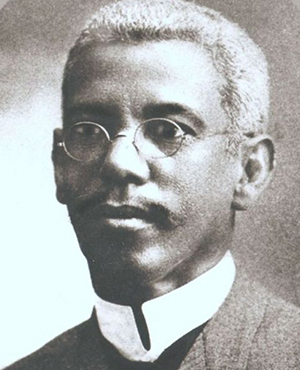
José Celso Barbosa, an afro-Puerto Rican leader of the annexationist republicanos, took interest in the well-being of the “Porto Rican Negro Regiment”, the 375th. He wrote to the regiment’s commander, Col. Frank C. Wood, expressing his willingness to accept that the “national citizenry were divided in organizations and racially,” but hoping that when the war ended the men’s willingness to sacrifice in “defense of their nation” would help to erase such divisions.”
The color line, however, existed in Puerto Rico before the arrival of the Americans in 1898.

Local newspapers reported that “el Morro proper is now referred to as Haiti.” The same news article commented that the “100 negro candidates” company “was already distinguishing itself”. It also highlighted that the officers training them deemed the men an “unusual fine lot”.
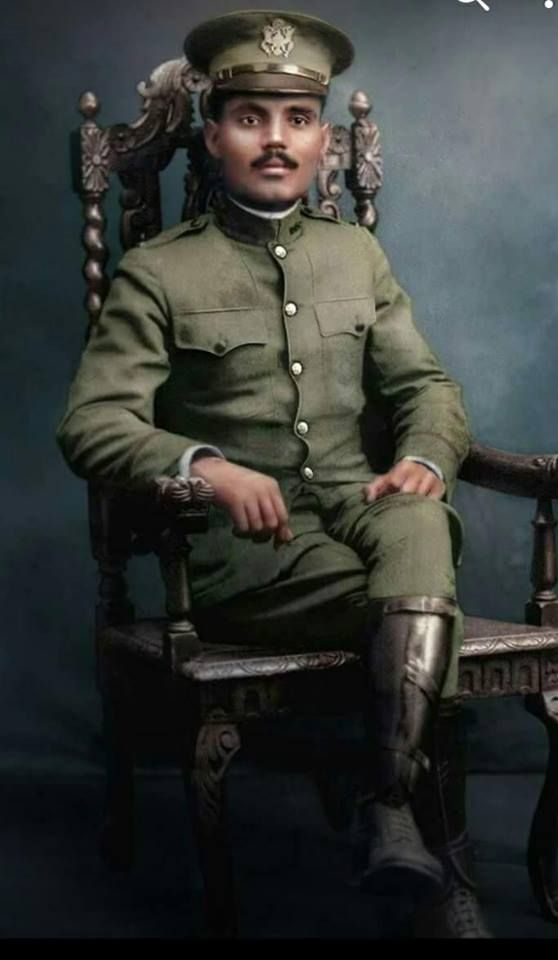
And they were right, the Black Puerto Rican officer candidates included figures like Pedro Albizu Campos. They were an exceptional group of men indeed- highly skilled and educated and traced their Puerto Rican lineage many generations back– and yet, their Blackness was enough to label them as aliens in their own land– and their presence enough to call one of the most distinguishable Puerto Rican icons- the Castle of San Felipe del Morro- Haiti.
Still- just like the soldiers of the Puerto Rican Regiment (the 65th) and their brothers in arms and compatriotas in the Puerto Rican white regiments- the men of the 375th trained and worked hard to prepare what they saw as their duty.
“By October 31, 1918, three of the four regiments authorized for the Porto Rican division had been trained and manned with 10,600 officers and soldiers. On November 11, an armistice between
the Allies and the Germans went into effect, ending hostilities in Europe.” (See, Franqui-Rivera, Soldiers of the Nation)
The war ended before the Porto Rican Division finished its training in Camp Las Casas. Not that the War Department intended to ever send them into the fight. But this was unbeknownst to them.
“Amid fireworks, dancing, the colors of the United States and of the Allied nations, out of the gates of Las Casas came marching the 12,000 soldiers and trainers of the Porto Rican contingent of the National Army.
The celebration climaxed with a military review of the Porto Rican Division in the Plaza 2 de Marzo in Condado, commemorative of the Jones Act of 1917. Knowing that demobilization would come rather sooner than later, the Porto Rico Progress announced that the men from Las Casas “no matter what their future may be, cannot help being better men for the few months of training they have had.”
“On December 18, 1918, demobilization orders arrived, and in January 1919 the Puerto Rican division had been completely demobilized. The soldiers training in the island did not see combat.
A soldier lamented after receiving his discharge papers and examining the document and the blank space reserved for “battles, engagements, and skirmishes”: “If there were only three or four names in that line, how proud I’d be.” Other local outlets published similar stories.”
By March 1919 Pedro Albizu Campos- who had trained and became an officer in the 375th- along with some 12,000 Puerto Rican soldiers from the 94th Infantry Division, had been discharged from the Army. On April 2 he was commissioned as a first lieutenant in the Officers’ Reserve Corps. Soon thereafter he resigned his commission and returned to Harvard. (Marín Román, El caldero quemaó, 514–20).”
“Demobilization came swiftly, but that was not to be the end of the “Porto Rican contingent.” The three regiments from Las Casas were reorganized in 1922 as part of the Army Reserve Corps. And in 1919, Secretary of War Baker authorized Yager to organize an infantry regiment and a cavalry battalion, officially creating the Porto Rico National Guard“- in recognition of the Island’s herculean mobilization in support the war effort- despite The War Department’s obstacles and antipathy towards it.”[Excerpts from Soldiers of the Nation]
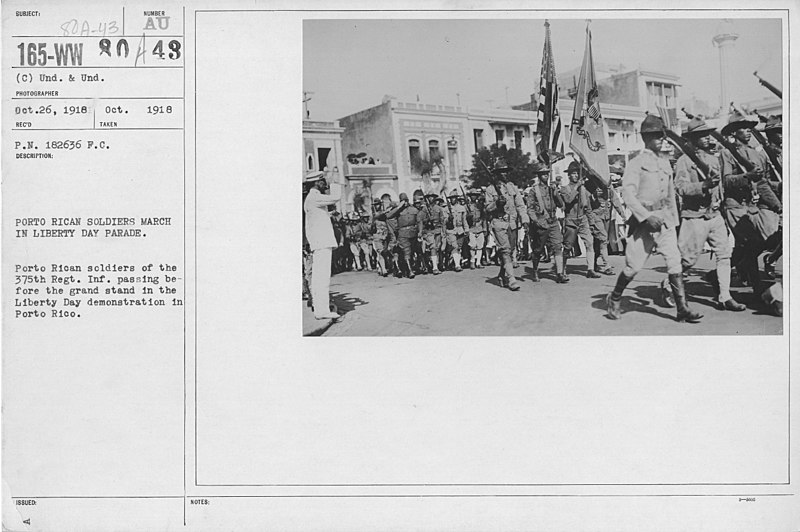
This is why it is so important to recognize what these men did. They fought for the right fight and to serve as equals, despite the institutional racism and colonialism they faced, and for reasons that went beyond military service alone. They sought to fulfill what they understood to be their duty to their communities, their country, and the larger causes for which they believed they were fighting.
It dishonors their memory to portray them as fools or pawns of the metropolis or the colonial local elites, or, as so many do, as vende patrias. The vast majority went eagerly, believing that their efforts and sacrifices would help create a safer world, advance democracy, and improve the conditions of their communities and the country as a whole.
After all, they trained to fight in what was heralded as “the war to end all wars,” amid promises of decolonization and self-determination for national groups.
Hindsight is 20/20. We cannot expect these men, their families, or their communities to have known what the future would bring. But we can—and should—honor their bravery, their service, and their commitment.
They trained to serve under the flag of the United States, but they did so as Puerto Ricans, with their own colors and those of the Allied nations flying alongside it.
Their story is not one of blind allegiance or misplaced patriotism, but of men who sought to claim their place as equals in a world that continued to deny them that right. Whatever the contradictions of the colonial system in which they served, their efforts, aspirations, and sacrifices deserve to be remembered on their own terms.

