The sine qua non in discussions about nationalism and national identities in Puerto Rico is without doubt, El Grito de Lares of September 23, 1868, the biggest revolt against Spanish rule ever staged in the island.[1] This revolt occurred almost in unison with the Glorious Revolution (La Gloriosa or Revolución Septembrina) in Spain (19-27 September, 1868) and the Grito de Yara (October 10, 1868), which started the Ten Year’s War and a three decades long struggle for independence in Cuba.
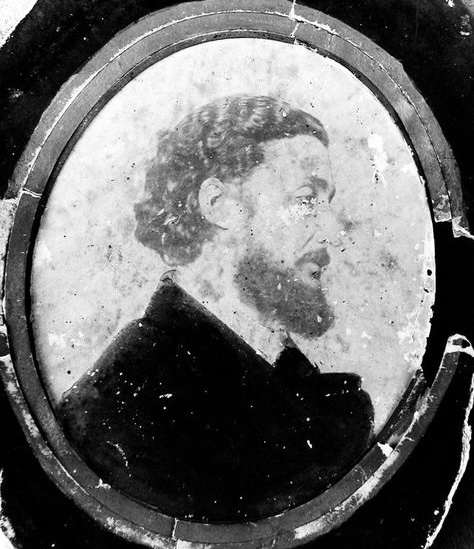
On January 6, 1867, prominent Puerto Rican separatists and revolutionaries exiled in New York, under the guidance of Ramón Emeterio Betances, Segundo Ruiz Belvis, Juan Ríus Rivera, and José Francisco Basora founded the Comité Revolucionario de Puerto Rico. They aimed to overthrow the Spanish regime on the island and to create a democratic republic.
New York City was the main base for its early activities, though some sources note that Betances and other leaders had also been active in the Dominican Republic and other exile hubs before settling in New York,
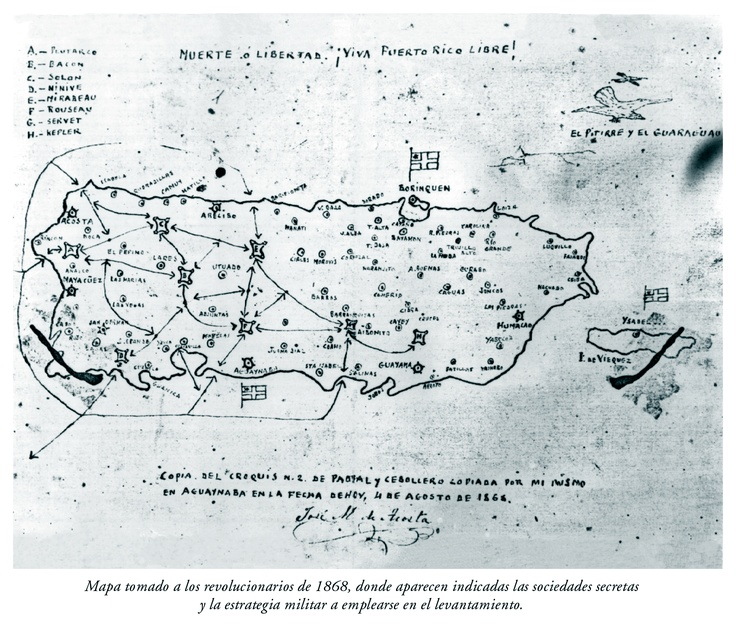
The revolutionary committee proceeded to organized secret cells on the island for this purpose and to secure weaponry for the rebel army.[2] A series of setback doomed the plans of the revolucionarios. They managed to secure 500 rifles, six canons, ammunition and the small transport ship, “El Telegrafo” to arm the revolutionary army; however, their ship was confiscated in Saint Thomas.[3]
Worse yet, Betances, who had planned to land in Puerto Rico with men and weapons the first day of the revolution, set originally for September 29, was detained in Santo Domingo and never made it to the island.[4]
Meanwhile, the leaders in Puerto Rico faced problems of their own. On September 19 a rebel agent was apprehended in the western coastal city of Mayagüez and the next day a miliciano (member of the Puerto Rican militias) in the northwestern town of Quebradillas informed his commander of rebel plans in Camuy.
The Spanish Capitán General de Puerto Rico, Julián Juan Pavía ordered Spanish troops to full alert.
In the first hours of the morning of September 21, Spanish authorities detained the rebel leader Manuel María González and searched his house.
There, the Spanish authorities found a list of members of the rebel cell and a copy of their reglamento.
The Camuy rebels who were not arrested moved to Lares and warned the rebel cell in that town.
From Lares, messengers were sent to alert the rebel cell in Mayagüez that their plans had been compromised and of the need to launch the rebellion as soon as possible. They also wanted the Mayagüez’s cell to alert the rest of the cells throughout the island.
Reckoning that speed was of the essence, the leadership of the rebel cells in Camuy, Lares and Mayagüez decided to launch their revolt six days before originally planned.[5]
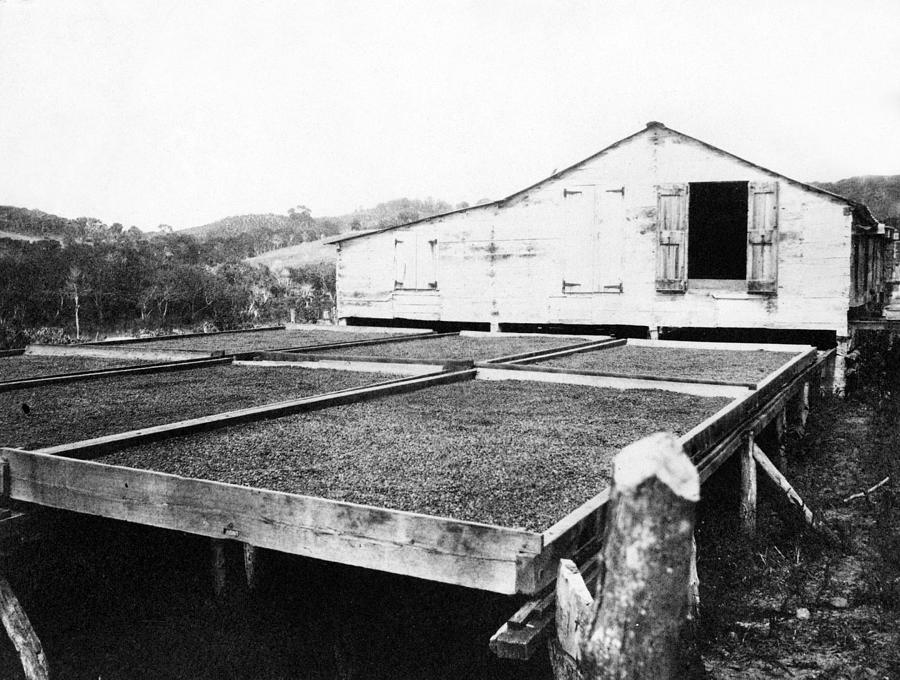
On September 23, 1868, hundreds of rebels started to converge at the farm of Manuel Rojas, a coffee grower in the mountain town of Lares and rebel leader.

On their way to Lares the rebels exhorted slaves and jornaleros to join them in some cases threatening to kill them if they did not do so.[6]
That evening the rebels marched into the town itself and took it without resistance.
They proceeded to form a provisional government of republican character.
The Republic of Puerto Rico, with a president and a cabinet appointed by the chief military leaders present in Lares, Manuel Rojas and Juan de Mata Torreforte, was officially established on the morning of September 24.[7]
Rojas and de Mata Torreforte instructed the new government to recruit and organize more rebel soldiers and to secure funding by forcing the merchants to loan monies to the republic.[8] By decree, the rebel government declared null the hated jornalero (passbook) system that forced landless peasants to work as peons, and promised freedom to those slaves who joined them in the fight against the Spaniards.
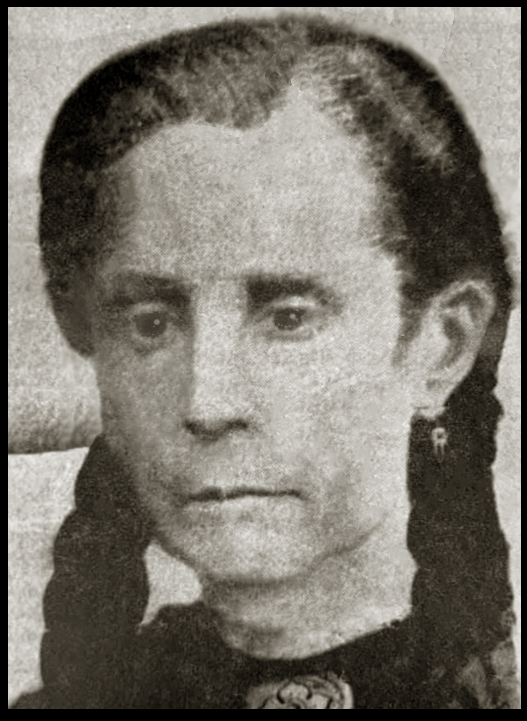
The rebels also welcomed foreigners to join their ranks and become patriots of the republic. Another decree gave Spaniards in Puerto Rico three days to swear allegiance to the new republic or to leave the island if they did not. The decree also warned of extreme repercussions if the Spaniards decided to stay and did not support the rebels and the republic.[9]
The chief rebel commanders, Rojas and de Mata Torreforte, proceeded to name the officers of the Ejército Revolucionario, which at that point consisted of roughly 600 men. They named eight brigadier generals plus colonels for the infantry, artillery and cavalry. These colonels were quickly promoted to generals. That the rebel leadership appointed so many generals and colonels for such a small number of rebels suggests that the leaders believed they would be able to gain popular support.
Late in the morning of the 24th, the rebels proceeded to the town of San Sebastian del Pepino. The commanders of the milicias disciplinadas (local militias) in Pepino, Lieutenant Manuel Cebollero and Alférez Eusebio Ibarra had spent the previous night organizing slaves and jornaleros into a fighting force to join the rebel column coming from Lares. They had also promised the rebel leadership that their milicianos would join the rebellion.
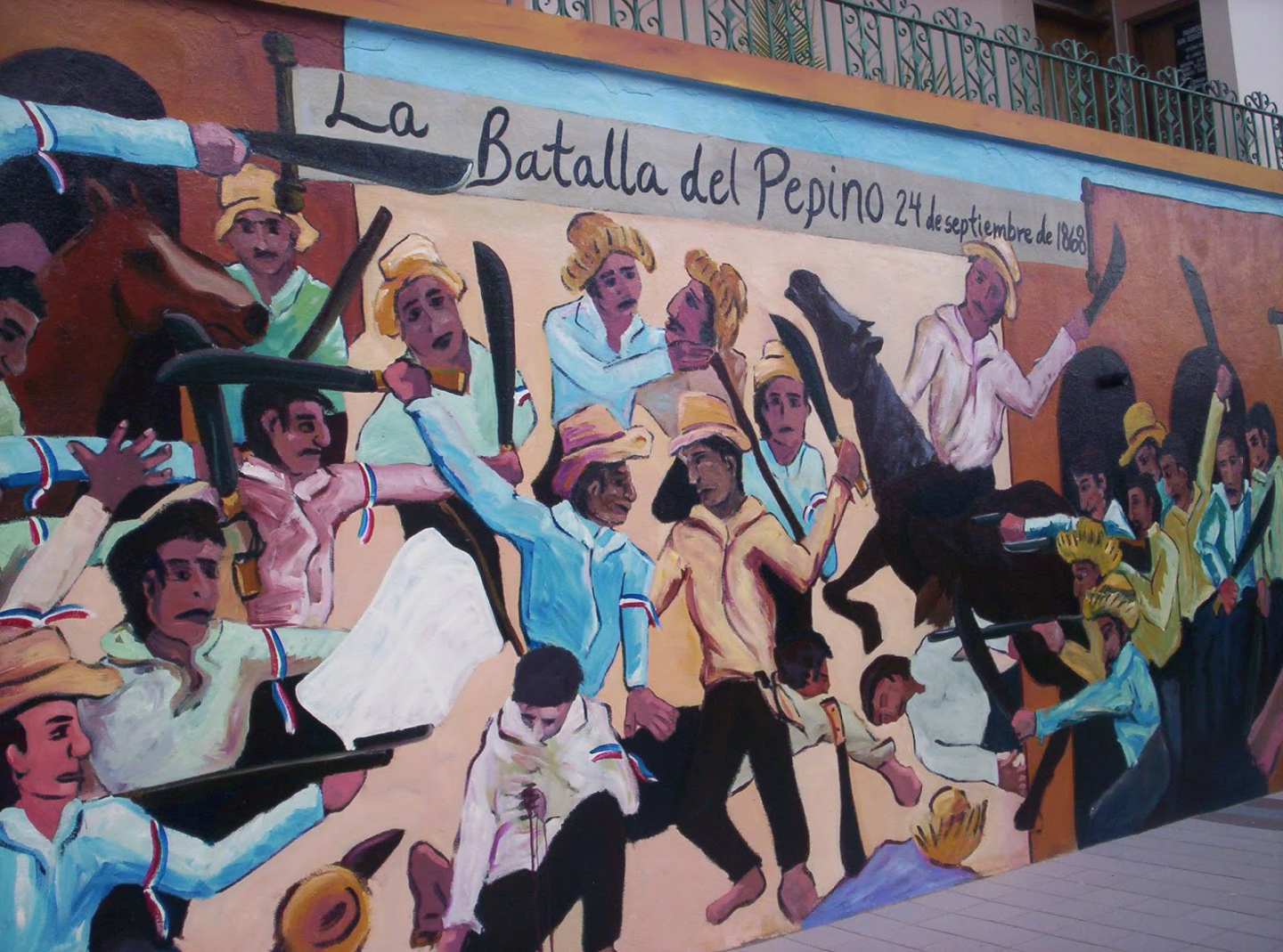
Later that morning, roughly forty rebels on horseback enter Pepino’s plaza shooting and chanting “death to the Spaniards and the Queen”, while exhorting the milicianos to join them.
To their surprise, and that of the Spanish authorities present, the milicianos responded to the rebels with intense fire ignoring the calls of Cebollero and Ibarra.
More rebels continued to pour into Pepino, but their efforts bore no fruits against the effective fire of the milicianos, and the town’s civilians who fired rifles and guns and threw dynamite against them from the rooftop of buildings surrounding the plaza. The battle lasted over an hour before the rebels, repulsed twice and driven off the Plaza by the milicianos, decided to head back to Lares. The confrontation left eight rebels dead and two milicianos wounded.
Fighting against milicianos and civilians, the rebels lost the only engagement of the revolt. Disconcerted by the unwillingness of the milicianos to join them and recognizing that without them on their side, they could not possibly defeat the regular peninsular troops on the island, the rebel army quickly melted away.
Scattered in the mountains and with no hope of a general uprising or aid coming from the exterior, the rebels who initially escaped capture eventually surrendered.

Over 500 rebels found themselves imprisoned. Eighty died while in custody due to poor sanitary conditions.
Seven were sentenced to death, but by virtue of a general amnesty, all rebels were set free by January 1869. [10]
“From a strictly military standpoint, the revolt was a fiasco.
Lares was the only town taken by the rebels, and the Spanish authorities crushed the revolt in roughly twenty-four hours. The brevity of the uprising is even more damning when taking into account that the rebel army was defeated by milicianos, who were an auxiliary corps manned almost exclusively by Puerto Ricans.
Furthermore, the rebels did not enjoy broad support from the island’s inhabitants, who were either unaware of the events or chose to remain neutral or loyal to Spain.
Lack of communication and coordination and poor leadership just accentuated the absence of support from the island’s community in general.
More than 60 percent of the participants were jornaleros, peasants, or slaves, many of whom declared that they were forced to join the rebels under pain of death.
Though a failure from a military point of view, some view the Lares uprising as a defining moment for Puerto Rican nationality, a moment when the island’s people ceased to see themselves as Spaniards.
And to this day, el Grito de Lares remains an integral part of Puerto Rico’s foundational mythology.” (See; Soldiers of the Nation, Birth of a Nation)
One school of thought regards the Lares revolt as the birth of Puerto Rican national consciousness and a true national uprising.
However, agrarian and economic historians have emphasized class conflict and local economic grievances as the revolt’s principal triggers. Criollos sought to correct what they perceived as economic and political injustices perpetrated by peninsular merchants and creditors.
Economic historian James L. Dietz argues that Lares marked the moment when “Spanish domination, and in particular peninsular control over the largest commercial establishment and credit, became an obstacle rather than an ally to the members of this class, as well as to educated professionals, just as it had in the rest of the New World.”
Dietz agrees with Laird Bergard that Lares was a “concrete manifestation of the attempt by members of the more powerful creole class to end the dominance of the hated Spanish merchants.”
The 1860s and the Lares revolt therefore marked “the point at which the development of Puerto Rico’s productive forces came into fundamental conflict with Spain’s sociopolitical domination.”
Bergard goes further, concluding that the “revolution’s principal causes were local, not national in scope.” For the men who marched chanting “Viva Puerto Rico libre,” freedom meant, in significant part, “depriving Spanish merchants of the control over the coffee export economy in Puerto Rico’s cordillera central.”
The later transformation of Lares into a national symbol should not be confused with the existence of a fully developed national consciousness in 1868.
Despite its brevity, el Grito de Lares has inspired generations of politicians, poets, and political movements.
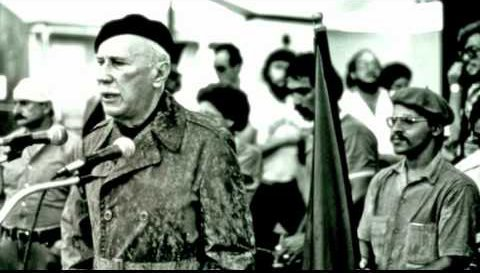
Writing for the San Juan Star on the centenary of the revolt, Juan Antonio Corretjer (1908–85), one of Puerto Rico’s most prominent advocates of independence, described Lares as the day Puerto Rico became a nation.
Such an interpretation is possible in hindsight, when later generations could reinterpret the revolt and incorporate it into a broader national mythology.
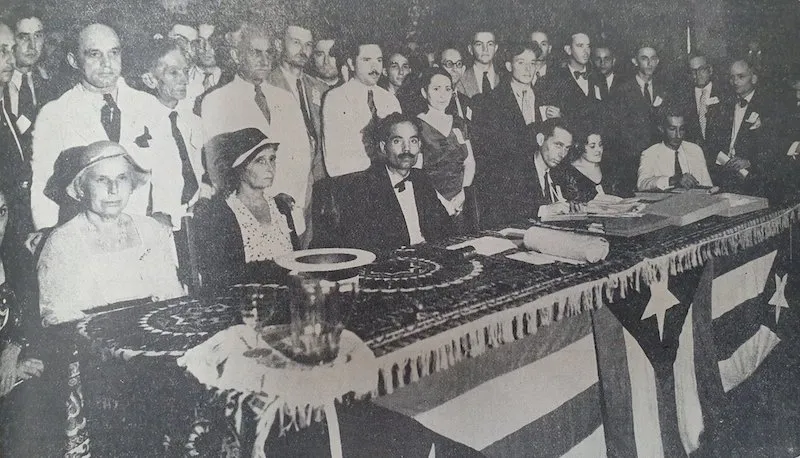
The failed uprising remained an obscure episode in Puerto Rican history until the 1930s, when the Partido Nacionalista Puertorriqueño adopted Lares as a national icon.
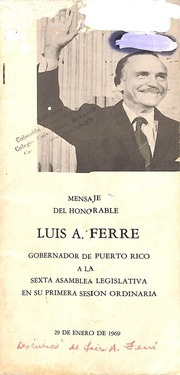
In 1969, Luis A. Ferré, the first governor of Puerto Rico elected by a party advocating statehood, declared the anniversary a national holiday.
The fact that political movements with radically different visions of Puerto Rico could embrace the same event is not necessarily contradictory.
Rather, it demonstrates the political power of national symbols and historical memory. As anthropologist Arlene Dávila has argued, control over national mythology and its icons, and the ability to appeal to national identities and sentiments, can wield significant political power in Puerto Rico.
The circumstances surrounding the revolt itself, however, reveal the considerable obstacles to the formation of a unified Puerto Rican national consciousness in 1868.
Although only about 7 percent of the 551 detainees—39 individuals—had been born outside the island, foreigners occupied important positions within several rebel cells. Spanish authorities used this fact to portray the uprising as foreign-inspired and foreign-led.
More importantly, the criollo leaders of Lares failed to mobilize the island’s population on a broad scale, even when they appealed to a supposed Puerto Rican national spirit.
The problem was not simply the absence of political will. The social, demographic, economic, geographic, linguistic, and racial conditions necessary for a strong sense of common identity were still developing.
Puerto Rico had experienced enormous demographic change during the first half of the nineteenth century. Its population had quadrupled, while immigration produced a remarkably diverse society. Estela Cifre de Loubriel identifies three major immigration waves, 1800–1850, 1850–80, and 1880–98. The first included immigrants from Santo Domingo, French elements from Haiti, and political émigrés from Venezuela.
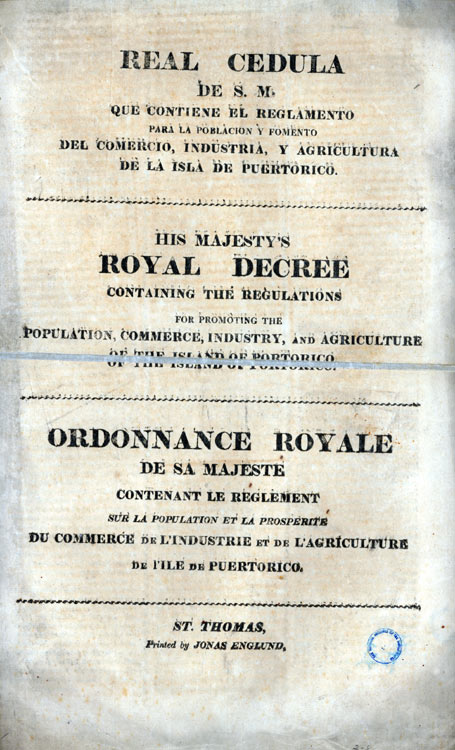
Cifre de Loubriel argues that immigration encouraged by the Real Cédula de Gracias of August 10, 1815, was central to the formation of Puerto Rico as a pueblo and identifies this period as an important moment in the emergence of Puerto Ricans as a distinctive people. Yet this interpretation underestimates the extent of the island’s racial and social divisions and the contribution of nonwhite populations to the formation of that pueblo.
More recent scholarship has challenged the assumption that nineteenth-century immigration primarily contributed to the “whitening” of Puerto Rico. Joseph C. Dorsey has shown that, particularly after 1815, thousands of Africans and Caribbean slaves arrived from the non-Hispanic Caribbean.
Their presence was tolerated because of economic necessity, but it was hardly accepted on equal terms. Both enslaved and free people of color were subjected to extensive policing and social repression. Following the sugar crisis of 1848, the colonial government largely restricted nonwhite immigration while encouraging white migration.
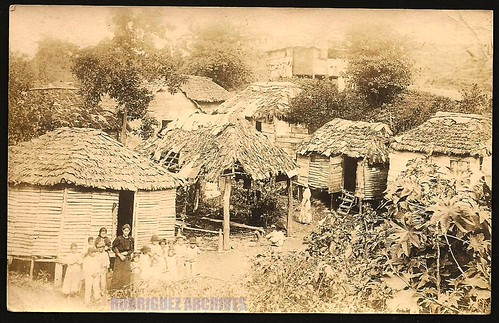
The result was not a socially homogeneous population capable of easily imagining itself as a single political nation. Several European and African languages, along with their creolized forms, could be heard in Puerto Rican communities. Former slaves and freedmen from the Dutch, Danish, and French Caribbean, as well as Corsicans, Italians, French, Germans, and others, established communities and enclaves with varying degrees of connection to one another.
Poor transportation and the limited network of roads further isolated communities. Beyond their immediate locality, many inhabitants shared neither a common educational experience nor the sustained social interaction necessary to develop a strong island-wide identity.
Under these circumstances, an appeal to a common Puerto Rican nation had limited reach.
Racial divisions presented an additional and particularly formidable obstacle. By 1860, Puerto Rico’s population was almost evenly divided between whites and Blacks. Colonial authorities and conservative allies exploited fears of racial conflict, invoking the Haitian Revolution to frighten liberals and separatists alike.
As late as 1872, conservatives argued that independence would lead to the departure of nearly 100,000 whites, leaving a nonwhite majority that would attempt to seize political power, potentially through a racial war. Their claims drew on the participation of free people of color and enslaved people in the Lares uprising and on the presence of known abolitionists among the rebels.
Thus, the problem confronting the Lares rebels was not simply that they failed to win an independence struggle. The revolt occurred in a society in which the social foundations of an island-wide national consciousness remained weak.
Class, race, locality, immigration, language, economic interests, and limited communications divided the population, while competing loyalties to Spain, local communities, and emerging political projects remained powerful. The colonial government exploited these divisions through a narrative of impending racial conflict.
In Cuba, rebels eventually developed a powerful counternarrative that helped transcend some of these divisions by the 1890s. Puerto Rico followed a different trajectory. As late as 1898, with the exception of exiled separatists and more radical elements, many of the island’s political leaders continued to identify their interests and political future with Spain.
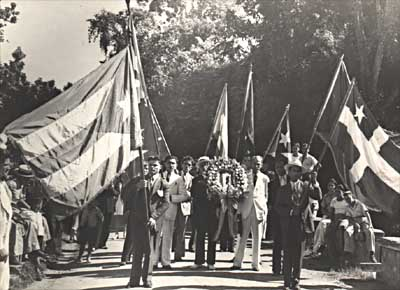
Seen in this context, Lares was an important anticolonial and separatist revolt, but the evidence does not support treating it as the expression of a fully developed Puerto Rican nation.
Its leaders articulated a national language, but the social conditions necessary to transform that language into a broadly shared national consciousness had not yet emerged.
The later elevation of Lares into the foundational moment of Puerto Rican nationalism was therefore a product of subsequent historical memory and political nation-building as much as a reflection of the society that existed in 1868.
A national revolt requires some meaningful preexisting basis for imagining a shared political community. In 1868, the Lares Uprising demonstrated the emergence of nationalist language and political aspirations, but not yet the broad social cohesion necessary to call the uprising a genuinely national revolt.
While the revolt itself was not a national uprising, the exclusionary policies imposed by Spanish authorities in its aftermath, together with the later recovery and reinterpretation of Lares’s memory, helped nurture the seed of puertorriqueñismo planted in 1868. Lares may not have been the day Puerto Rico became a nation, as Juan Antonio Corretjer claimed a century later, but it became an important moment in the longer process through which Puerto Ricans came to imagine themselves as a distinct political community- a pueblo.
Excerpts from: Franqui-Rivera, Soldiers of the Nation, Chapter 1 Birth of a Nation
Continue reading: El Grito de Lares’ Aftermath: An Emerging Nation
___________________________________________________________________________
[1] The Glorious Revolution culminated with Queen Isabella II deposed. She was replaced by the Italian prince Amadeo de Savoy who lasted two years as the head of a constitutional monarchy. He was followed by the First Spanish Republic which lasted roughly two years (1873-74).
[2] Since the exiles in New York had a “revolutionary” agenda, including the abolition of slavery I use the term “revolutionaries” to refer to them. The leaders of the revolt in Puerto Rico, which included some slave owners who disagree with the abolition of slavery, are referred to as “rebels”.
[3] For the military aspect of the Lares revolt see; Héctor Andrés Negroni, Historia militar de Puerto Rico: en conmemoración del encuentro de dos mundos, (España: Ediciones Siruela S.A., 1992), 296-301. For an exhaustive study of the rebels who led the revolt and their motivations see; Olga Jiménez de Wagenheim, El grito de Lares, sus hombres y sus causas.
[4] By order of the Dominican president Buena Ventura Báez, Betances and his men were precluded from sailing to Puerto Rico., See; Jiménez de Wagenheim, El grito de Lares, sus hombres y sus causas, 192, and; Negroni, Historia militar, 297.
[5] See; José A. Gautier Dapena, Trayectoria del pensamiento liberal puertorriqueño en el siglo XIX, (San Juan, P.R.: Instituto de Cultura Puertorriqueña, 1975), 103-105, and; Negroni, Historia militar, 298, and; Jiménez de Wagenheim, El grito de lares, sus hombres y sus causas, 160-62.
[6] Those threatened were the slaves and jornaleros working for landlords who were not part of the rebellion. The rebels apparently killed Agustín Venero, a freed black, for refusing to join them. See; Jiménez de Wagenheim, El grito de Lares, sus hombres y sus causas, 170-74, and; Gautier Dapena, Trayectoria del pensamiento liberal, 108.
[7] Francisco Ramírez was named President of the Republic of Puerto Rico, Clemente Millán as Minister of Justice, Federico Valencia as Minister of Treasury, Aurelio Méndez Minister of Foreign Affairs, and Bernabé Pol as Secretary of State. See Jiménez de Wagenheim, El grito de Lares, sus hombres y sus causas, 179-80, and; Negroni, Historia militar, 298-300, and; Gautier Dapena, Trayectoria del pensamiento liberal, 107-08.
[8] Jiménez de Wagenheim, El grito de Lares, sus hombres y sus causas, 179.
[9] See the original decrees in: Gautier Dapena, Trayectoria del pensamiento liberal, 102-103. For an analysis of the decrees see; Jiménez de Wagenheim, El grito de Lares, sus hombres y sus causas, 179-84. See also; Negroni, Historia militar, 29, and; María Asunción García Ochoa, La política española en Puerto rico durante el siglo XIX, (Rio Piedras, P.R.: Editorial Universidad de Puerto Rico, 1982), 150-52.
[10] See; Jiménez de Wagenheim, El grito de Lares, sus hombres y sus causas, 179-80, 185-92, and; Gautier Dapena, Trayectoria del pensamiento liberal, 106; and, Negroni, Historia militar, 298-300.


I hate this website it tells me nothing I’m never using again we should delete it and I hate it I hate it so much and tells me nothing and my family also hates it they want you to delete it.
LikeLike
Dear grammar-challenged hater;
I would like to inform you that no one forces you to visit the site because we live in a free world.
Also, what you and your family want has no bearing on the content I create for MY site.
Have a nice life.
LikeLike
Is there a way or method to find out who the 500 plus men who participated in the uprising or the 80 prisoners that died due to poor sanitary conditions.
LikeLike
Olga Jimenez de Wagenhein wrote “El grito de Lares: sus hombres y sus causas”. There you can find a detailed description of the men and women involved.
LikeLike
Thank you. I’ve read her work, but wanted more details on the men who died in captivity… I believe some were imprisoned in Adjuntas and elsewhere on the island. Just wondering why there hasn’t been much research on the specific detail of names and towns they were from.
LikeLike
That would require painstaking archival work. Those records from 1868-69 should be in the Archivo General de Puerto Rico. More than likely, they are incomplete.
LikeLike
[…] other articles, I have listed and discussed many of the reasons why rebellion against Spanish dominance in Puerto Rico ended in defeat. In this one, I will focus on […]
LikeLike
[…] Lares’ Aftermath (Follows: El Grito de Lares (The Lares Uprising): A Few facts) […]
LikeLike