The broad consensus among American political and military leaders since the early 2000s has not favored launching a full-scale war with Iran.
Instead, leaders across multiple administrations viewed such a conflict as high risk, destabilizing, and strategically disastrous, even as they disagreed on tactics.
After Iran was labeled part of the “Axis of Evil” in 2002 by President George W. Bush, tensions escalated sharply. Yet even then, U.S. officials avoided direct war. They relied on sanctions, covert operations, and diplomacy to counter Iran’s nuclear program and regional influence.
That was precisely when Iran was eager and willing to mend fences with the United States as both countries faced a common enemy.
So, beyond the incredible blunder of failing to seize the opportunity to bring Iran to the table and improve relations, the United States—even under Bush—still chose sanctions and diplomacy over war.
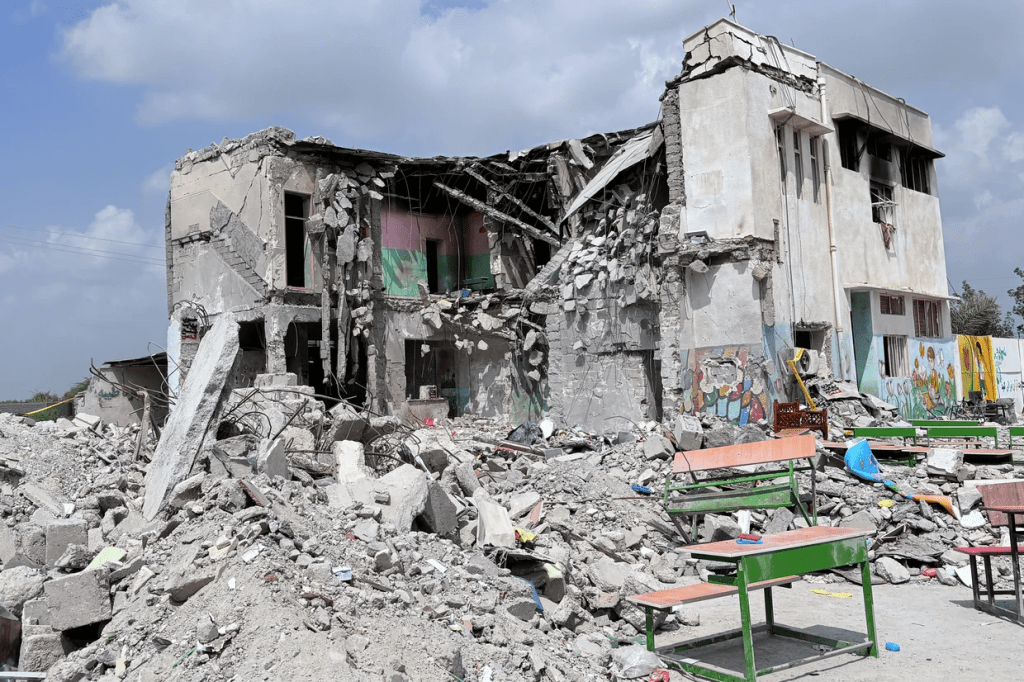
Iranian state media said 168 people were killed in a strike on a school in Minab, southern Iran, on the first day of the war. Damage is seen in this photo from March 5, 2026.
Across Republican and Democratic administrations, senior defense officials repeatedly warned that a war with Iran could trigger a regional catastrophe, devastate global oil markets, and require a massive and prolonged military commitment.
The United States, Europe, and their partners—even during periods of intense confrontation involving nuclear negotiations, maritime incidents, and proxy conflicts—consistently pursued containment, deterrence, and diplomacy rather than open war.
That changed under the first and second Trump administration.
The first step was violating the Joint Comprehensive Plan of Action (JCPOA), the agreement reached under the Obama administration. All international observers agreed it was working. Iran was complying with it to the letter, and it would have prevented Iran from ever obtaining a nuclear weapon. Let that sink in.
The American violation of the treaty left Iran with little incentive to continue complying. Iran revived its nuclear program and increased support for paramilitary and terrorist groups across the Middle East—both as leverage and as protection against Israel and the United States.
Trump and Netanyahu put us on the path to war with Iran.
Against the advice of military leaders who had served under several administrations—leaders whose loyalty was to the Constitution, whose duty was to protect the American people, safeguard national security, and protect the soldiers under their command—Trump and Hegseth launched an unprovoked war of choice with no clear strategic aim, largely in service of Israel’s agenda.
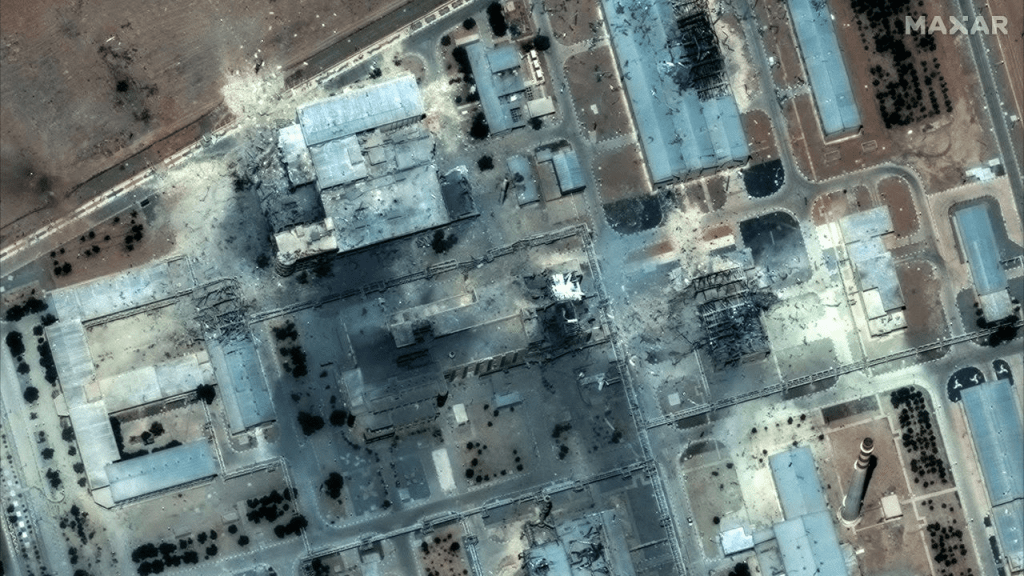
Early American bombing of Iranian sites.
Leaving aside the fact that the war on Iran violated international law and treaties, and that war crimes may have been committed, the war quickly became unwinnable. Iran absorbed the punishment and fought back, while American stockpiles and military assets were depleted.
It appears that American military leadership was removed for refusing to relay unlawful orders and for presenting Hegseth with facts he did not want to hear. That is an absolute failure of leadership. But we already knew Hegseth was unfit for the position.
Trump responded with tantrums on social media and threats of genocide. Genocide. Let that sink in.
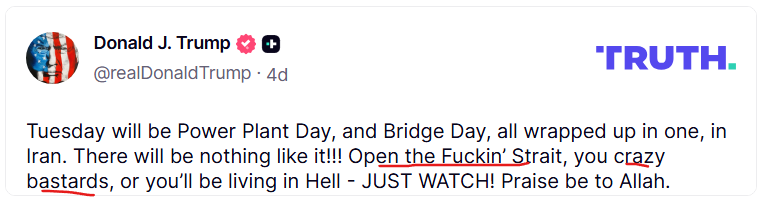
Those posts—combined with Hegseth’s declaration that American forces would give “no quarter” to the enemy, itself an unlawful order and a war crime if carried out—provoked even more resistance within the military. Pentagon lawyers and senior officers increasingly refused to approve attacks on civilian infrastructure that appeared on Hegseth’s target list.
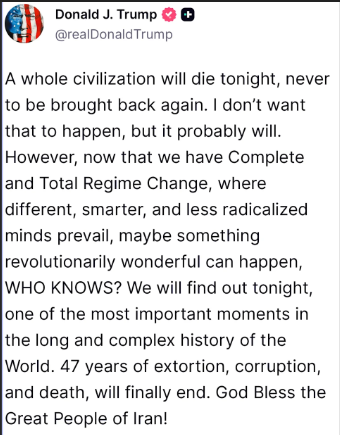
As pressure mounted from both inside and outside the administration, and as public support collapsed, Trump announced a last-minute “deal.”
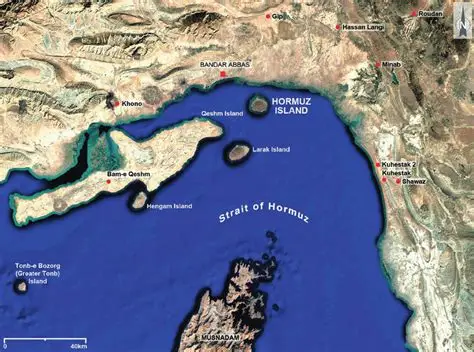
1. Strait of Hormuz Access
- Iran’s 10 Point Plan: Iran demands continued Iranian control over the Strait of Hormuz and U.S. acceptance of that control. It also ties reopening the strait to a ceasefire and non-aggression commitments, including Israel ending its invasion of Lebanon.
- JCPOA: No provisions on the Strait of Hormuz, maritime access, or shipping rights. The strait remained open.
2. Israel–Lebanon Conflict
- Iran’s 10 Point Plan: Calls for an end to combat on all fronts, explicitly including Israel’s conflict with Hezbollah in Lebanon. Iran presents a Lebanon ceasefire as an essential condition.
- JCPOA: No regional conflict clauses. It does not address Israel, Lebanon, Hezbollah, Syria, or regional military activity.
3. Uranium Enrichment
- Iran’s 10 Point Plan: Demands U.S. acceptance of Iran’s unrestricted right to enrich uranium.
- JCPOA: Severely restricted enrichment, which by the consensus of nuclear experts meant Iran could not build a nuclear weapon:
- Limits enrichment to 3.67%
- Caps the stockpile size
- Limits the number and type of centrifuges
- Requires intrusive IAEA inspections
The purpose of the JCPOA was to constrain enrichment, not endorse it.
4. Sanctions
- Iran’s 10 Point Plan: Demands the lifting of all primary and secondary U.S. sanctions, as well as the termination of all U.N. Security Council and IAEA Board of Governors resolutions against Iran.
- JCPOA: Offered phased sanctions relief tied to verified nuclear compliance:
- Lifted nuclear-related sanctions
- Left non-nuclear sanctions—terrorism, human rights, and ballistic missiles—in place. Meaning that Iran was being penalized for those actions.
5. U.S. Military Presence and Non-Aggression
- Iran’s 10 Point Plan: Requires a U.S. non-aggression guarantee and the withdrawal of American forces from the region.
- JCPOA: Contains no provisions on U.S. military posture, force presence, or non-aggression guarantees. Meaning- all options would be considered if Iran violated the nuclear deal- or increase support of terrorists groups.
6. Reparations and War Damages
- Iran’s 10 Point Plan: Demands that the United States pay for war damages. And we should.
- Including Iran’s continued control of the Strait of Hormuz and the imposition of a toll on shipping.
- JCPOA: No reparations or compensation mechanisms.
All things considered, this has been one of the greatest strategic blunders in history.
The region and the world have been destabilized.
The main instigator of this war—Netanyahu’s Israel—is in an even weaker moral and strategic position than before the attack.
American assets across the region have been destroyed or depleted.
Our principal rivals, Russia and China, emerged as the great winners without having to do anything at all (other than Russia helping Iran to target Americana assets in the region- for which it received a prize from Trump- the lifting of sanctions for their own illegal invasion of Ukraine).
America’s Arab partners—the Gulf Cooperation Council (GCC) states, including Saudi Arabia, UAE, Kuwait, and Bahrain—were furious at not being consulted and at seeing the war spill into their countries without any American contingency planning. And while many of them publicly welcomed the supposed weakening of Iran, they also had to contend with their populations’ anger over the attacks.
Iran emerged with both the moral and strategic advantage. Trumps and Hegseth’s threats to commit war crimes and crimes against humanity gave Iran the sympathy of much of the world and made the United States appear as a monster.
Hegseth and Trump—those two criminally incompetent failures—believed wars are won by racking up numbers. Hegseth appears to believe that America loses wars because it does not destroy enough targets or kill enough people—as if he had never heard of Vietnam.
And now Iran, with no navy and no meaningful air force, gets to dictate the terms of the ceasefire and perhaps the future of the Middle East because it withstood an illegal war launched on behalf of Israel, Trump’s fragile ego, and Hegseth’s Christian nationalism, which convinces him that he can bring about the apocalypse and carry out “God’s plan.”
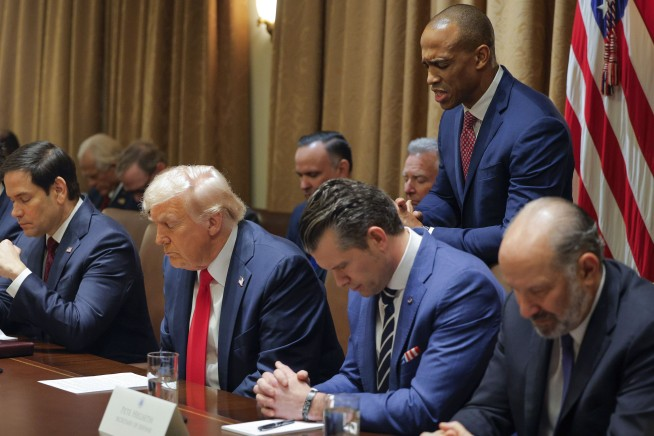
It may be that Hegseth is removed, or that he convinces Trump to launch an invasion of Iran.
The former may begin to repair the damage Hegseth has done to our armed forces.
The latter could bring about the collapse of the Western world and the global order, the destruction of the rule of law, and a genuine World War III scenario.
That is the level of incompetence, corruption, and dereliction of duty in the Trump administration.
As I write this- I’m still in shock and trying to fully comprehend the magnitude of this colossal strategic failure.
 in cOHERENT Thoughts