The Announcement as Rupture and Benito’s Origin Story
On September 28, 2025, global superstar Bad Bunny—Benito Antonio Martínez Ocasio—posted what many assumed had to be a joke: he would headline Super Bowl LX’s halftime show. Instagram. X. No press release. No pomp. Just a post. Disbelief followed immediately. Some thought it was a prank. Others simply refused to believe it.
The next day, the NFL made it official during Sunday Night Football, unveiling a video announcement scored to “Callaita”—a song that itself carries historical weight, having soundtracked Bad Bunny’s cameo during Shakira and Jennifer Lopez’s halftime show in 2020. This time, there was no cameo. No sharing the stage. This time, it was his.
Bad Bunny’s selection marked a historic first: the first halftime headliner whose catalog is in Spanish. The game—scheduled for February 8, 2026, at Levi’s Stadium in Santa Clara—will pit the Seattle Seahawks against the New England Patriots, a neat West–East divide mirroring something larger: a country negotiating who it is and who it’s becoming.
While billions across the world—including in the United States—celebrated the announcement, a small but loud and belligerent minority reacted with hostility. To that minority, it felt like rupture.
It would be easy to dismiss these responses as mere ignorance or entrenched bigotry. Doing so, however, obscures what is actually unfolding: a historic cultural shift in the United States and globally. This shift is driven by demographic transformation, the rise of the internet, and a digital revolution that dismantled traditional cultural gatekeepers. Cheap and accessible platforms now allow artists from humble beginnings (like Benito) to create, distribute, and dominate global culture on their own terms. He recorded his music, uploaded it to Spotify, and the world listened.
That isn’t a footnote. That’s his origin story.
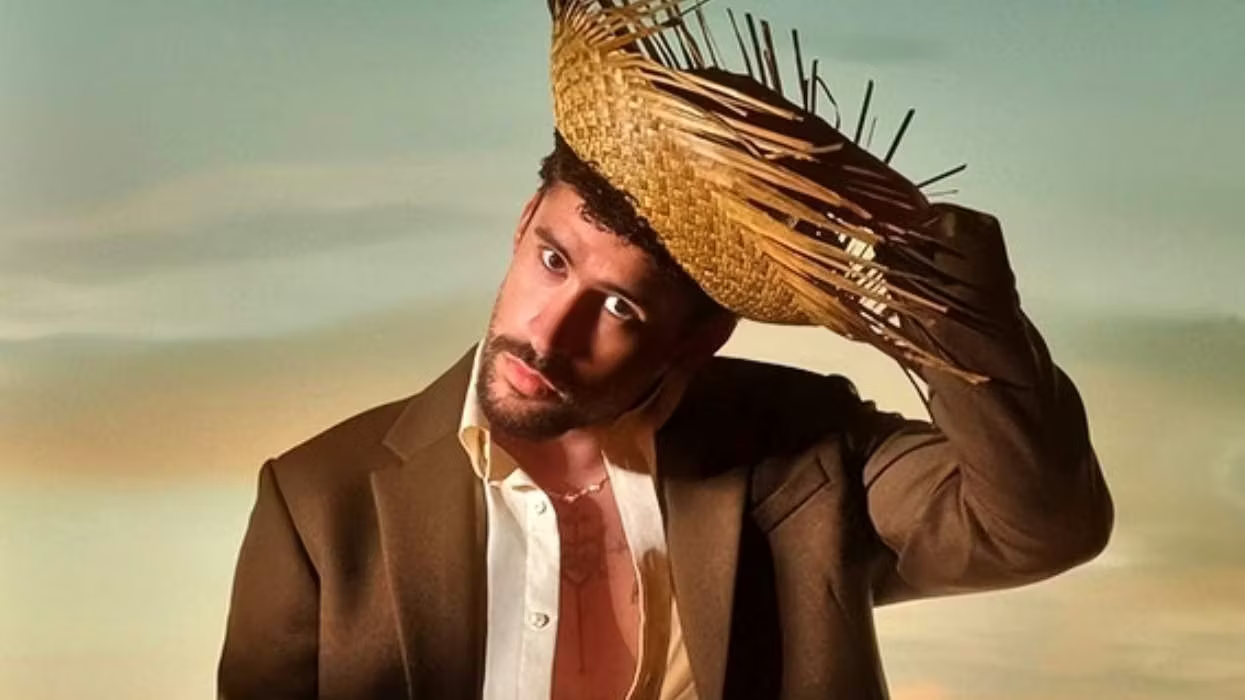
The Panic
The backlash arrived fast and predictably, less as disagreement than as reflex.
Conservative commentators and political figures framed the decision as “political,” “woke” (a word now so hollow it functions mainly as a siren), and “un-American.” Donald Trump called the choice “absolutely ridiculous.” Right-wing pundits on X complained that Bad Bunny sings in Spanish, labeling him a “Trump hater” and an “anti-ICE activist.” Ultra–far-right influencers like Benny Johnson and Jack Posobiec warned darkly that featuring a Spanish-dominant artist deviated from “traditional American culture.”
That phrase—traditional American culture—did a lot of work. It always does. It whistles. It race and anger baits. It signals racial anxiety while pretending to mourn something noble that never existed in the first place.
Online, the panic metastasized. Change.org petitions demanded Bad Bunny’s removal and replacement with “real Americans.” Reddit threads insisted the Super Bowl should feature English-only performers. Others vowed to boycott the game entirely, claiming the NFL had surrendered to “globalism,” foreigners, or worse—Latinos with opinions.
This wasn’t critique. It was cultural vertigo.
The Mask Comes Off
Then came the counter-programming—the rotten cherry on top.
Turning Point USA, the ultra–far-right political organization best known for laundering Christian Nationalism into college campuses, announced an “All-American Halftime Show.” It would promote “Christian conservative values.” Any honest observer recognized it for what it was: political theater, grievance monetized, culture war as revenue stream.
Worse still, TBN—once a Christian television network—agreed to air it.
Pastor Brandon, a Christian pastor and social media figure, put it plainly:
When Christianity fuses itself to the Evangelical Right—when groups like Turning Point USA are welcomed into Christian spaces—being MAGA becomes more important than being like Jesus.
He continued, indicting TBN directly:
Because TBN no longer follows the Trinity of Father, Son, and Spirit.
It follows a different trinity:
Money. Power. Political Access.
Christianity, productized.
Faith, monetized.
Jesus, leveraged.
And who was the musical standard-bearer for this “moral alternative”? Kid Rock—a performer whose catalog includes lyrics declaring it “mandatory” to rape underage girls:
“Young ladies, young ladies, I like ’em underage, see,”
“Some say that’s statutory (But I say it’s mandatory).”
(“Cool, Daddy Cool,” 2001)
This song somehow appeared on for the animated children’s film Osmosis Jones. Other Kid Rock’s classics include titles like Balls in Your Mouth.
This was not a values debate.
This was values revealed.
The Real Division and the Fragility of Christian Nationalism
This moment exposes a profound cultural—and ultimately moral—divide. Bad Bunny’s detractors have positioned themselves squarely on the wrong side of history, promoting division, racial animosity, and exclusion while disguising these impulses as cultural anxiety, moral concern, or patriotism. None of this is new. We have seen it before, repeatedly. What would be a mistake, however, is to read these reactions as strength. They are the opposite.
What they reveal is the fragility of Christian Nationalism—a racist distortion of Christianity (and a heresy) and a clear marker of the decline of “whiteness” as a dominant socio-political and cultural project. In the process, its adherents are dragging both Christianity and democratic norms down with them.
While some of the backlash stems from calculated political and business strategies designed to consolidate power and profit, much of it is fueled by ignorance, disinformation, and uncritical loyalty to movements like MAGA. On platforms such as Reddit and X, users objected that “no songs in English should be at the Super Bowl,” accused the NFL of privileging “international” identity or a “globalist agenda,” and insisted the halftime show must reflect “God and country”—as if those concepts were incompatible with Spanish, Puerto Rico, or immigration. Others vowed to boycott the game entirely, outrage that intensified after Bad Bunny’s unapologetic denunciation of “ICE” at the 2026 Grammy Awards on February 1.
These reactions do not defend tradition. They expose fear—fear of demographic reality, cultural change, and a future they no longer control.
The Counterpoint
Against all this noise, Bad Bunny did not rage. He did not posture. He existed.
At the 2026 Grammy Awards, after winning Album of the Year for Debí Tirar Más Fotos, Benito spoke—not with venom, but with love:
Puerto Rico, believe me when I tell you: we’re much bigger than 100 by 35, and there’s nothing we can’t achieve.
I dedicate this award to all the people who had to leave their homeland to follow their dreams… to all the Latinos in the world and all the artists who came before and deserved to be on this stage.
Earlier that night, after winning Best Música Urbana Album, he was more direct:
Before I say thanks to God, I’m going to say ICE out.
Then the line that mattered most:
The only thing more powerful than hate is love.
No dog whistles. No enemies named. No culture war theatrics. Just dignity. Imagine being attacked for your language, your birthplace, your culture, your skin tone—and still choosing love.
Bad Bunny—a proud Puerto Rican and also an American citizen—stands as a near-perfect vessel for a message of civism, unity, love, and care at a moment when both the nation and the world are aching for them. His presence transcends the political fractures tearing the country apart, even as he—and the communities he embodies—are relentlessly targeted by xenophobia rooted in language, culture, and belonging.
To be attacked for where you were born, the culture you inherit, the skin you live in, and the words you speak—and still respond not with bitterness, but with love—is not just resilience. It is grace. Amazing grace indeed.
That, apparently, was unforgivable.
The Unignorable Numbers
By the time Debí Tirar Más Fotos dropped in January 2025, Bad Bunny was already a global force. What he did next made the backlash not just ugly—but futile.
It is no surprise that Bad Bunny has been the target of so much hatred. His music and career have conquered much of the world, and at this historical moment of global cultural shift, he has become both a symbol of hope and a threat to the champions of “whiteness.” By the time Debí Tirar Más Fotos dropped in January 2025, Benito was already a global force. Rather than chasing international audiences, he crafted an album as a gift to Puerto Rico—a homage to its culture and traditions, a challenge to colonization and gentrification—and did so entirely in Spanish, refusing the unspoken requirement that global superstars crossover into English.
DTmF conquered the world anyway.
That choice, unapologetically Puerto Rican, a love letter to the Island, entirely in Spanish, yet universal in appeal, propelled the album to the top of global charts within weeks.
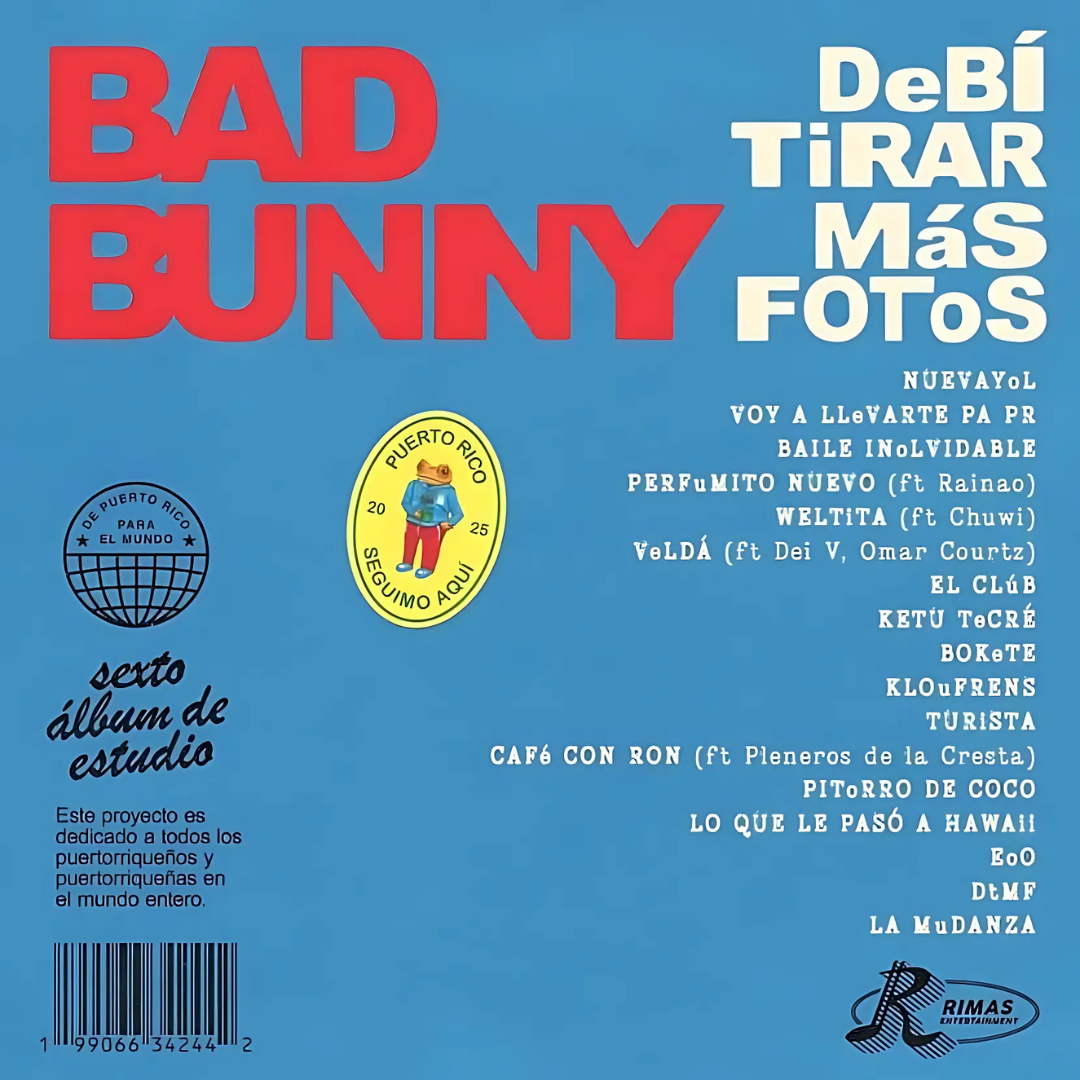
In 2025 alone, Bad Bunny became the most-streamed global artist on Spotify, surpassing English-language superstars like Taylor Swift and Drake; Un Verano Sin Ti reached over 15 billion streams, ranking among Spotify’s most-streamed albums ever; Debí Tirar Más Fotos sold over a million units in the U.S. market and has exceeded 100 million equivalent album sales worldwide, cementing his place among the best-selling global artists of all time. His reach is not confined to Puerto Rico, Latin America, or the Latino diaspora—his music resonates with listeners worldwide, transcending language. I witnessed this firsthand at Yankee Stadium in the summer of 2022, where thousands of non-Spanish speakers sang every word of his songs, oblivious to the meaning of a simple phrase like “con permiso.”
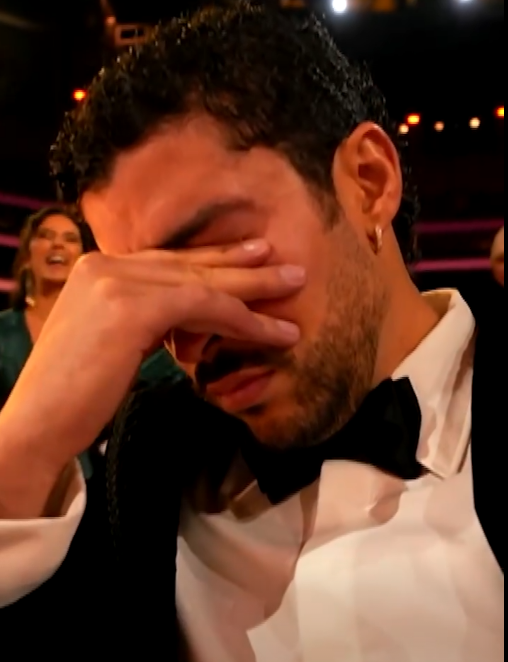
Add to that a staggering 100+ Billboard Hot 100 hits—making him the first primarily Latin artist to reach that milestone—and four consecutive Billboard Latin Music Artist of the Year wins, a Guinness World Record demonstrating both growth and sustained dominance. In 2025, he was named Top Latin Artist of the 21st Century, setting a record with 27 nominations at the Billboard Latin Music Awards—the most ever for a single artist in one year. Then came the historic 2026 Grammys: Debí Tirar Más Fotos became the first Spanish-language album to win Album of the Year, breaking a language barrier in a category dominated by English releases since 1959. He also won Best Música Urbana Album and Best Global Music Performance for “Eoo,” signaling not just mastery of Latin genres, but recognition across global musical traditions. These milestones do more than reflect popularity; they redefine what global music dominance looks like, mainstream Spanish-language artistry, and inspire non-English performers (and nonperformers) everywhere.
The Real Threat
Bad Bunny’s success poses a challenge far greater than football programming.
By refusing to crossover into English—and becoming the world’s biggest artist anyway—he has mounted the first serious challenge to English as the global cultural lingua franca. Since the early 20th century, English has dominated politics, economics, and cultural production. That dominance is now cracking.
The backlash to Bad Bunny is not about music. It is about demographics, language, and power. The same forces enabling global cultural exchange also fuel xenophobic and racist movements in the U.S. and Europe. Panic follows loss of monopoly.
This is why his presence feels threatening: he carries a future that cannot be gatekept, a vision of culture and belonging that refuses borders and limitations. The backlash to his Super Bowl LX halftime announcement is not mere outrage—it is a reaction to a milestone that mirrors the changing cultural and ethnic makeup of the United States, one the organizers recognized before most of the country even understood it. This moment is not about what the halftime show does for Bad Bunny. It is about what Bad Bunny is doing—for American football, for Americana, and for the shape of global culture itself.
The reactions are both unwarranted and futile as these cultural changes are not just natural- but inevitable and should be embraced instead of repudiated and criminalized.
The Reversal
So the question isn’t what headlining the Super Bowl does for Bad Bunny.
It’s what Bad Bunny does for the Super Bowl.
The NFL knows football is shrinking, aging, and stubbornly domestic. Bad Bunny brings it something it has never truly had: global relevance.
What will matter is that football—America’s last conservative cultural fortress—will become a global spectacle for the first time. Sung in Spanish. Watched worldwide. Impossible to ignore.
The Super Bowl is routinely the most-watched television event in the U.S., drawing over 100 million viewers each year. Last year’s halftime show, headlined by Kendrick Lamar, reportedly pulled in about 133.5 million viewers—one of the highest in history. Media outlets project that Bad Bunny’s halftime performance could match or even surpass that, with some experts predicting over 130 million viewers worldwide. I’ll go further: his show will likely smash all previous records, perhaps even doubling Lamar’s audience.
Halftime numbers are always buoyed by casual viewers tuning in just for the performance, and with Bad Bunny’s global reach—including being Spotify’s most-streamed artist worldwide—and as the first solo Spanish-language headliner, it is almost certain his show will set a new standard. This record-breaking, culture-shifting event will not be halted by a few million who refuse to watch for political reasons, moral pretexts, or disdain for his culture, language, or skin color. Their numbers are trivial. What they symbolize, however, is profound: the death knell for “whiteness” as an ideology of systemic privilege and oppression, and a sign of the final emergence of a post-racial world.
The United States and the world have seen this movie before. It panicked over Jazz, Rock and Roll, Elvis. Metal, Hip-Hop… Every time the culture changed, it called the change un-American—until it wasn’t. And it id that because all those cultural changes were the byproduct of demographic changes.
Bad Bunny will not be performing a culture war at the Super Bowl- even as he is the clearest example of global demographic and cultural changes. He’ll be performing Joy, Love, Memory, Language- all that, while coming from an island that has always been part of the Americas, whether “America” was ready to admit it or not. An island and a people with global reach above their and “much bigger than 100 x 35”.
What is at stake is not a halftime show.
It is who gets to belong.
Who gets to speak.
And what America sounds like when it finally tells the truth about itself.
Puerto Rico and most of the world are aware they could not ask for a better global cultural ambassador- it is about time conservatives in the United States realize it too.
P.S.
Who would’ve thought that a humble artist from Puerto Rico, an American colony, would lead the cultural revolution that will end “whiteness” as a project of domination and help restore civism and true democratic norms in the United States?
 in cOHERENT Thoughts